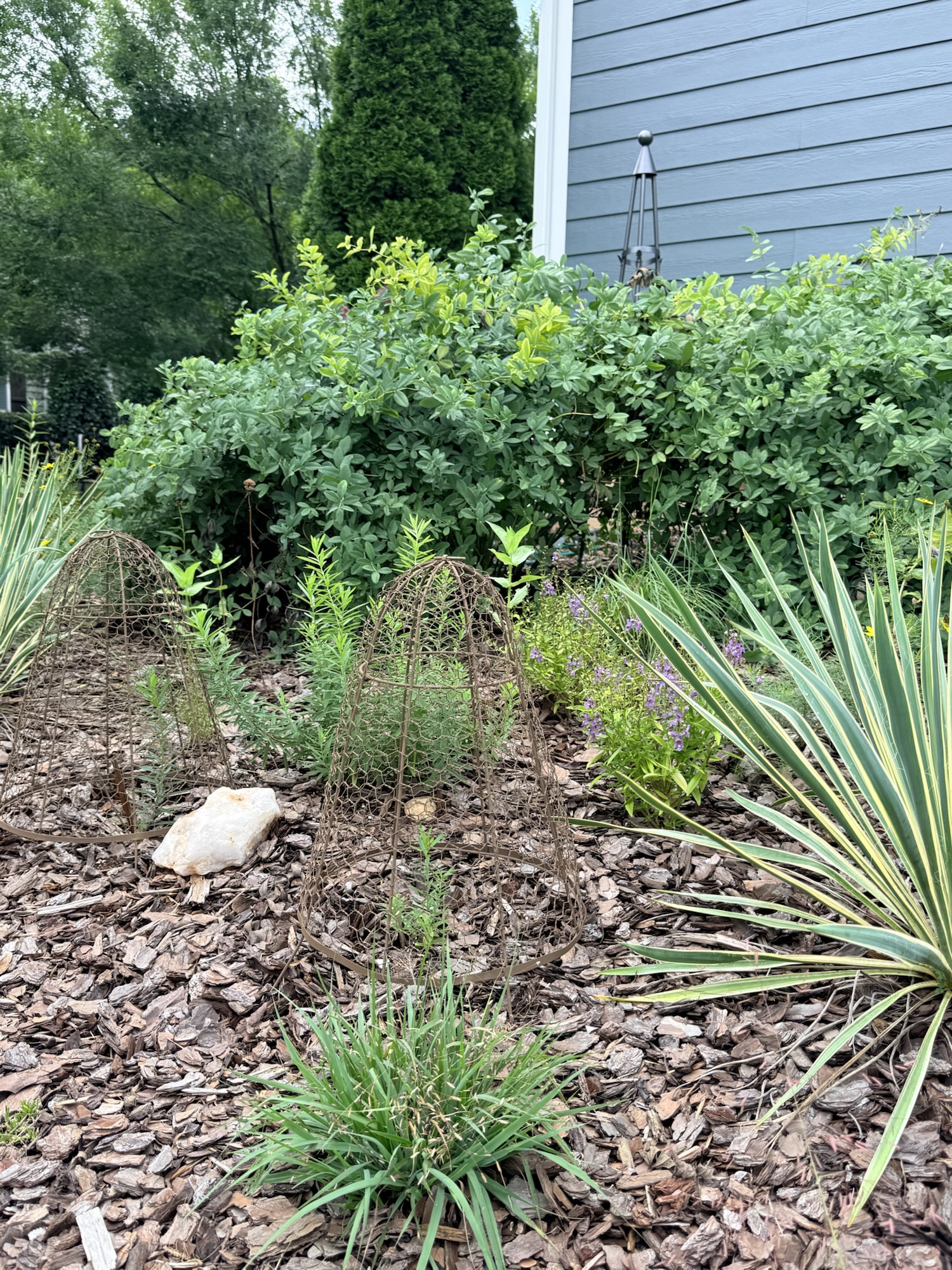
And what it’s revealed about the garden choices that I’ve made.
Are we taking just the beautiful pictures of our successes this summer or are we also revealing our failures? It’s time to look at the true measure of what’s handling a level 2 drought in Zone 8 of the Southeast accompanied by at least four (or is it five) extreme heat events (aka heat domes) since spring, the last having occurred this month. We’re questioning whether it will be the season’s last.

The sun angle has also changed. With a lower sun direction plants that may have been shaded a month ago are now receiving more hours of direct sun added to drought and the prolonged high temperatures. September is barely a relief. At least days are shorter.

I’m anticipating winter as the ‘go-to’, nice time of year. Pressure is off. The heat has passed. Dormancy is a much needed blessing. But we are many hot, humid days away from this.
The Casualties
Swamp Milkweed (Asclepias incarnata)
Featured here as a native plant that can handle drought and flood, my findings proved differently. I planted three last fall near our northwest facing downspout (aka C1) and two didn’t make it. I did not provide any supplemental watering. The one that has survived was the only one of the three that received some afternoon shade.
Note: always strategize with the sun.

Liatris spicata
The most recent Liatris to perish in C2 (find more about this garden bed here and here) was planted in 2025 next to Liatris microcephala. It flowered this year but was found dead recently. I’m really not having much luck with this plant as my spring investment in plugs mostly didn’t survive (one remains in triage) and of the three ‘experimental’ Liatris that I planted in C2 in 2025, only one remains. Read about that one below.

Ceanothus americanus (New Jersey Tea)
Two were planted in spring of this year under the maple tree (to add to one other that’s doing well), southwest corner of yard. One is thriving, the other struggled and finally succumbed. I probably should have triaged it and potted it up on my patio to be properly watered. I didn’t and here we are. It’s such a tough spot and I need to rethink what will work there and do well if anything. I had hoped this dry, part sun to shade spot would be tolerable for this native shrub and two out of three survivors isn’t so bad. They should help with erosion control of the soil in this area as well as provide spring blooms for pollinators.

TBD
Geranium maculatum
I’m not sure how long Geraniums live but the original four planted in 2023 (under two Vitex trees) looked great in spring and most of summer until this collapse of foliage. I can’t recall if this is how they finally look by summer’s end or if this is it for these four. The two new plants that went into the ground this spring seem to be doing okay but I have given them some supplemental watering.

We’ll have to see next spring what emerges. I hope that they do return. This would be a great plant to learn how to propagate!
Anemone virginiana
Also under these Vitex trees was a lone Anemone virginiana from 2023. In fact, these were my first intentional native plant purchases. I was pretty sure at the end of last year that this plant was a goner. I didn’t think the location was the best for it but I left it alone. This spring I noticed it wasn’t coming back. But now I have seen that there are two new volunteers nearby. So sometimes a plant lives out a short life (it is a perennial after all) but leaves something of itself behind if we’re lucky!

Coreopsis ‘Zagreb’
Taking some hits. Looking rough. I think the extreme heat (over 100 F) we’ve had and for not just one week but for at least four throughout summer, has not sat well with this Coreopsis variety. There are 11 throughout the garden.


One is in triage (could be an issue of water, shock or dog urine) and the rest look like they’re losing their fine leaves or are turning bronze which I don’t recall happening at the end of past summers. I think they’ll survive but this heat has been a challenge.
I wonder how anything has survived.

Which leads me to my next list.
Notables
Baby Joe Pye Weed (Eutrochium dubium)
Also featured here as a native perennial that can withstand flood or drought, Baby Joe Pye Weed (aka Little Joe or Coastal Joe Pye Weed) has proved this distinction. This has been one of my favorite native perennials overall. It gets a blue ribbon! Both patches of mine are near downspouts and get full- sun. They bring in the pollinators and their blooms are outstanding. Plus they don’t flop or get too big. This plant is tough.


Butterfly Weed (Asclepias tuberosa)
Better off not having supplemental water! This is a lesson learned when I planted plugs in a dry spring and thought they just needed more water rather than none. I was so wrong on that account. Neglect works well here and I’m happy for that.

Liatris microcephala (Small-head Blazing Star)
Not the most impressive bloomer but of all the Liatris I’ve planted this one survives and seems to be doing well. Both the L. Kobold and L. spicata either perished or ended up in triage (pot on patio). I would certainly be willing to add more of these to create a small patch. They handle the heat and humidity of the southeast and according to NC State Extension Gardener Plant Toolbox, “Unfortunately, it is listed as critically imperiled in our state but is globally vulnerable.” All the more reason to add more!

Grasses: Andropogon tenarius ‘Black Mountain’, Purple Love Grass, Prairie Dropseed
So happy to have added grasses in a sunny area and have them grow and thrive! In all future garden designs I will start here with grasses and sedges. Maybe they will go mostly unnoticed next to echinacea, rudbeckia and any other stunning flower, but they seem reliable, a solid structure with graceful movement.


Trumpet Honeysuckle (Lonicera sempervirens)
A top performer, always. I planted a second (straight species) in early summer and can’t believe how well it’s doing with very little supplemental watering. ‘Major Wheeler’ is on one side of the arbor and this one will face the western sun side. It’s already taken off and we hope to see how it blooms next year!

Yucca filamentosa ‘Bright Edge’ and ‘Color Guard’
They make a nice home for lizards. They can take the drought and heat, plain and simple. ‘Bright Edge’ are planted in my New Native Bed C2 which you can learn more about here. They are already two and a half feet and will eventually grow little off shoots. They even do well in part sun so I may test them in other varying light locations because these things don’t give up!

Baptisia ‘Purple Smoke’ and ‘Sunny Morning’
Of course these having staying power! Baptisia are known for their deep tap roots that allow them to withstand drought. The ‘Sunny Morning’ variety in C2 have been ravaged by caterpillars in the last couple weeks, a moth of some sort, but I’ve let them be as it won’t kill the mature plants regardless of how unattractive it appears. Now it just looks like the natural leaf and stem curling of late summer.


Christmas Fern (Polystichum acrostichoides)
Such troopers in the dry, shady world of the fern! These can handle dry spells and areas. Native to our region, these are a go-to fern in my yard that has limited extra moisture. Moisture which always seems synonymous with the fern in my mind. They are also not nibbled by the usual suspects like snails, bunnies and deer.

Juncus (Juncus tenuis ‘Blue Dart’)
I thought this plant would balk and then die at the lack of rain this summer but it has not. With a continued deficit of rain as we roll into fall, perhaps it will, but in the mean time it’s really showing some staying power and fortitude. I would love to have a nice large clump of these cupping this downspout area with the Baby Joe Pye Weed blooms sunning themselves over top.

Conclusion
There isn’t one really. The stress of this summer is still to be determined. The heat and lack of rain is not over. There may be more casualties that will only reveal themselves next spring. The heat and drought is tough on the Monarda fistulosa and Phlox carolina but they seem to be hanging on if barely. On the other hand native Solidago (check out Solidago here) and Asters seem to thrive and bloom as if shrugging off the need for water entirely.

Zinnias too. Always plant Zinnia seeds. Though not a native plant, as an annual they are welcome this time of year, especially the volunteers, as extras for pollinators and passersby. Halfway through a hot, dry September, they are a much welcome sight and don’t need supplemental watering unless you want more timely, reliable blooms for cut flowers.
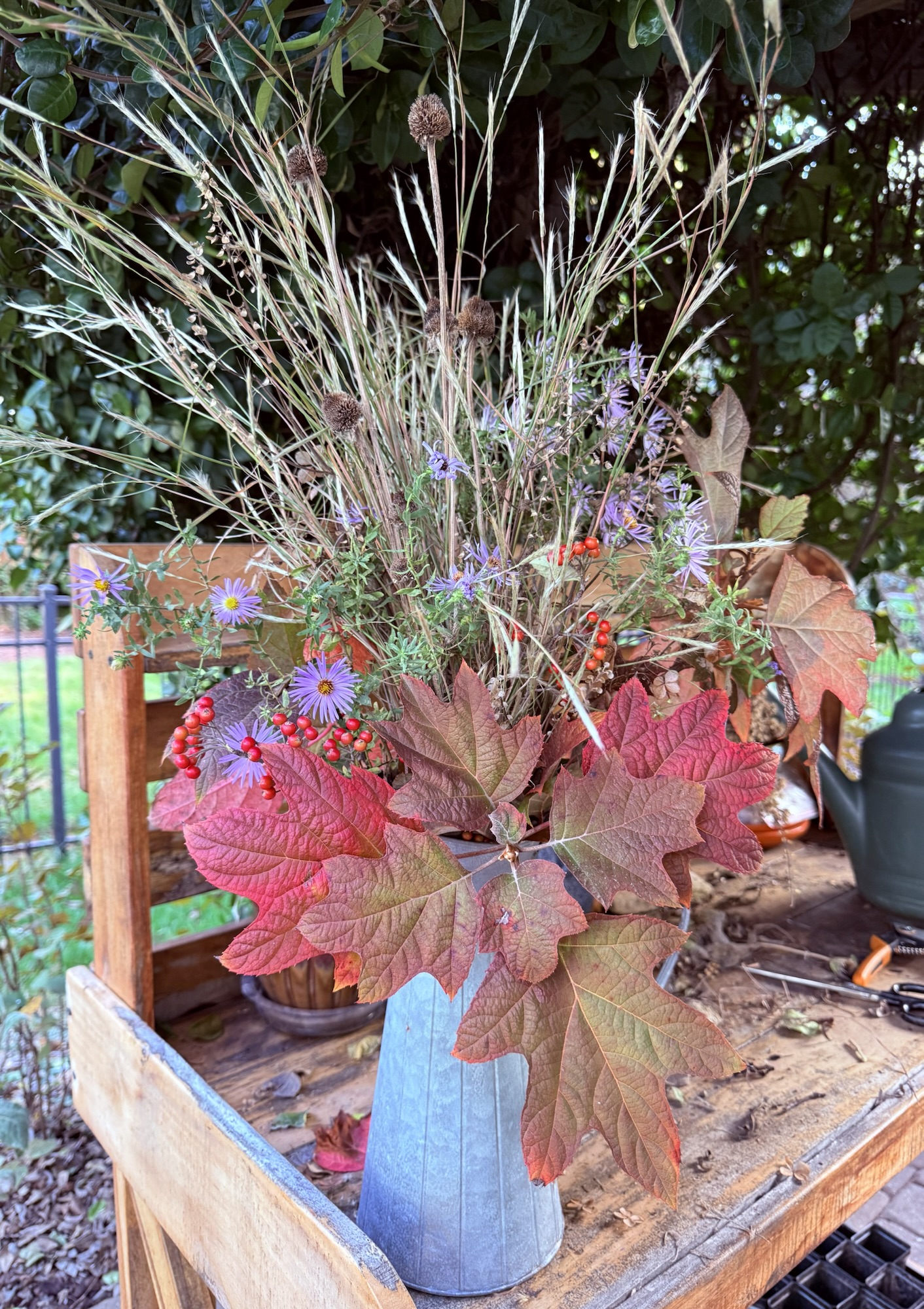
Thoughts of cut flowers lead to me think of the fall native bouquet. What will be available? What can I round up? What can be spared to cut at this time of year in a very sad, parched garden? We will see.


Leave a Reply