Or Being Flexible With Your Expectations and Accepting Unforeseen Outcomes
Music to accompany this post: Death Cab for Cutie's Meet Me on the Equinox
I can get down in the dumps when projects and designs don’t go to plan. Afterall I have spent all of this energy planning, researching and physically searching for native plants that I want to curate for my garden so, yes, I can get down, a bit depressed, fed-up, exasperated. So many faces to that coin.
And if you are like me and love designing and working toward beauty and bounty, then you may not be unfamiliar with these emotions and attitudes especially as a gardener, crafter, artist. This carries over into so many sectors of life. Disappointment. If you plan you drudge against certain outcomes and if you overplan then you should be closer to getting what you want. This may be part logic but it is also part folly.

Life’s experiences and outcomes travel among great waves of the Everything. Chaos theory has some application here. But let’s not call it chaos so much as interconnectedness and fluid being. We can not isolate from what occurs elsewhere, what is also designing itself and propagating itself. Our experience will always be affected in different levels by whats happening in the greater world, community, and family. Pick the scale and there you are as just one plotline and if the waves start to rumble, brace yourself.
Planning a garden is an attempt at control and calm. It offers me physical, mental and creative work. The reality is that I’m only a short term steward and this is an important self-check. One we must all face.

The garden is an act of defiance. When every cleared natural space around us in this country is relinquished to lawn and more lawn and anything that can be mowed, with a few struggling, token trees plugged back in, you must work against it and offer more!
The garden is a place of the unexpected. Life is happening. If you’ve put in effort, even into a small space, life is happening and it moves on waves that are greater than you. Plans will flop. Plants will be eaten. Plants will find themselves in shock and won’t survive. Pathogens will invade. Yet others will grow up strong and seem to defy the adversity of their conditions. Give slow starters time.

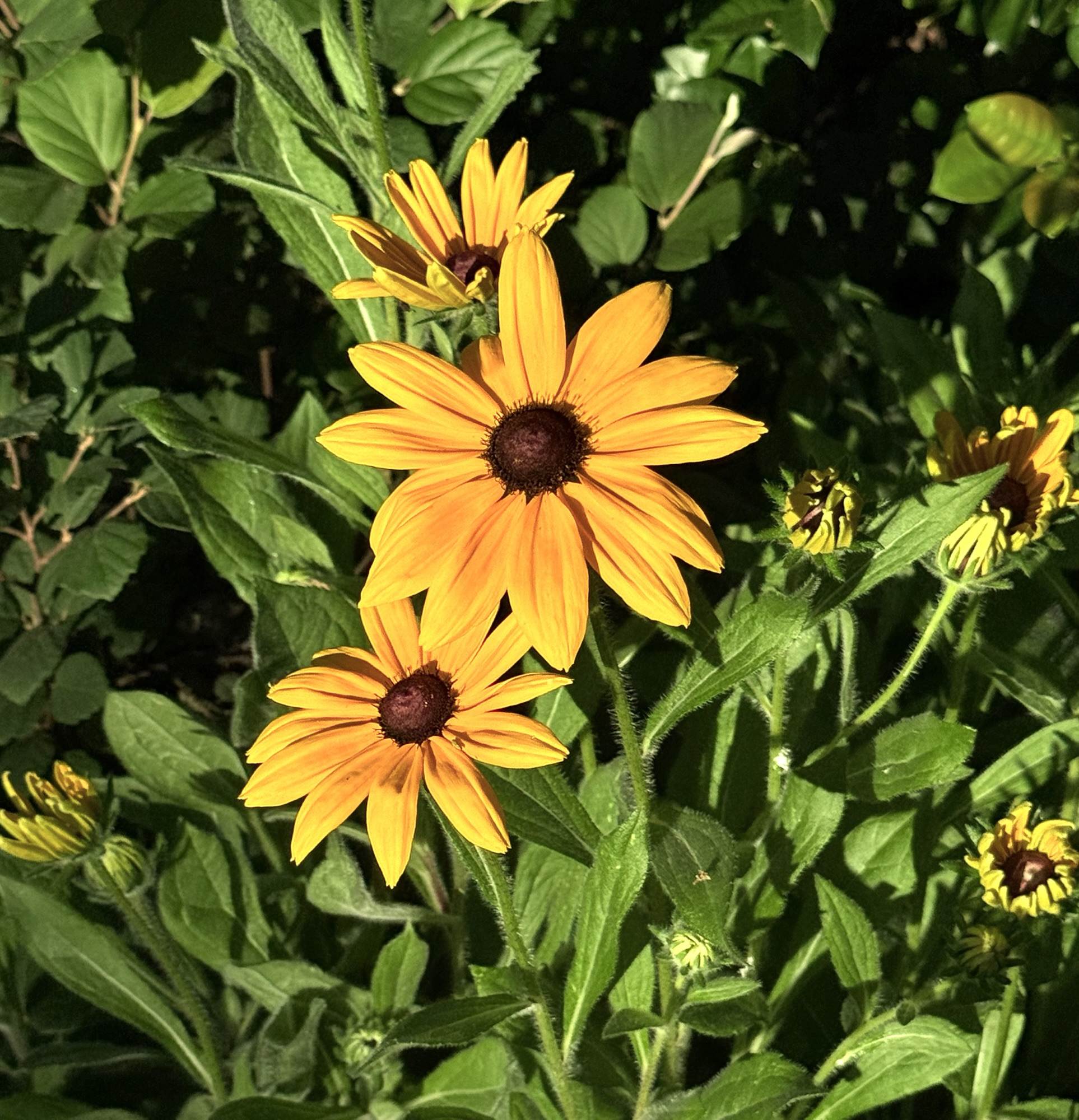
As much as I wanted to edit and to move plants around to suit my ideas, my sensibilities, perhaps I moved too quickly to execute these changes. How do you wait another year or season to see the fruition of your efforts? Well, its not just about you or me. It’s about relationships with your ecological environment, not just puppeteering the landscape. I have to slow down and let life be. Appreciate what does it’s own thing and looks fantastic like the Rudbeckia hirta, which from one single plant has become one of my greatest early summer assets for pollinator value and striking foliage and color. And it does its own thing.

Here are ways to deal with garden design folly and disappointment:
1. Embrace colorful, long blooming annuals
2. Don’t shrug off all non-natives

3. Source what’s available and design with it
4. Reuse and use again what already works and thrives in your soil.


5. See and appreciate what is going ‘right’ and unfolding beautifully, even as its changing and may be different next year.
Keep moving forward. Keep reshaping your vision.


See The Folly of Design, Part 1 here.
Find out more about my New Native Bed and designing and planting for pollinators with native plants here.
See a full list of plants that were started in the New Native Bed, C2, here.
Interested in native gardening, check out my Native Gardens Reference Links page here.



Leave a Reply