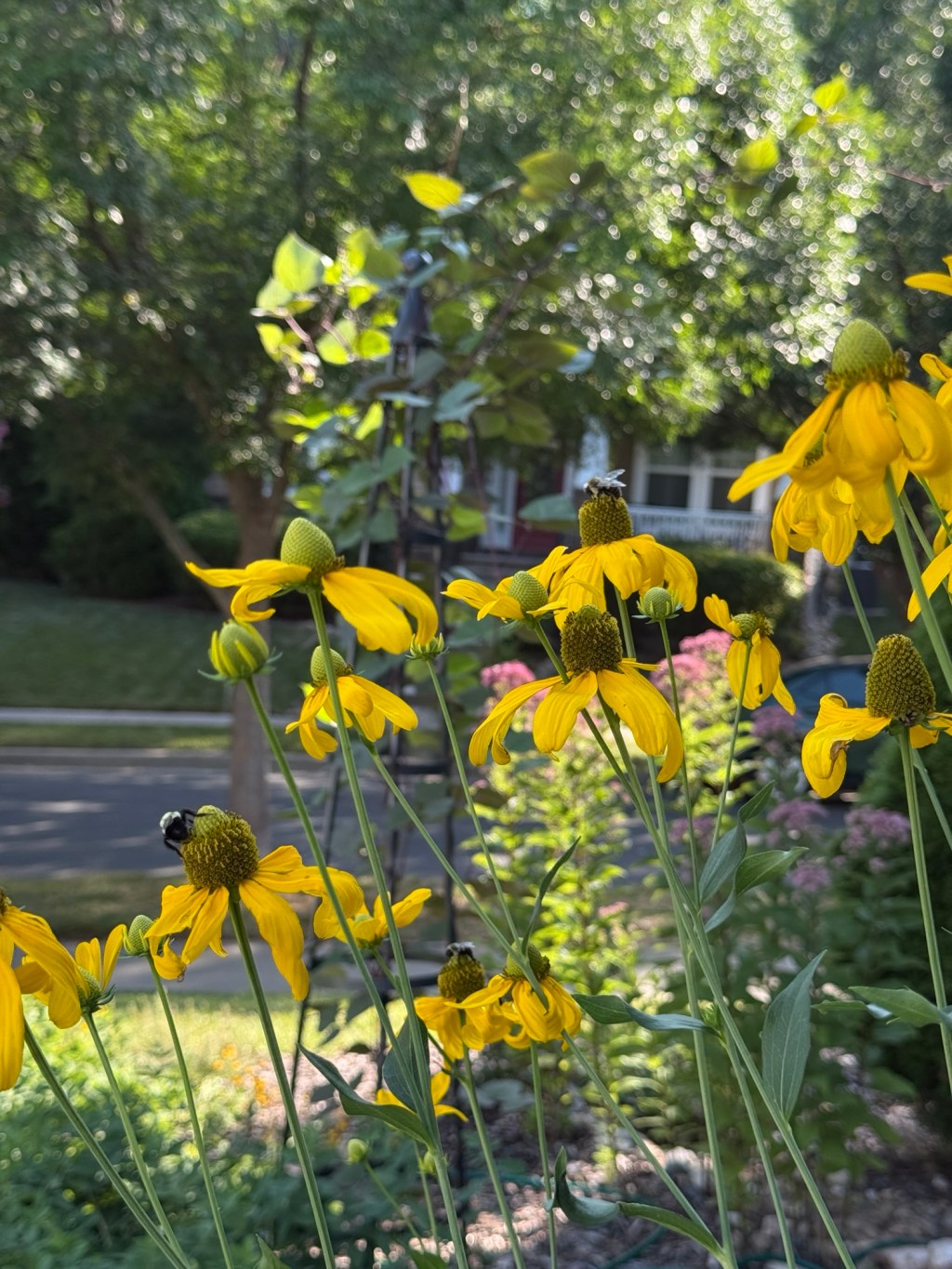
After a drier than normal yet pleasant spring, the heat kicked up towards the end of June and has not wanted to relent. Heat domes, blazing UVs, hardly any rain and yet the native bed is holding its own.
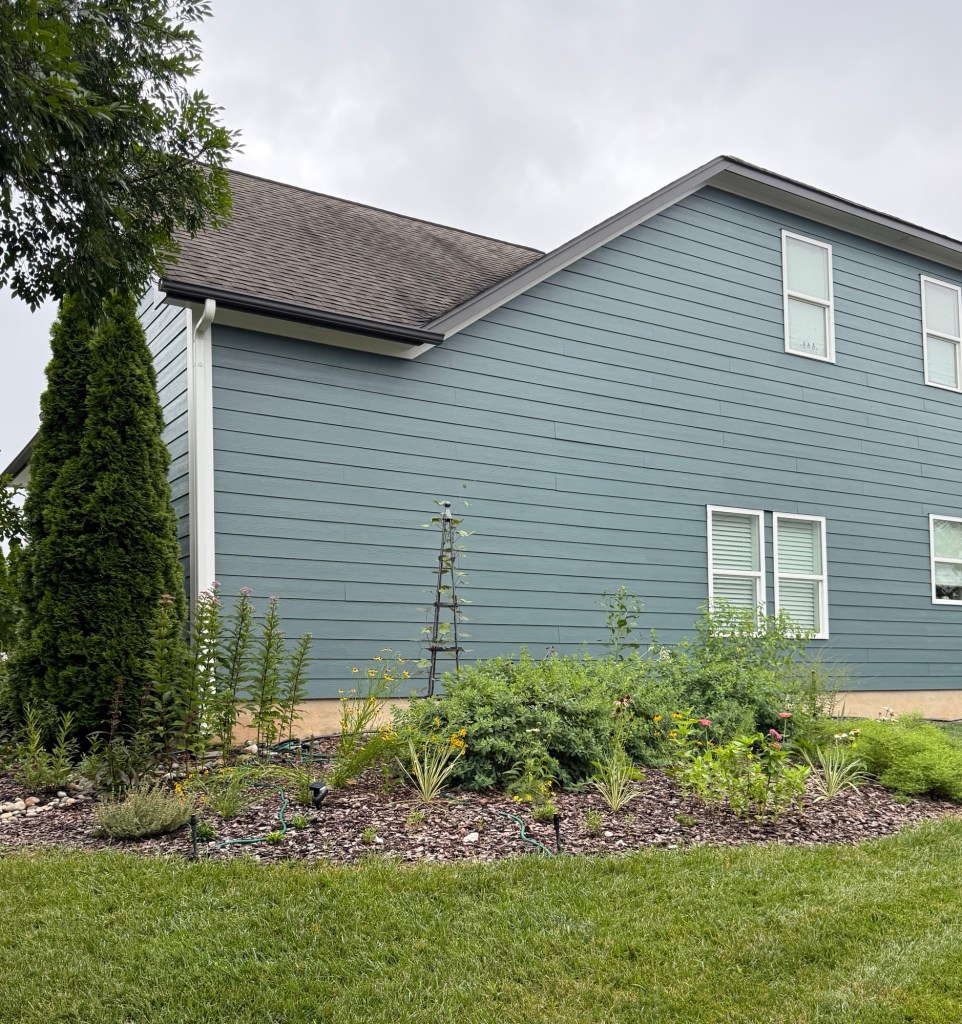
This is the first summer in the ground, in this location, for most of these plants. The echinacea have been slow to bloom but the Fragrant Angels in white are such a delight and the bees do love them. Only wish that I had more! In time, though, all of these plants will fill out then need to be cut back or divided to maintain properly.
Nature does not hurry, yet everything is accomplished. -Lao Tzu
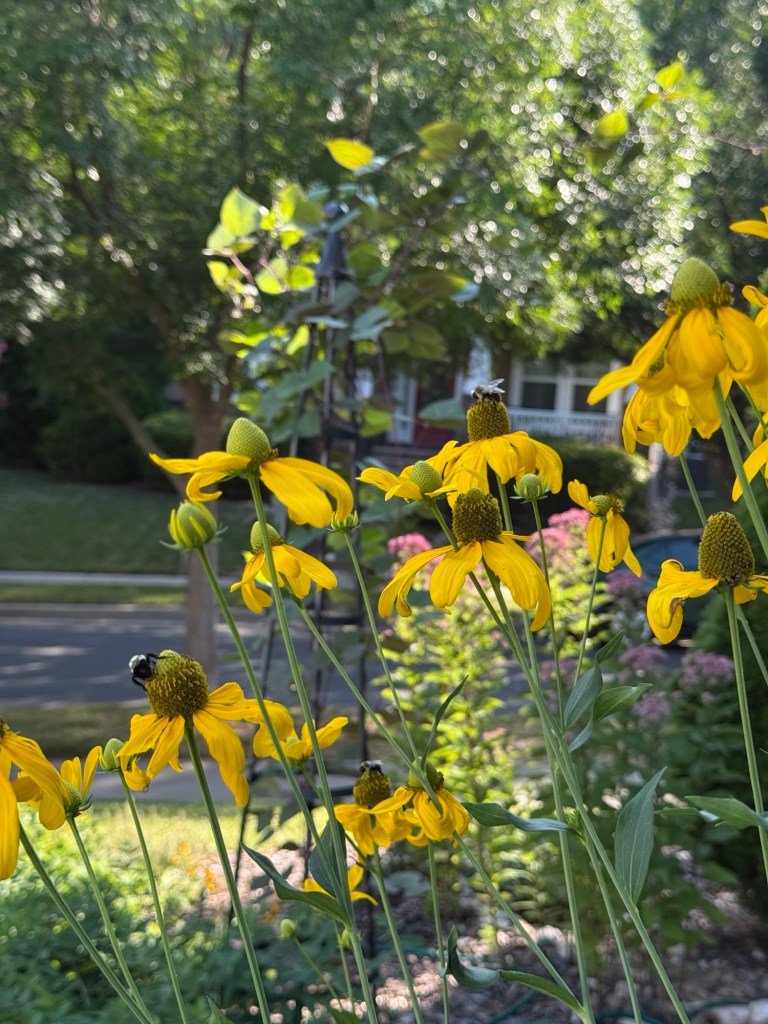
Another favorite of the bees is the Rudbeckia laciniata ‘Herbstsonne’ also known as the Autumn Sun Coneflower. It has turned out to be a top performer. It stands almost five feet tall, sturdy, no flopping like the Helenium flexuosum or sneezeweed, and the blooms are so unique and plentiful. While photographing, I saw no less than half a dozen bees at a time visiting this stellar perennial.
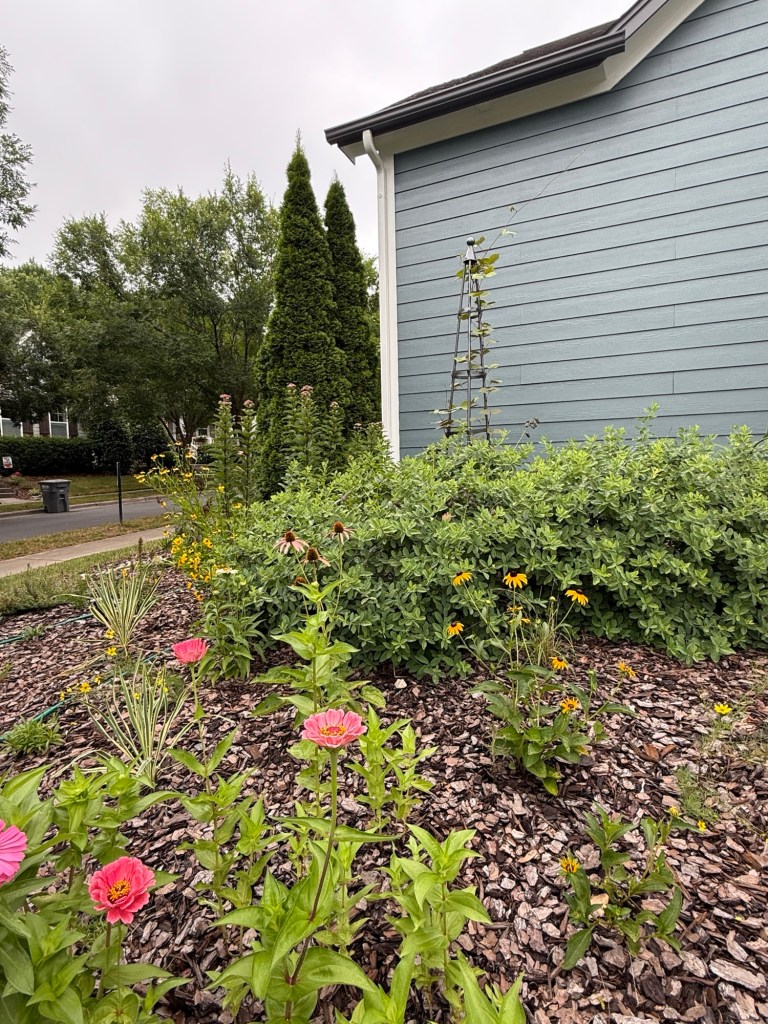
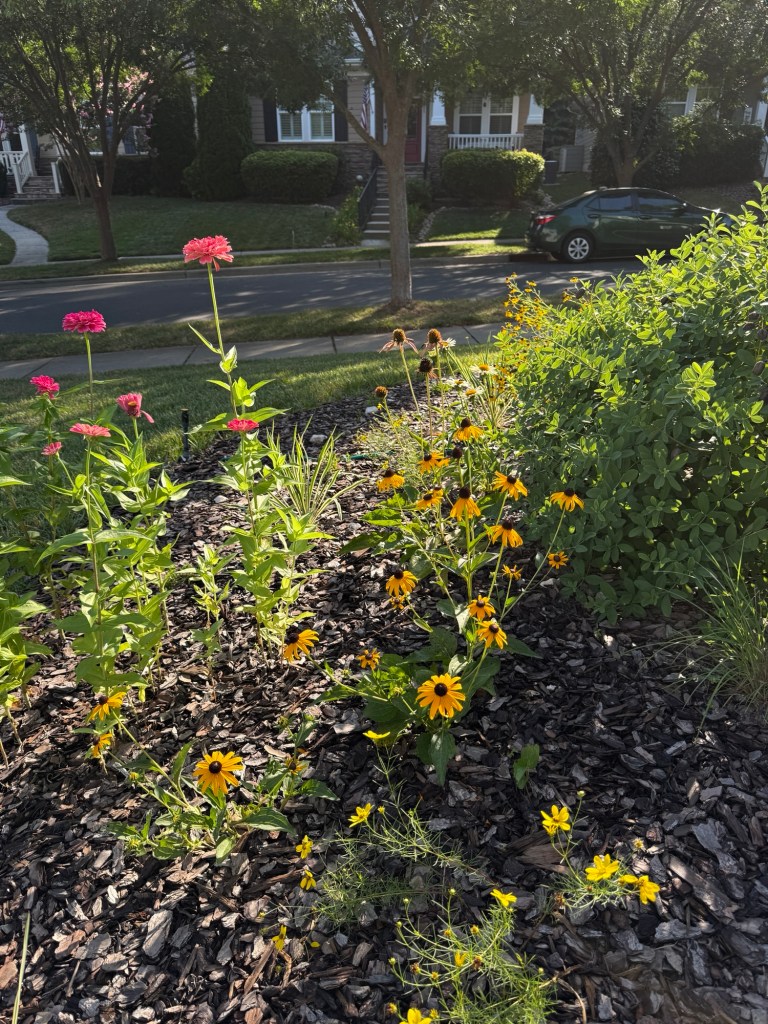
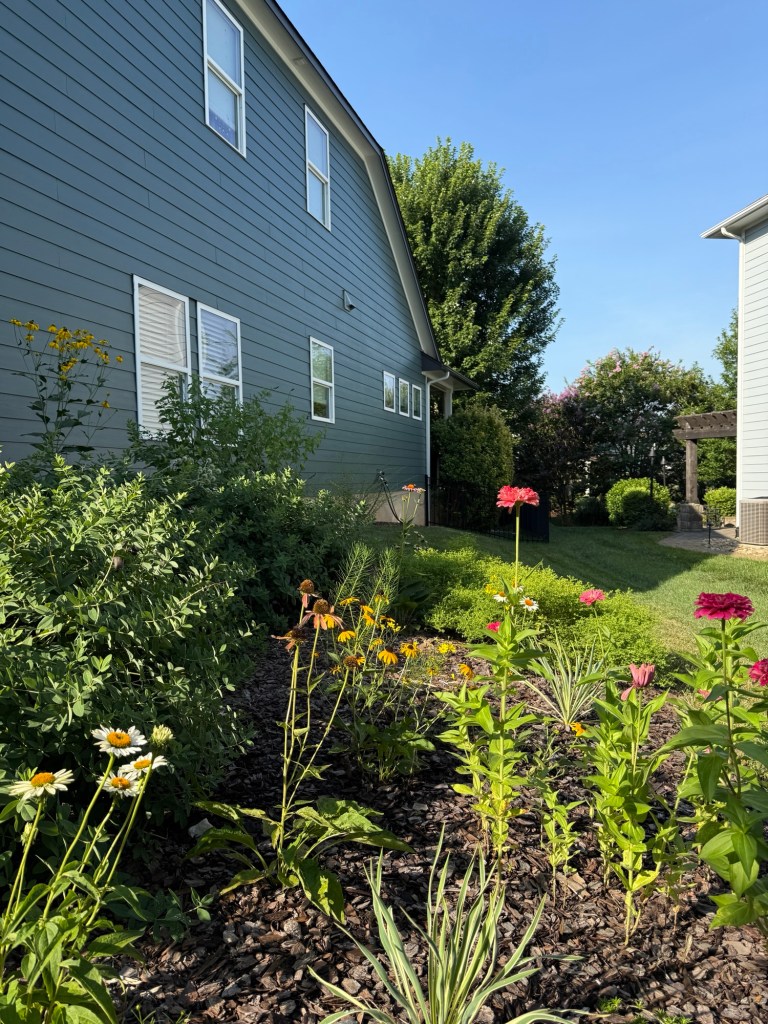
Here are some different angles showing Echinacea ‘Fragrant Angel’, zinnias, and Rudbeckia fulgida in bloom. Also blooming, though very difficult to see in the photo, is the wispy Coreopsis verticillata that I transplanted this spring after having divided three off another plant.

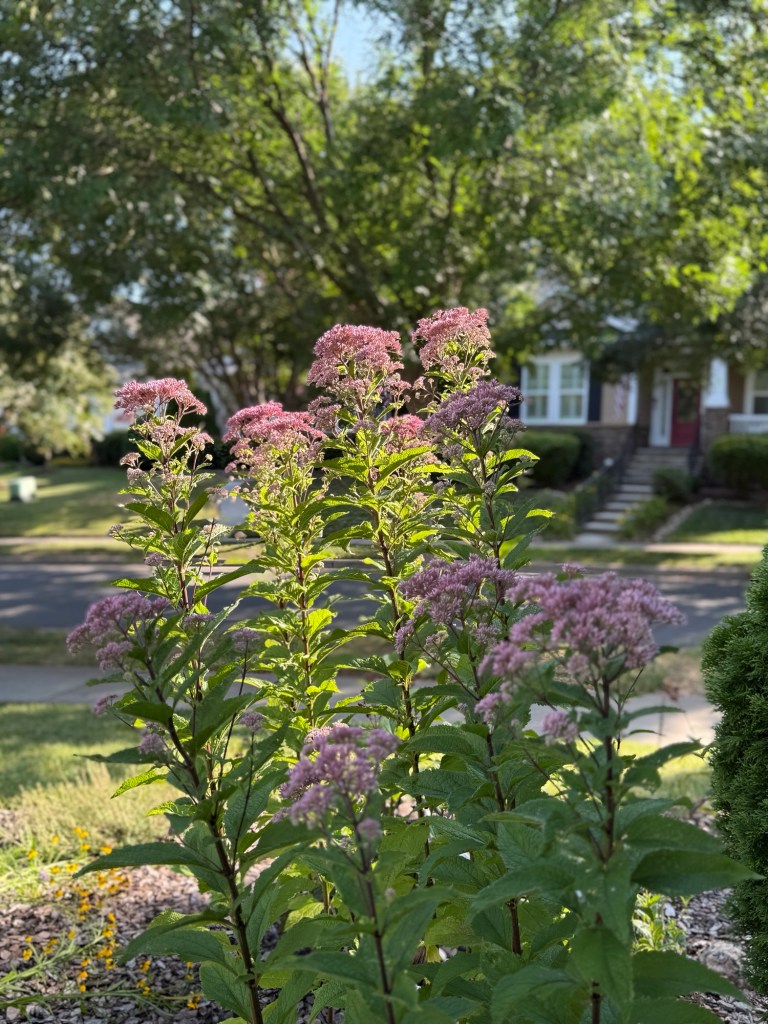
Another pollinator favorite, Baby Joe Pye Weed, is in bloom. It’s a tough plant with tiny, mauve blooms that form a dome of inflorescence, making it a great landing pad for insects.
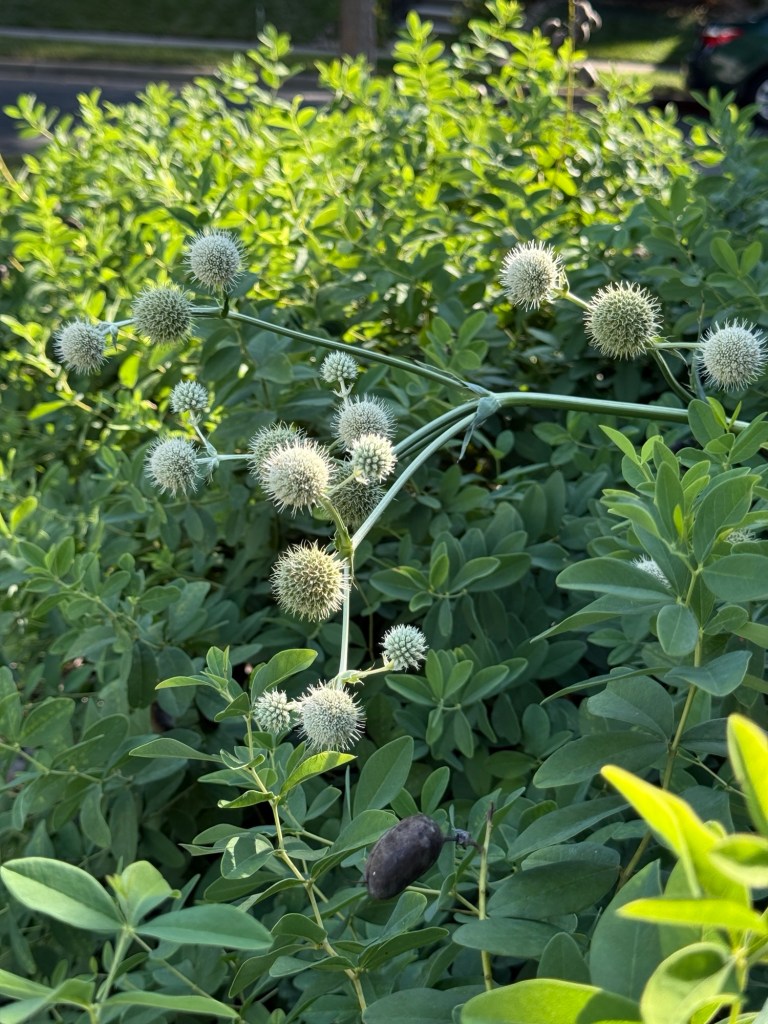
A native plant that I was anxious to try out in my garden is Eryngium yuccifolium also known as Rattlesnake Master. It was planted rear of the Baptisias to provide vertical interest alongside the ‘Herbstsonne.’ Unfortunately the plant was felled over and lies across the Baptisia rather than upright. No worries, as this did not affect its blooming and overall health. I didn’t see a point in staking it and I’m sure next year it will grow straight and tall. I may even add more.
Summer here has been rough on the humans, but the insects seem to be doing just fine. Also in the garden we’ve had frogs, lizards, bunnies, chipmunks, song birds, hummingbirds and even a turtle. My top native plants for hummingbirds are Monarda ‘Jacob Cline’ and Lonicera sempervirens ‘Major Wheeler’, the latter blooming on and off all summer. They also enjoy the blooms of our two Vitex trees, which I do not recommend growing, and are found to be invasive in some states and regions. Red salvia or Salvia coccinea which usually re-seeds itself every year, didn’t come back that much this one. It’s a disappointment for the hummingbirds as the salvia provide extra nectar through the end of summer.
The summer blooms are lovely to enjoy and I can’t wait to see the changes as we approach fall and cooler days and nights.
What native blooms in your garden have made you smile the most?


 Severnista
Leave a comment