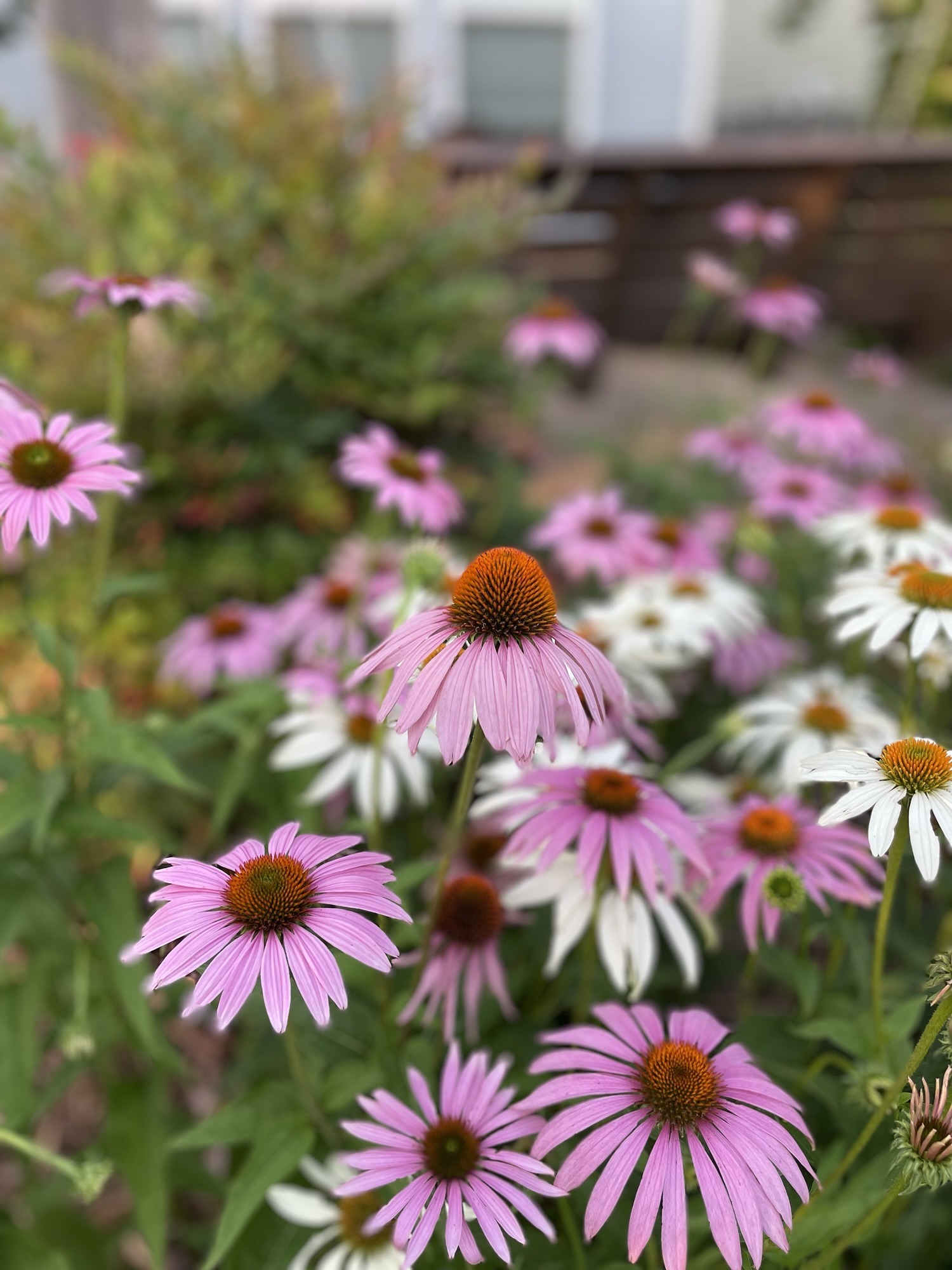
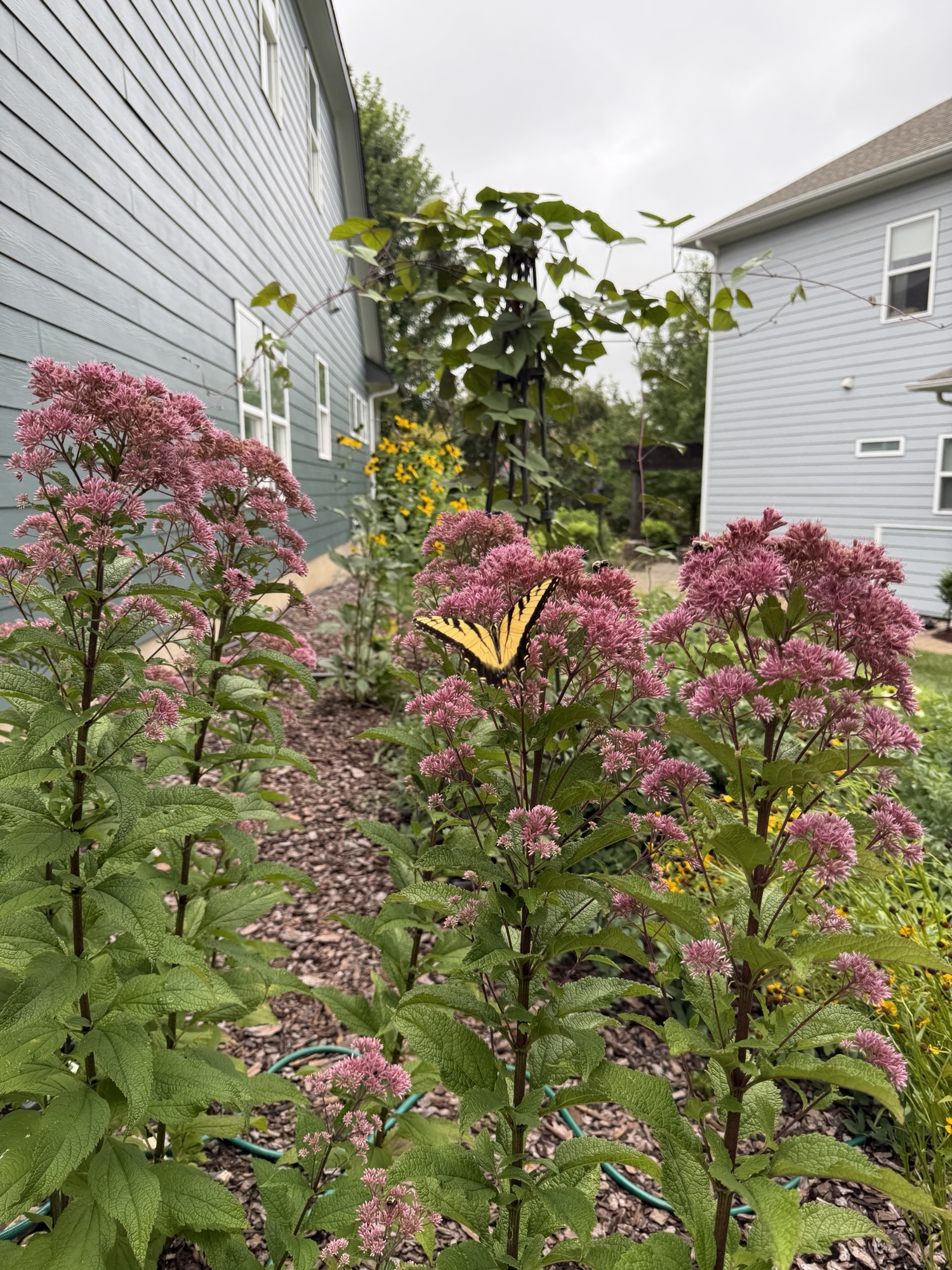
Plants in the new native bed are mostly native. I’ll get to the ‘mostly’ later when I go over the complete list of plants.
In designing my first intentional border from scratch, from start to go to now, I set up a list of priorities for my selections. One factor I didn’t add to the list below is availability, as this will always be a factor in sourcing plants.
Native
Native to NC or even US or a variety of one, not far removed. The USDA Forest Service defines ‘native’ as “a plant species that naturally occurs and has evolved in a specific region, ecosystem, or habitat, without human introduction, and has been present there for thousands of years.” It’s part of a balance that existed before an influx of too much human influence.

Tough
Because I am not a great gardener. I’m a good gardener and only good because I care, try and keep learning despite the mistakes.
This native US plant pops up first in a search for ‘tough native perennials’. Tough can also mean versatile rather than physically tough with fists, if that image happens to come to your mind.

Low water, because
1. Regular, supplemental watering past ‘year one’ of a plant’s establishment probably means it’s not the best ‘native’ choice for your environment.
2. It can be costly and unsustainable, especially when clean water or water at all is such a commodity.

Part sun
As mentioned before in A New Native Bed: Patience and Planning here, this was a unique sun exposure situation on the northwest facing side of the yard bookended on two sides by two-story houses yet still areas receiving quite a bit of sun and some hot, late afternoon sun.

Something old
These are plants that I’ve had some experience with growing in my garden previously or currently therefore offering me a little predictability in growing culture but this of course is no guarantee of success in this location or scheme. But can you imagine a small home gardener like me beginning with over twenty new species and fifty individual plants with no experience of what they’re like. That’s a big investment for all ‘first-timers.’

Something new
This is also my chance to grow and experience new-to-me plants. These are plants that I’ve never grown before but based on research should fit into this scheme based on different attributes. It’s a way to test how a plant performs in its new suburban environment. Is the plant going to be a good fit here or should it be left to the prairie? It’s another opportunity for me to learn and grow my knowledge base because I am not a great gardener.

Things that will get along
This concept also reinforces the idea of native plants growing together as they basically would have chosen for themselves in their native environments.
These are the species that make good neighbor plants to one another in the environments that suit them best (in the years before we laid waste or exploited almost everything in sight for our needs almost exclusively- eek, don’t hop on that train).
Yet as this is a residential border in a neighborhood with an HOA, I’m still going to implement some design constrictions so that it has a definitive structure, is tidy and manageable. It can’t be a wildflower meadow. It needs to look purposeful with some recognizable structure.
In addition I will have to keep any bossy plants in check, evaluate how much time I spend having to keep them in check and if it’s worth it. Finally, remove altogether if necessary. That’s also what is meant by ‘getting along.’ Showcasing one or two species together is a stylistic approach and does look fantastic but I want variety, a little diversity and to use this time and space to learn.
It’s all a learning garden.

Year round interest
What’s the point of a garden if it doesn’t evolve and change and flux and capture the lighting and hopes and dreams of every season!! Yes, there should be year round interest, great color combinations and striking architecture. I want people to walk by and see something new and different and not that another green shrub just got a trim.
Have you been thinking about starting a little patch for pollinators in your garden? Are you looking to just down-size the grass and go bigger with natives to boost your property’s ecological value? If so, check out how I began to do just that here in A New Native Bed: Patience and Planning .
I hope this information helps in planning your borders and beds. Also see my Native Garden Reference Links here, it’s being updated all the time.
Coming up next is A New Native Bed: Inspiration



Leave a Reply to A New Native Bed: Inspiration – SevernistaCancel reply