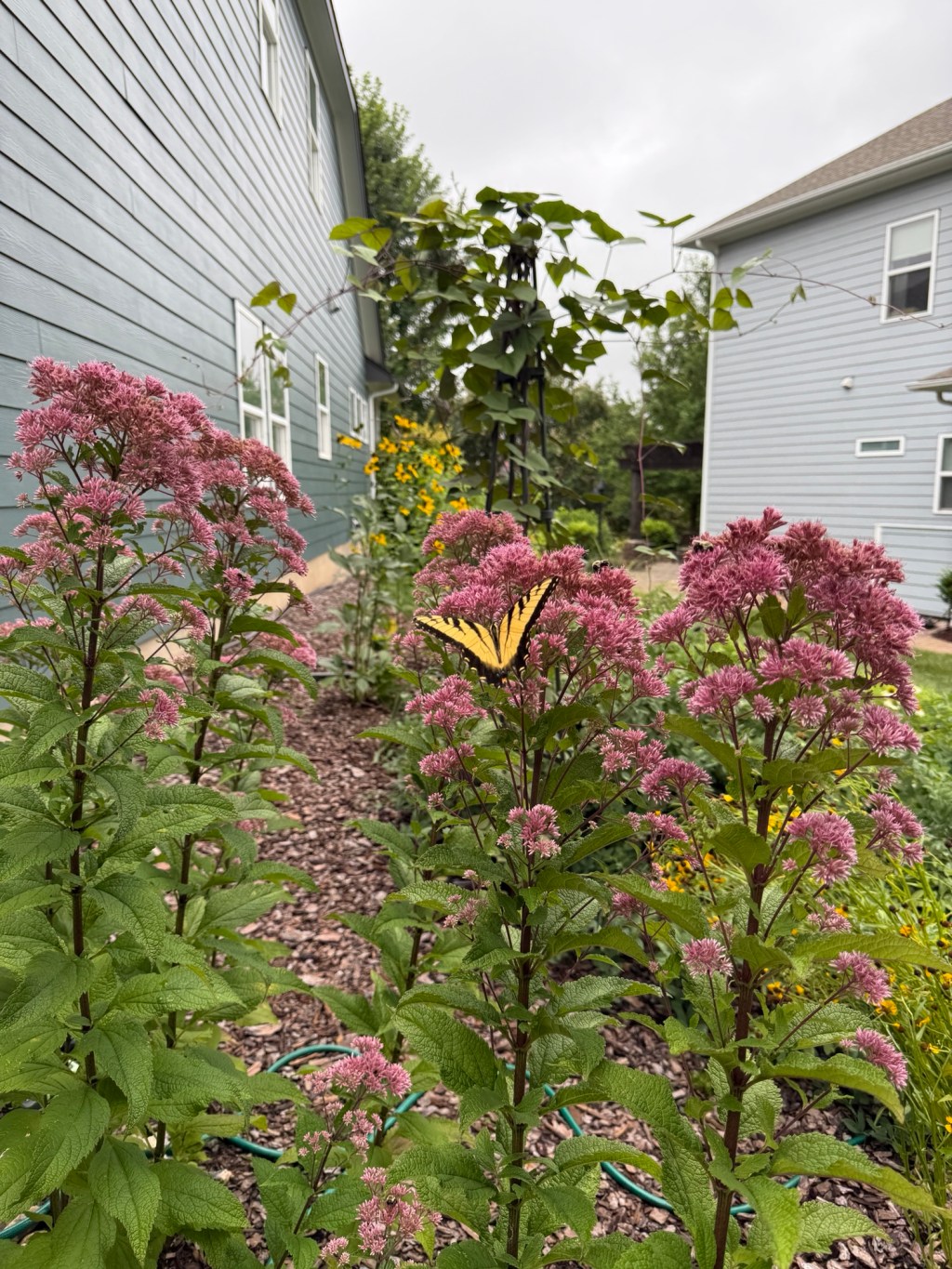
The great thing about a native perennial garden is that it can be remade and re- designed. It doesn’t have to be this fixed thing on paper that doesn’t change.
In fact, every garden deserves this distinction. This garden editing becomes a requirement as plants grow and spread; struggle, get absorbed and fade; and lighting and weather changes over the years. The garden is meant to evolve and be dynamic. After all, a garden is a reflection of cooperation with life: ourselves, the soil, the plants, animals, insects and microbes. It’s a relationship.
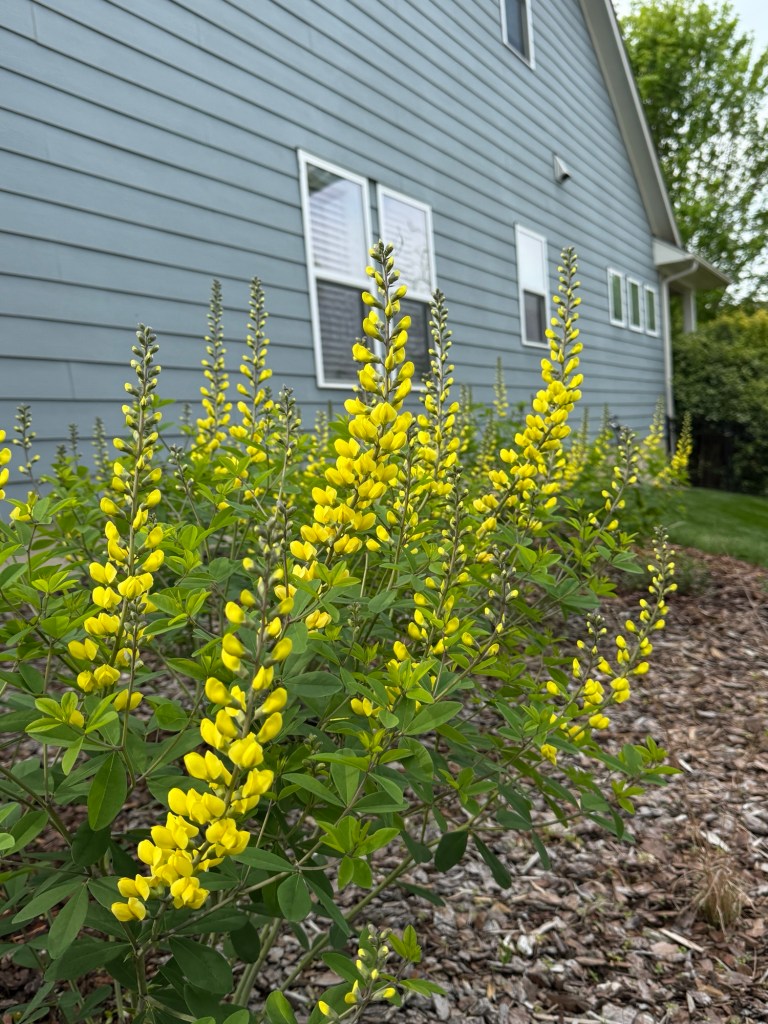
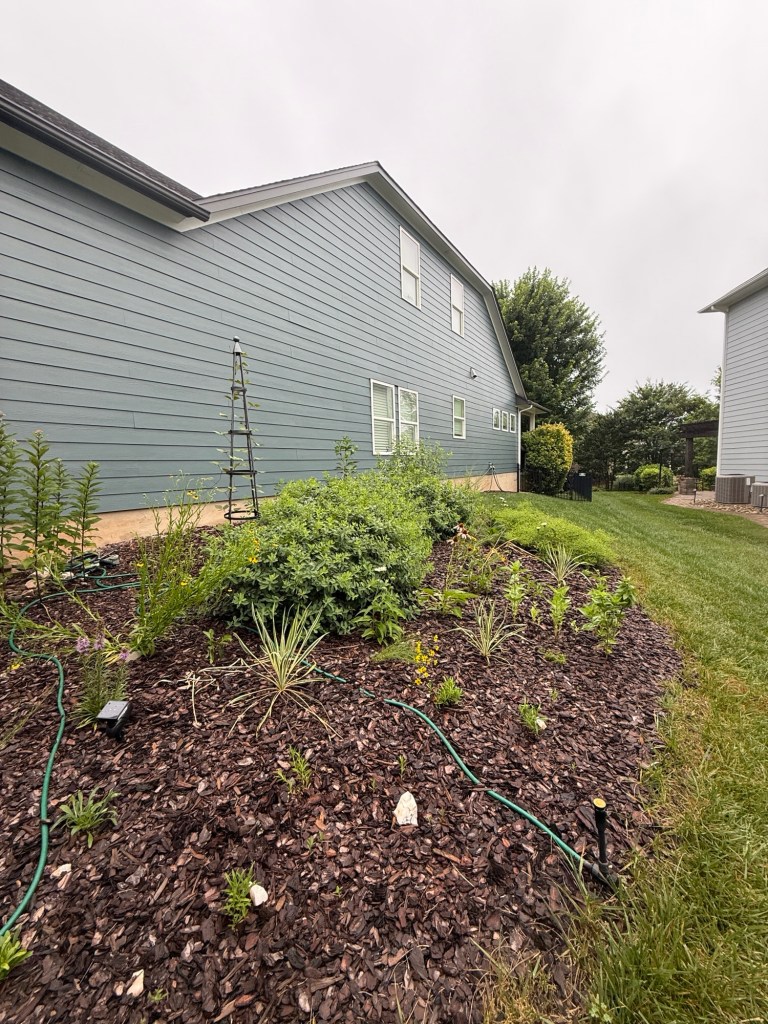
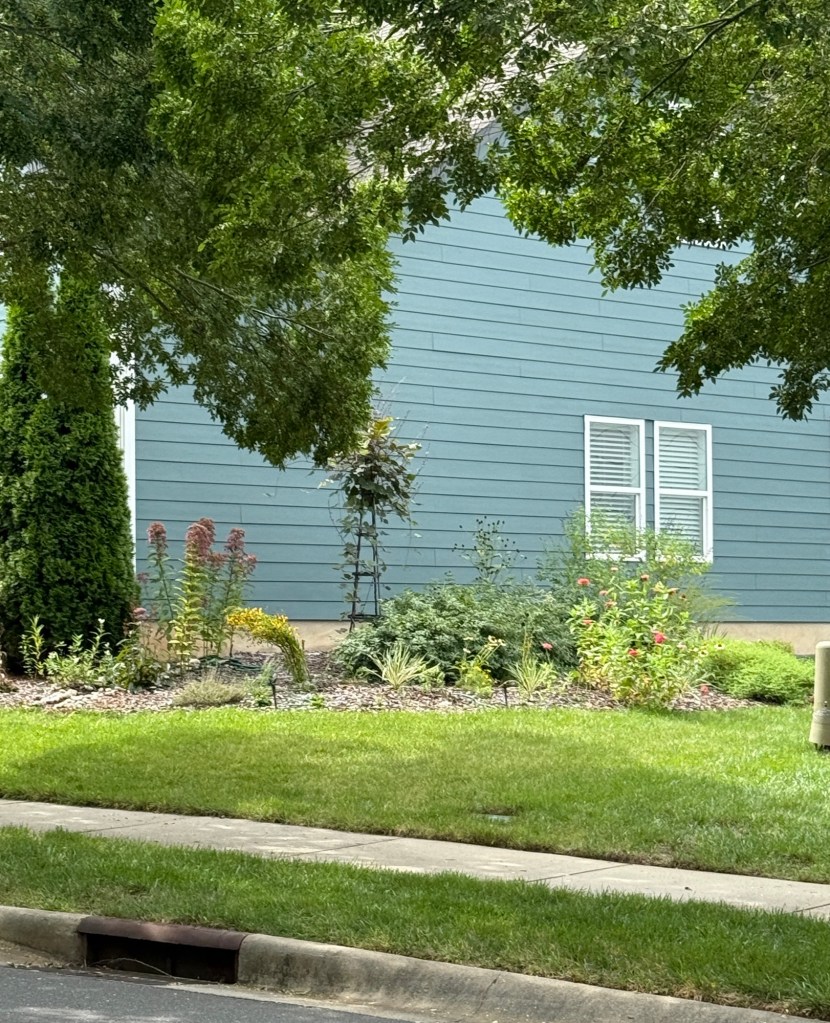
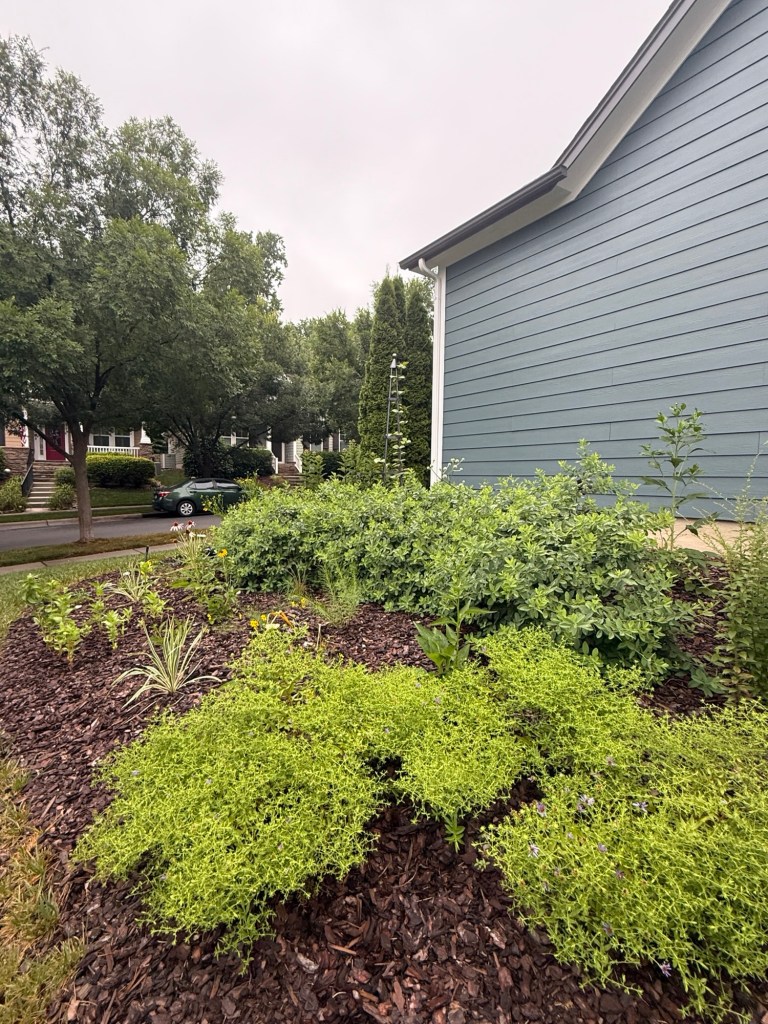
So enter the Garden Edit. This activity consists of five stages, from Evaluation to Appreciation. I’m going to apply this framework to C2: The New Native Bed that I established in Fall 2024 and Spring 2025, find it here and from the very beginning here. It’s been just over a year since inception and early spring is a good time to take inventory and change up where it’s headed and what’s needed.
Evaluation
I’m looking over the multitude of photos that I’ve taken over the last year and I’m seeing what plants had a strong start and which ones just didn’t get going. I’m seeing what needs to be removed or just moved. I’m seeing what I like best and what I can do better. What color palette I’d like to add, what textures and dimensions. I’m also changing up my overall strategy and next investments because a garden requires both.
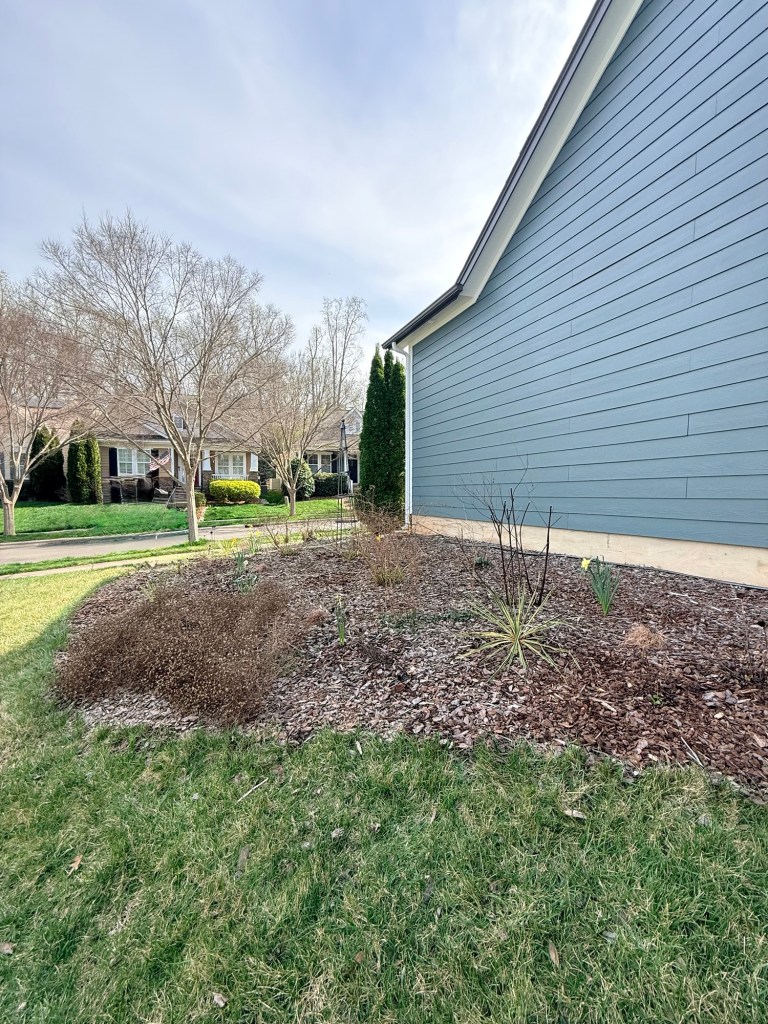
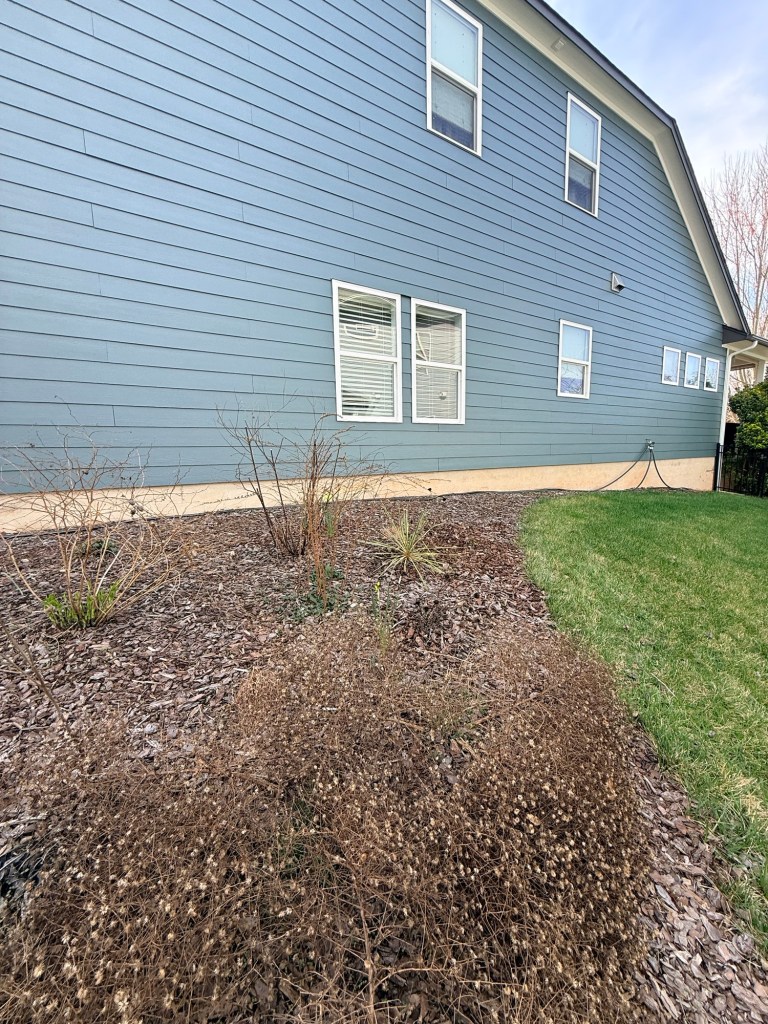
Note: We’re also re-working our main front yard bed called A2 which connects to C2 as the beds merge around the front corner of the house (facing NW) and across the downspout area (known as C1). Because of this, I’m moving a few plants from A2 into C2, particularly Echinacea ‘Magnus’. A2 will be reduced of nearly all its current plant residents as we start with a fresh and hopefully more informed dry shade garden design for this very small, challenging space. More to come on that garden edit later.
Remove, regroup, add, move
One of the most obvious things that this bed needs is the addition of some more year round vertical interest and background textures.
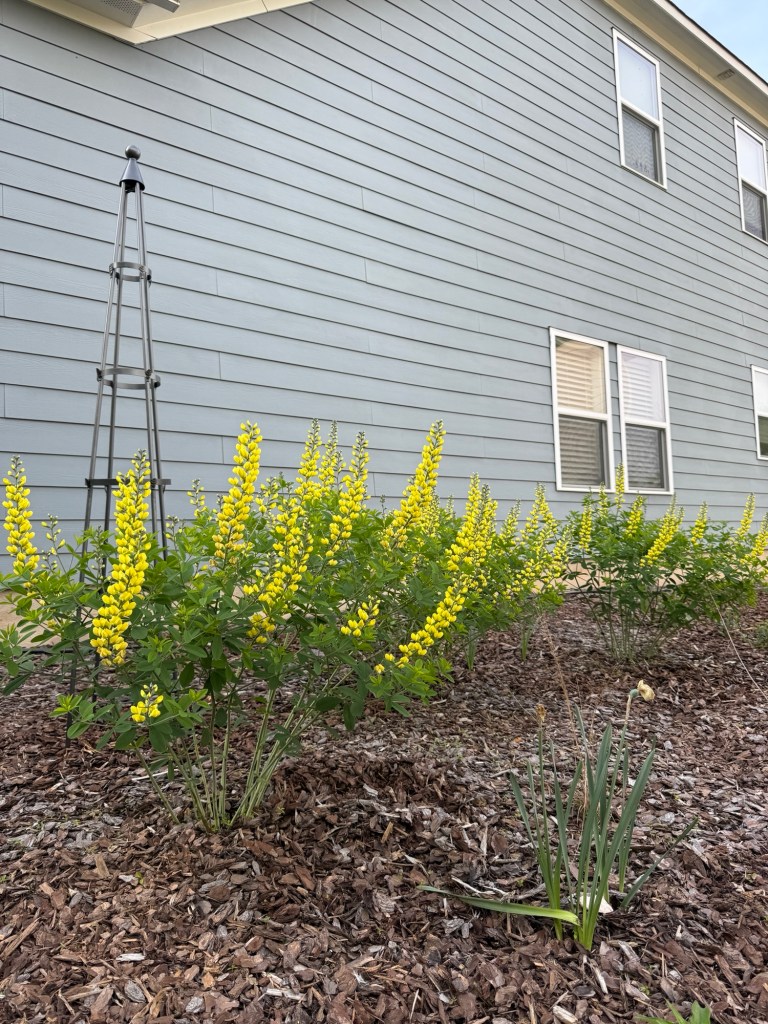
I’m thinking it needs some large grasses! Just behind the Baptisia, a few native grasses can offer height, texture, movement, seasonal interest and depth. Because the plantable space behind the Baptisia is closer to the house, these will receive part-sun so I need a grass that can do okay with these conditions. I also need something that grows narrow and more upright as there is also a designated walkway along the wall of the house behind the bed.
Switchgrass (Panicum virgatum) and River Oats (Chasmanthium latifolium), both native to my area, will tolerate part sun. Switchgrass is more readily available in the horticultural trade with several cultivars. A local nursery may have more mature Panicum grass (and for more $) if it’s a cultivar. I’m thinking three. River Oats may be too much of a seed spreader for my small neighborhood patch, so I’ll give these a miss.
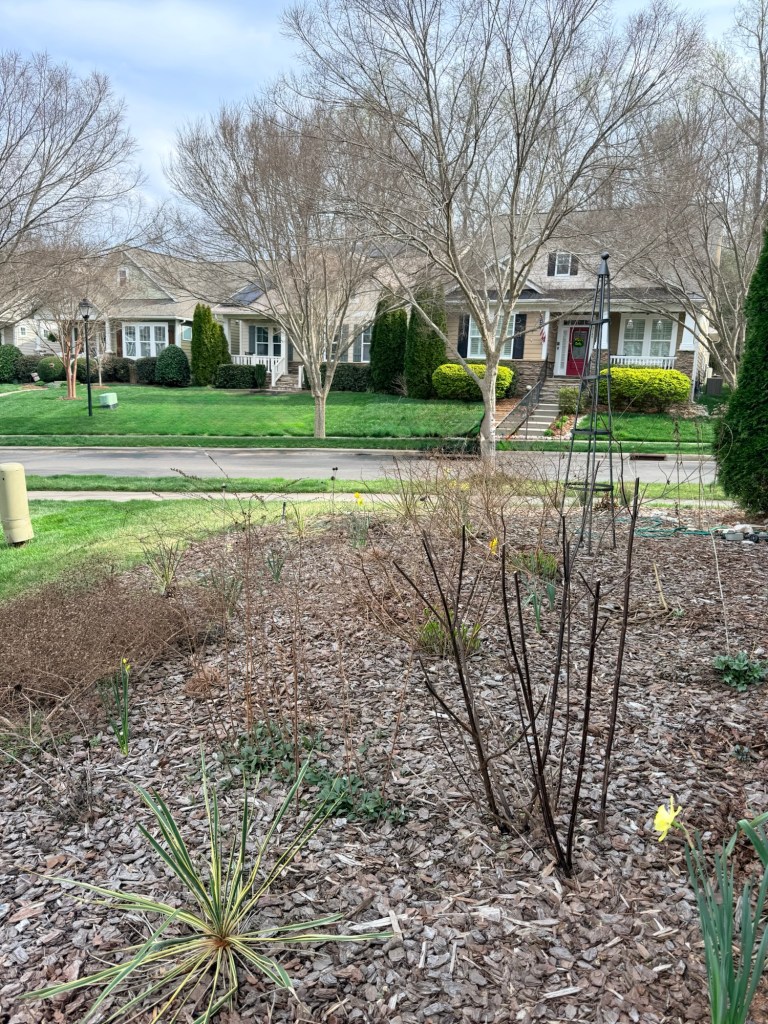
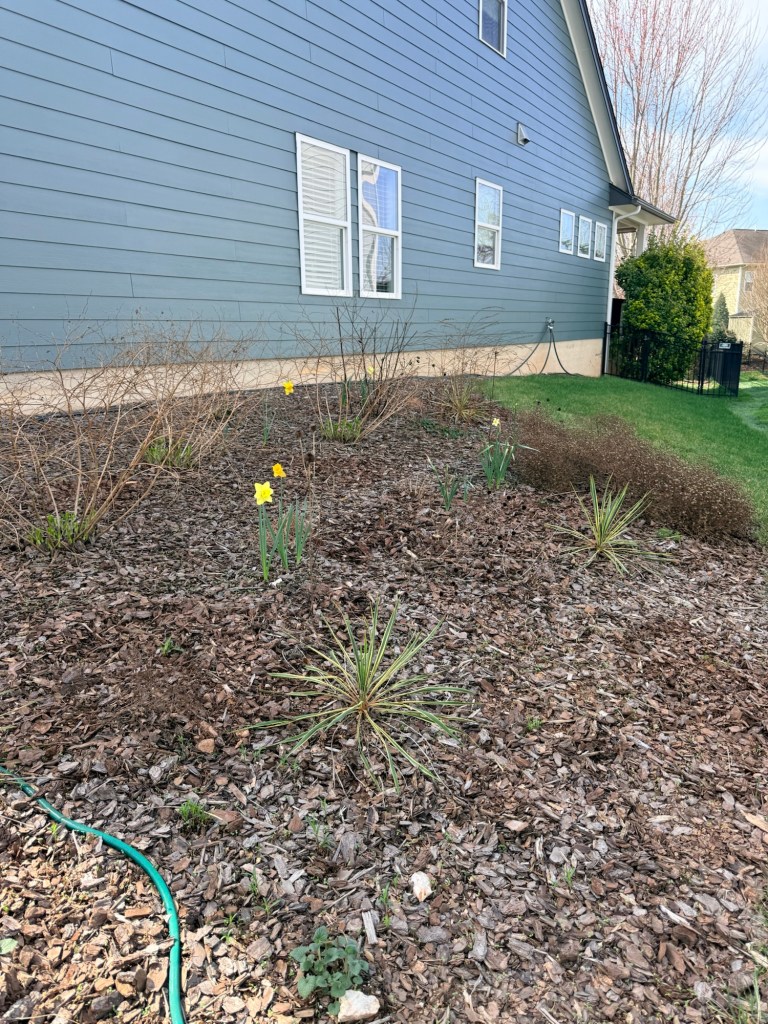
To make room for Panicum, I’ll need to remove the ‘Amistad’ salvia from the back right edge of the bed. But that’s okay because the salvia truly needs full sun and though I have seen hummingbirds checking it out, it looks leggy and could use a better home than what I can give it here.
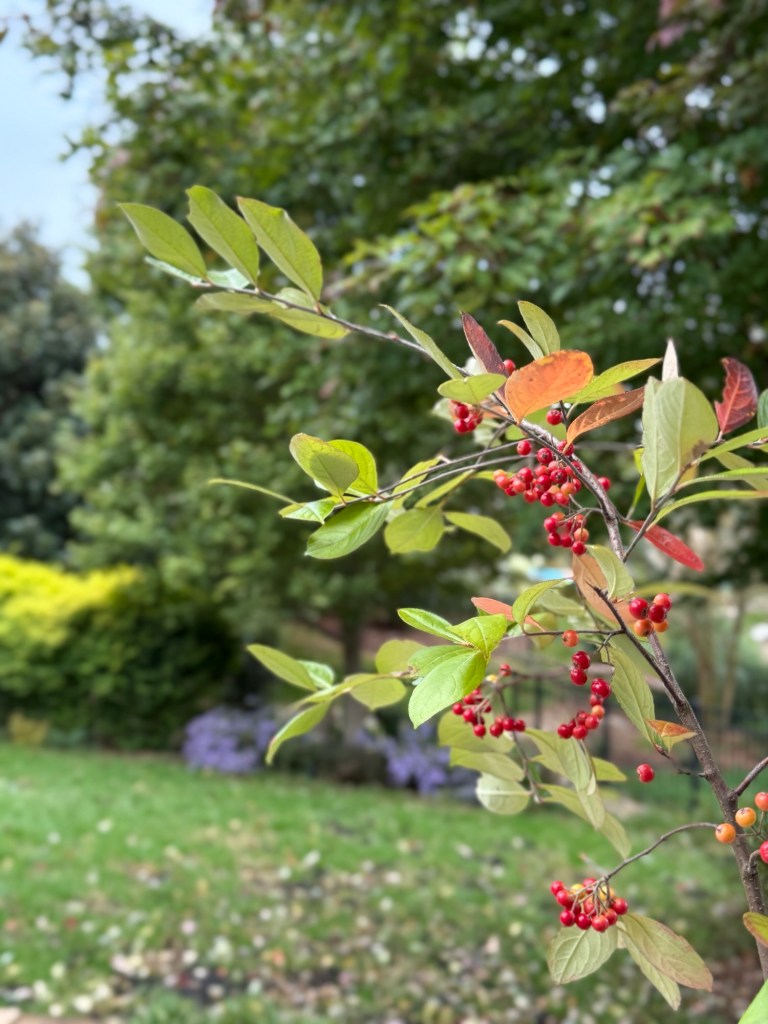
Another native I’d like to add in this area is Aronia arbutifolia, or red chokeberry. It’s a multi-stemmed, open spreading, deciduous shrub that can tolerate part-sun. It offers spring blooms, fall color and showy red berries in winter. It too may be tall and lanky with a vertical growth habit of up to ten feet and three to five feet wide, but with the addition of grasses around it, I think it’ll fit in nicely. The pollinator/cottage garden can also be a woodland edge garden.
With lots of open room between the perennials I’ll add in graminoids like Prairie Dropseed (Sporobolus heterolepis) and Purple Love Grass (Eragrostis spectabilis). I’m further convinced of this gardening strategy from Lisa Likes Plants, a gardener, YouTuber who focuses on native plants in her landscape designs. These smaller native grasses will help frame my native bloomers while also offering some rock solid ecological benefits for insects. Both are host plants to different kinds of butterflies. Birds can forage the seed heads, and as the grasses grow, use as cover.
While adding graminoids is similar to the matrix gardening that you might find in prairie style gardens or restoration areas, I’m seeing it as a practical strategy for the regular homeowner. Graminoids, herbaceous plants with grass like morphology including grasses, sedges and rushes, help fill in open space while other plants are growing. They help reduce the need for mulch, suppress weeds and they add that very important ecological value.
Nowadays as yard plots are becoming ever smaller on average, understanding how to use native plants, how they will perform and what benefits they offer, are important for the typical home garden even in it consists of containers on a balcony. Lisa Likes Plants states that she uses around 40% graminoids for her typical garden bed designs. And I can really see where they are needed in my garden edit! Find Lisa Like Plants listed here under Landscape Design.
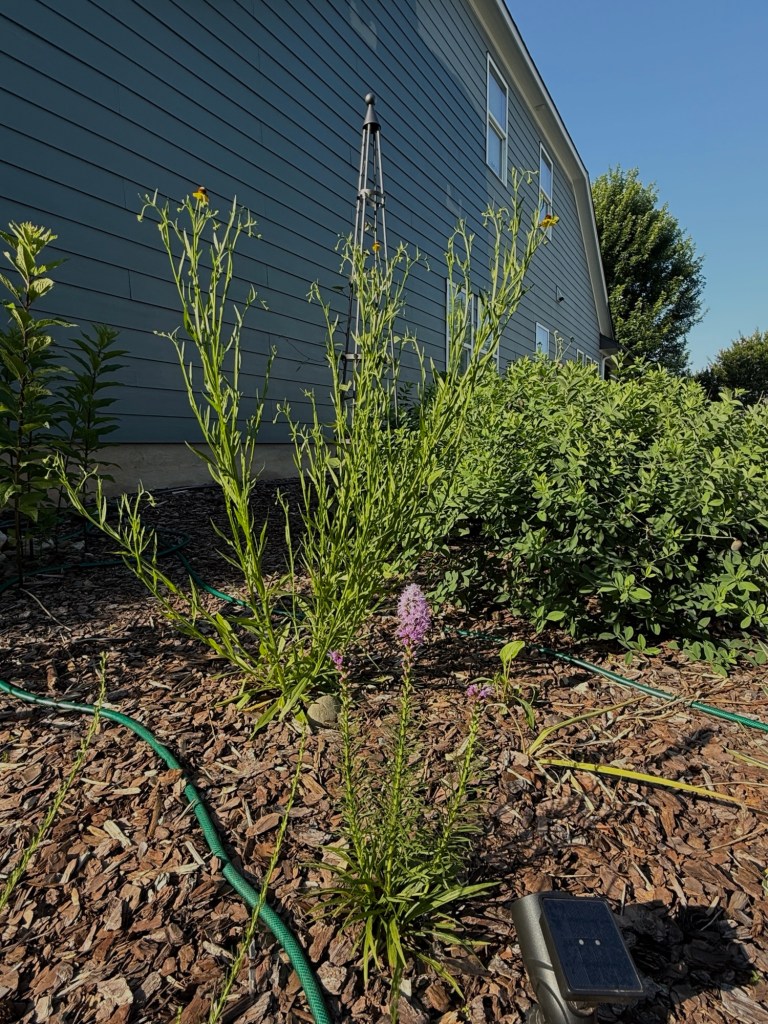
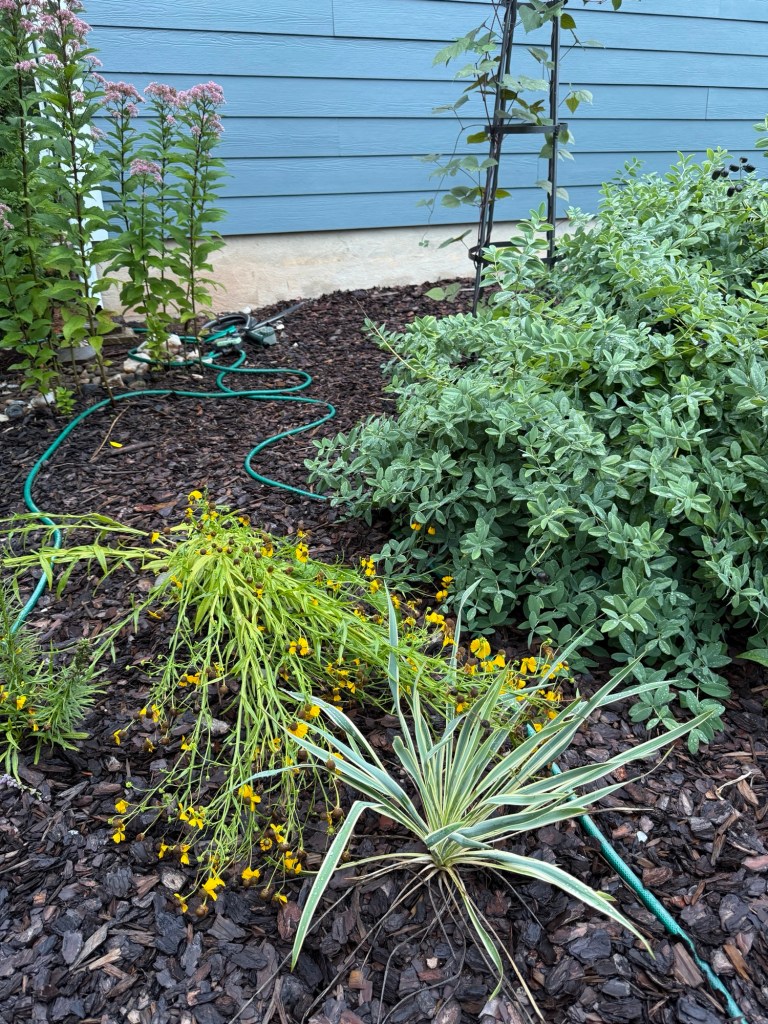
I know the design of C2 is busy with more plant varieties than it probably needs to be an easily approachable, cohesive and neighbor (or observer) friendly pollinator garden, but this is my experimental garden. This is research. I needed to see how these plants would grow and behave in real world locations and scenarios. And finding real world applications and examples, especially on a small scale, is harder than you think! I’ve had to create my own examples and build first hand experience.
No matter what, gardening is always full of experimenting, learning, delights and failures. But that’s okay. We have the power of new understanding and the Garden Edit.
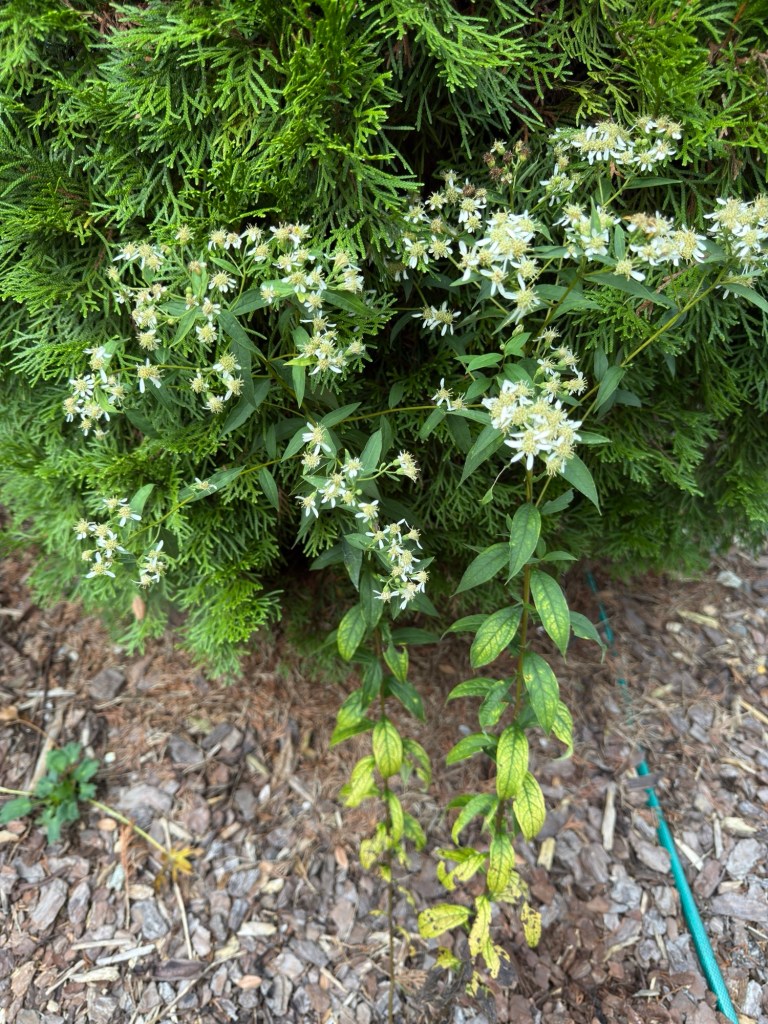
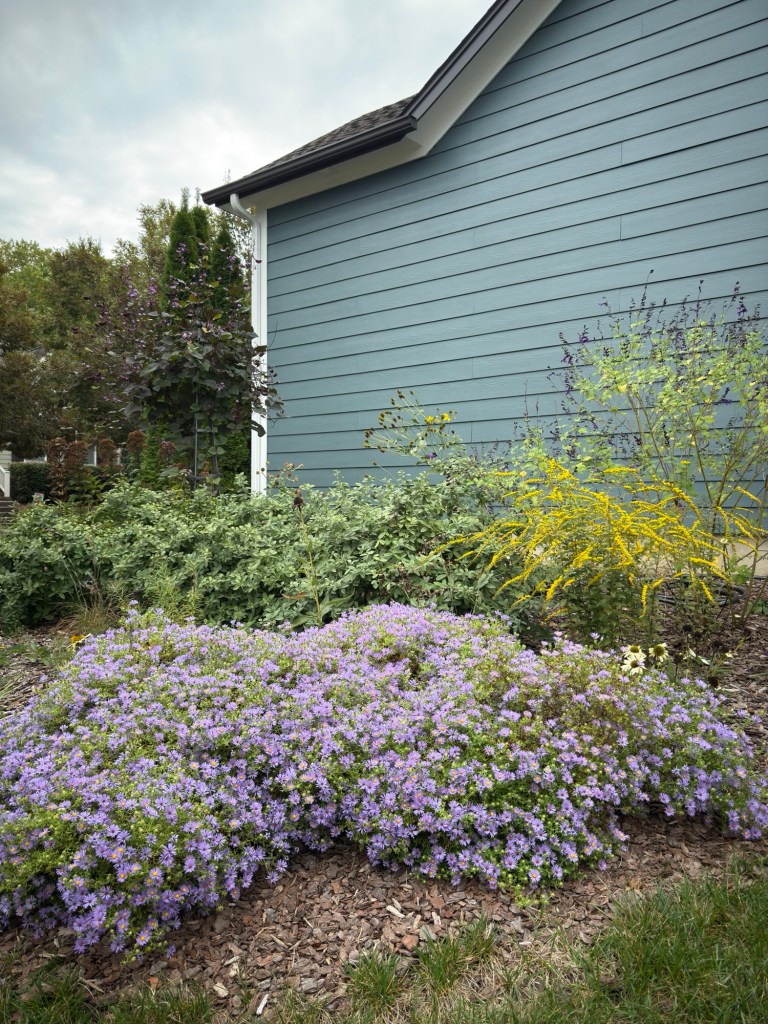
Plants will need to be moved and given homes elsewhere in the garden like this Flat Topped White Aster (Doellingeria umbellata) that I planted too close to the Arborvitae in A2. While it’s actually doing well in this location for a first year plant, it will have to move as the bed is being overhauled.
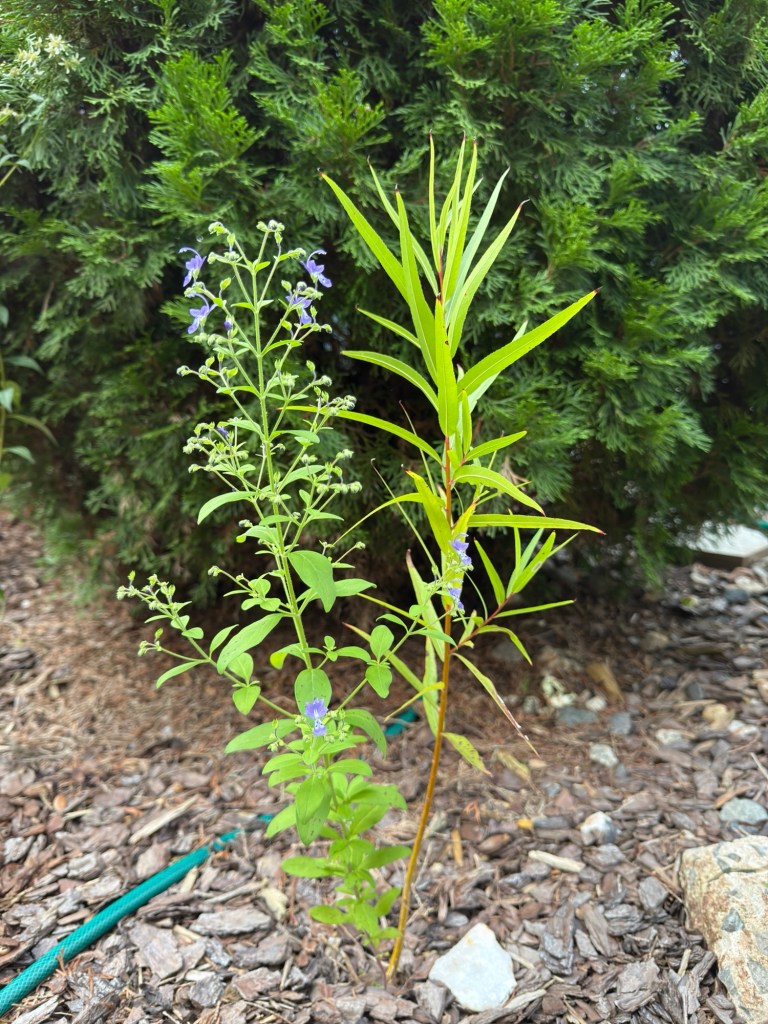
Another plant that I’d like to add to C2 is Monarda fistulosa ‘Claire Grace’ as I recently saw a very compelling photo of this paired with Agastache foeniculum and it looked awesome! Agastache was an unexpected find and addition to C2 in the fall of last year. As my Phlox pilosa was being ravaged, I had extra space to fill in so these pollinator magnets could not be passed over when I found them at an end of season sale at my local botanical garden. The purple of the Agastache will complement the bright pink of ‘Claire Grace’ and be quite stunning.
Monarda are also hummingbird food so that covers the loss of the Salvia. I also plan on planting a Lonicera sempervirens vine under the obelisk. Last year I grew Purple Hyacinth Bean from seed to cover this trellis, now I’m going to commit to the vining native that readily supplies red, trumpet shaped blossoms which hummingbirds adore.
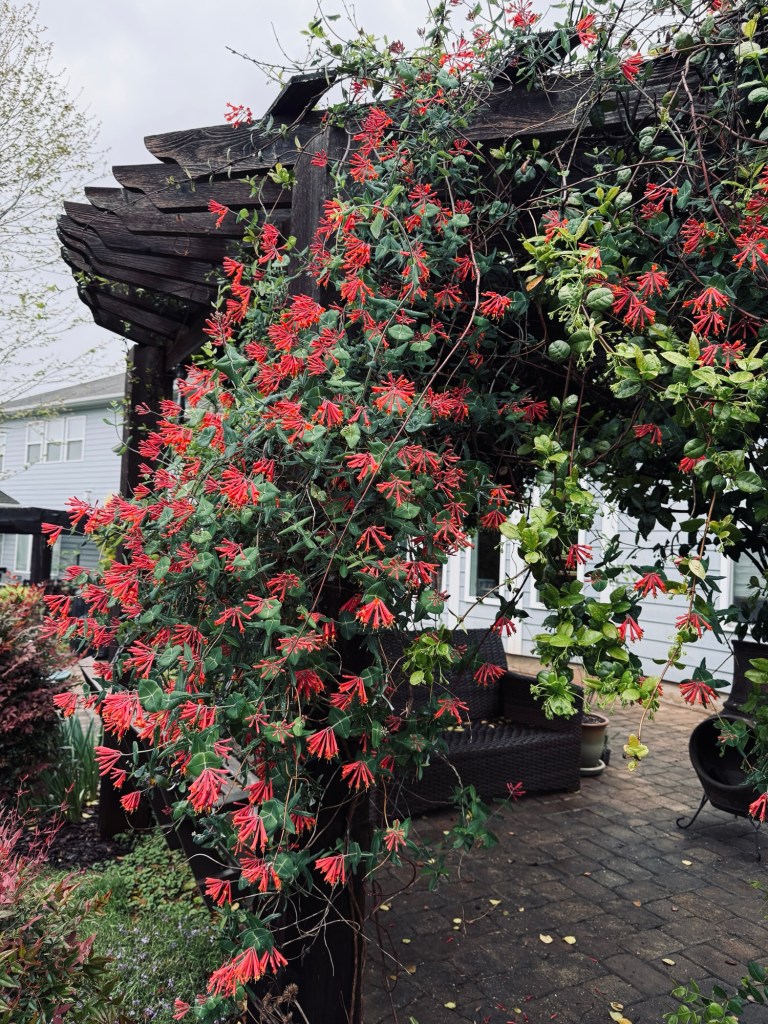
Also known as Trumpet or Coral Honeysuckle, L. sempervirens is a beautiful, long blooming, part evergreen native that will probably outgrow this obelisk trellis. For the delight of the hummingbirds, I think I’ll still add it. The red blooms will be striking against the predominantly purple, yellow and white flowering plantscape of C2.
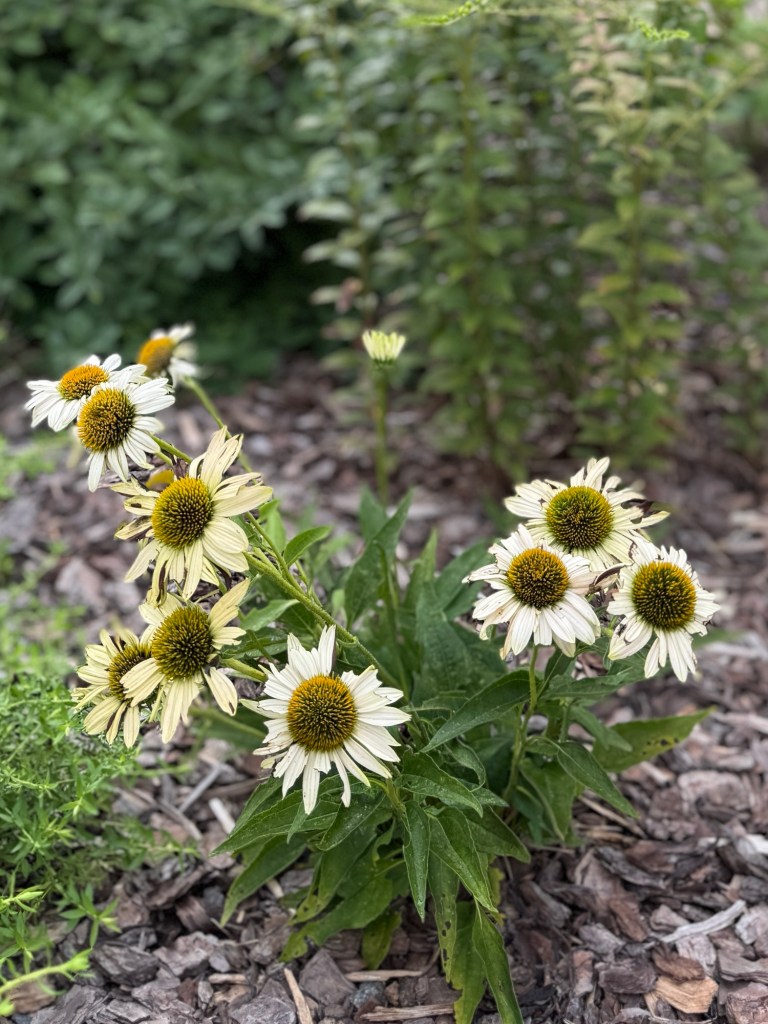
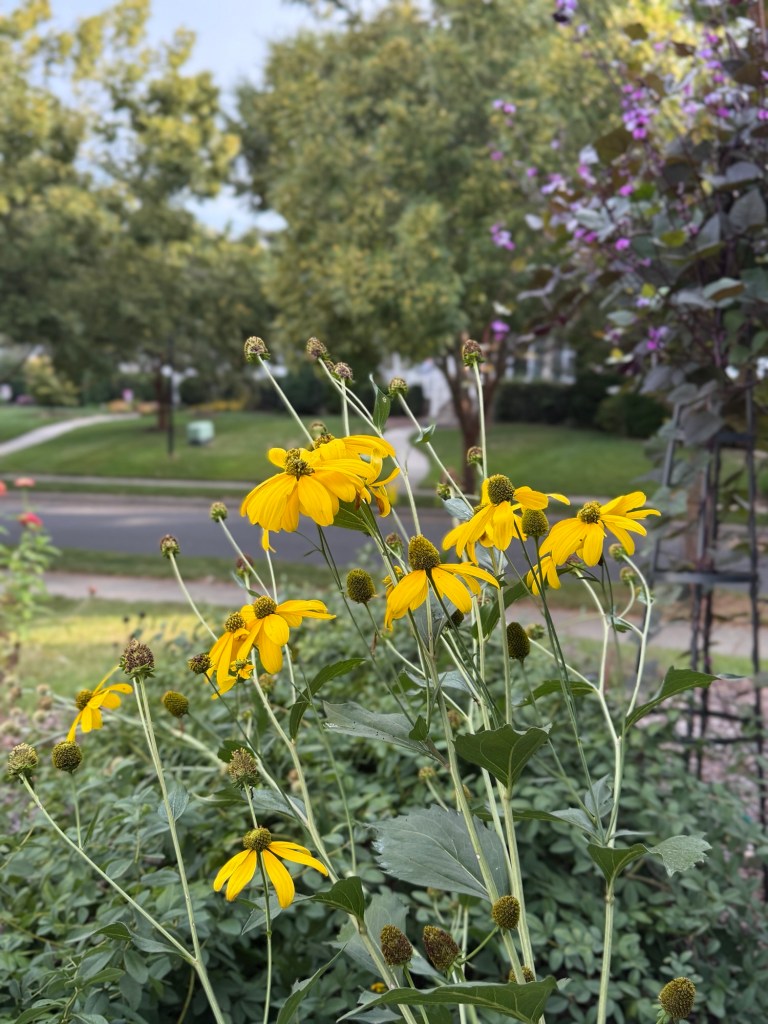
Another edit is clumping the Echinacea together into small groups rather than spread out and waiting for them to fill and mature. I have two different cultivars of Echinacea: “Fragrant Angel’ and ‘Magnus’. These were originally planted as individual plants in an alternating pattern across the mid-ground of the bed in front of the Baptisia. I decided to move like closer to like and make small drifts of each kind. I probably should’ve started them out this way but I often fall into the trap of planting too sparsely. I am on a budget and plant expenses add up quickly! On this line of thinking I’d probably stick to planting straight species Echinacea purpurea and growing from seed. Skip the fancy and expensive cultivars!
So these are just a few ways that I’m editing to improve the design, fill in space, add more ecological value and make plans for next stages.
Maintenance
Now’s the time to start weeding (it’s March). If you’re like me and have gaps between plants you’re probably having plenty of weeds pop up. Mine are mostly Chinese Elm tree seeds. Our neighborhood street is lined with them. When I planted my perennials I disturbed the soil and so now have a ton of tree seeds growing right at the base of every single one. This is where I start to weed first. I want to limit competition for my beloved perennials so I start weeding to clear the area nearest them and work my way out. I’ll do this periodically and then more often as the weather warms and new weeds emerge.
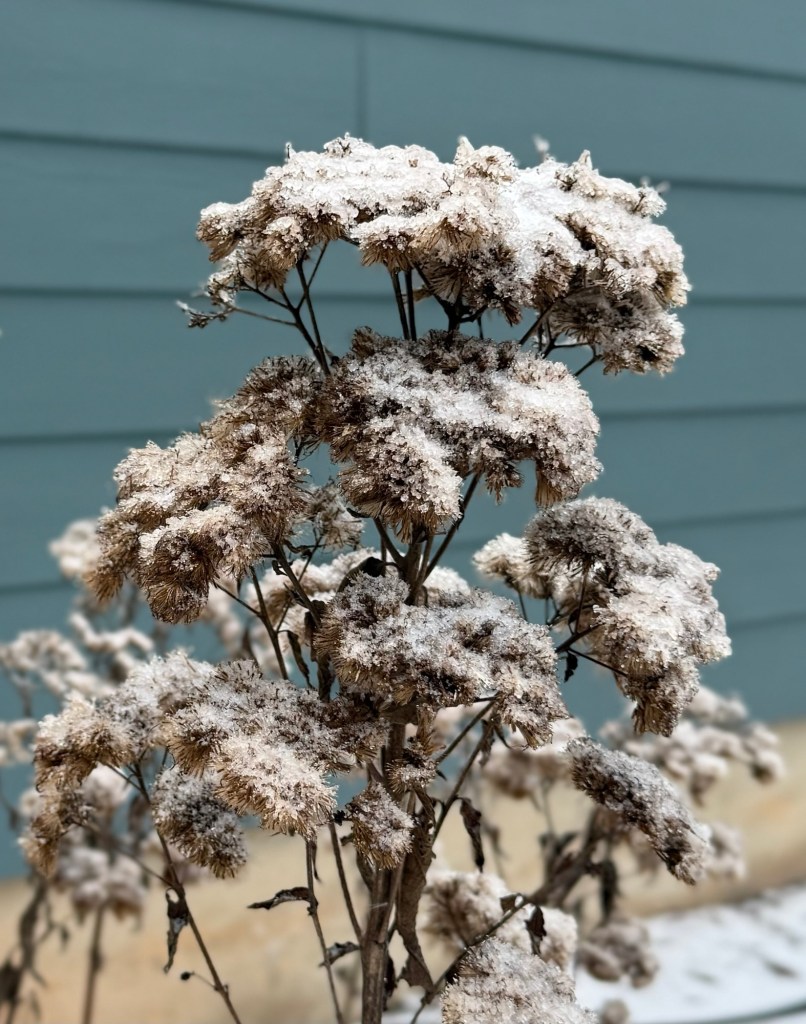
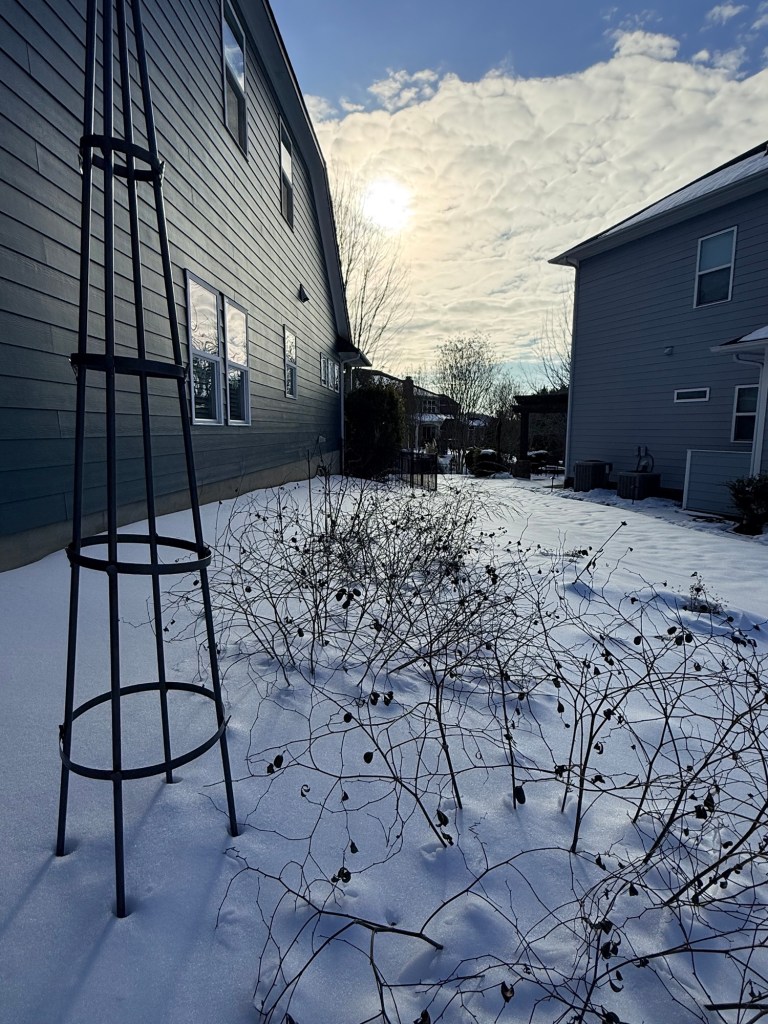
Don’t clean everything up! It’s not even mid-March here and we’ve had over a week of unseasonably warm weather (20 degrees F above average). There is such a temptation to think that this is it and we can just jet past spring into summer but this is the ‘promise’ of summer, what we’re getting now. Patience wins out. Do a little clearing of debris, twigs, etc, but leave some. There’s no rush. Some of these twigs are nesting spots for small bees and insects. The birds seem to also like a nice loose pile of twigs to forage through.
Nature does not hurry yet all is accomplished. -Lao Tzu
Maintenance also includes seedling care, if you planted any, or want to plant seeds for summer (check best planting dates and recommendations). Maybe it’s time for division of mature plants in the garden bed and to transplant, pot or gift your divisions. Perennials can be transplanted and popped in the ground in early spring here in the Piedmont.
Update
Squeeze in a bit of nerd time and update not only your to-do list, but also your master plant database, drawings and wish lists. While we edit in the garden with digging out and digging in, we should also be updating our records and documentation which keeps us organized and if you want to throw in the word ‘intentional’ there, go right ahead.
Admire and appreciate
After all of the physical work: the digging, weeding, back bending, knee scraping; after the tedious administrative work of data input, cross referencing, drawing and erasing; one should find time to simply enjoy what the garden has to offer.
Offerings for our friends, the pollinators and birds, but also for ourselves. For the positive impact gardening has on our physical and mental well-being, for the aesthetic and sensual joys, for the future it’s building. Admire the beauty and the unfolding of spring. This is my favorite season.
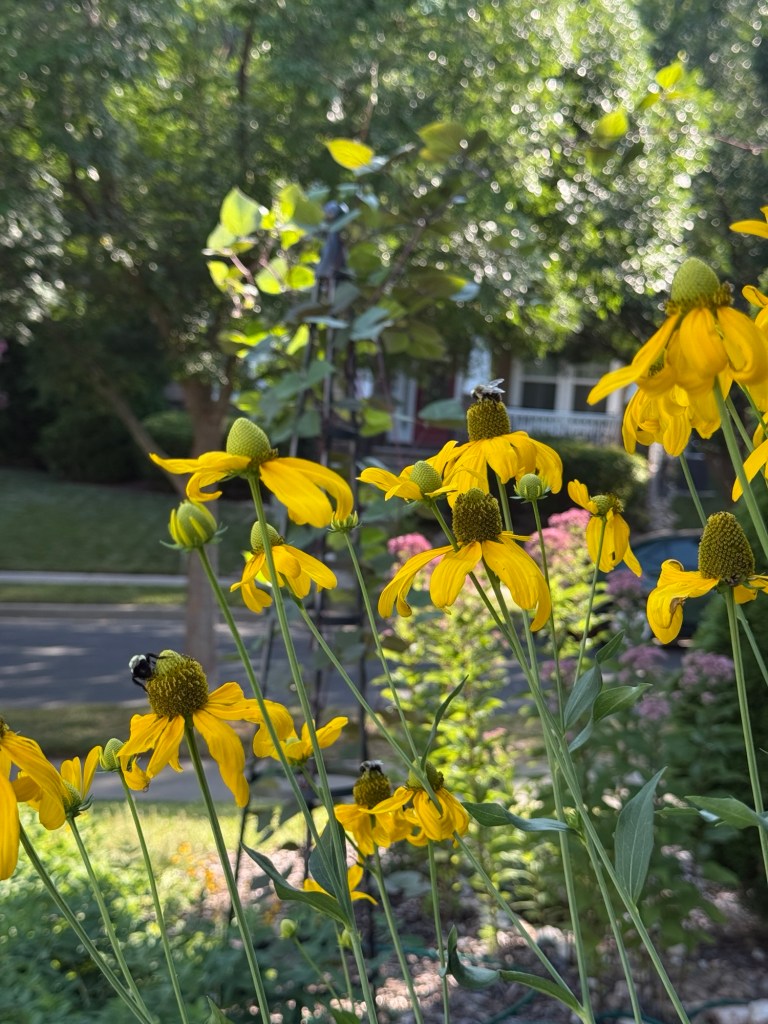
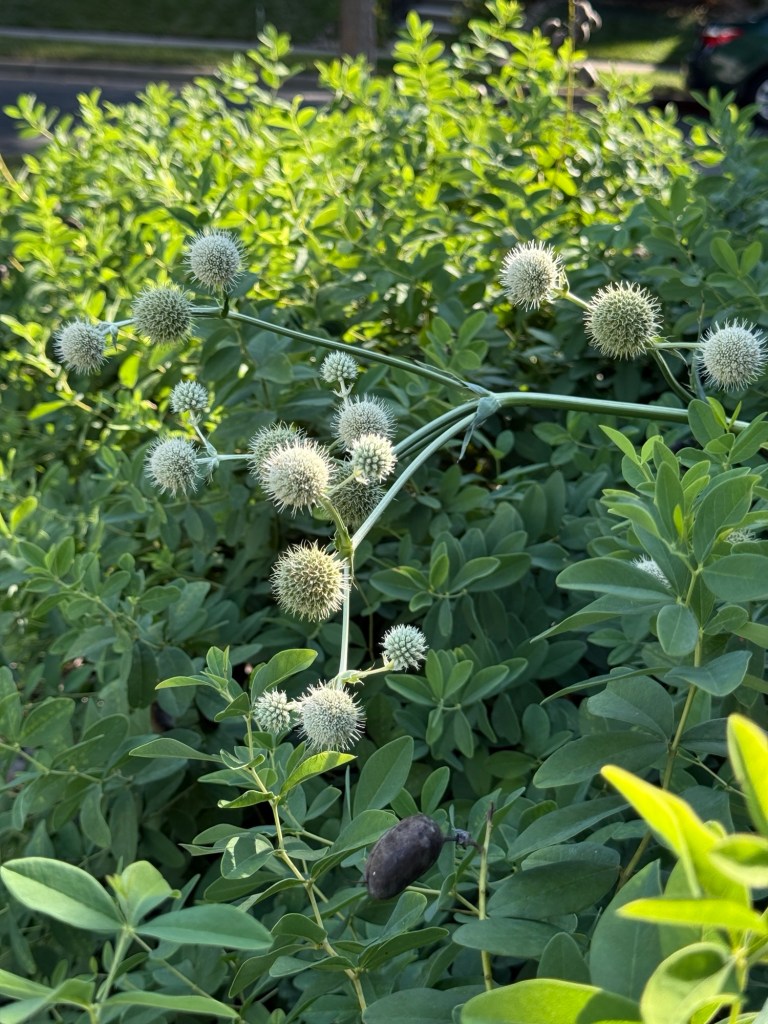
Observe life happening. Really take in the amazing, beautiful color displays; the textures; the great ecological value provided! In just a small space so much can be positively happening because all the little things that we do have value. All that care and work is the value.
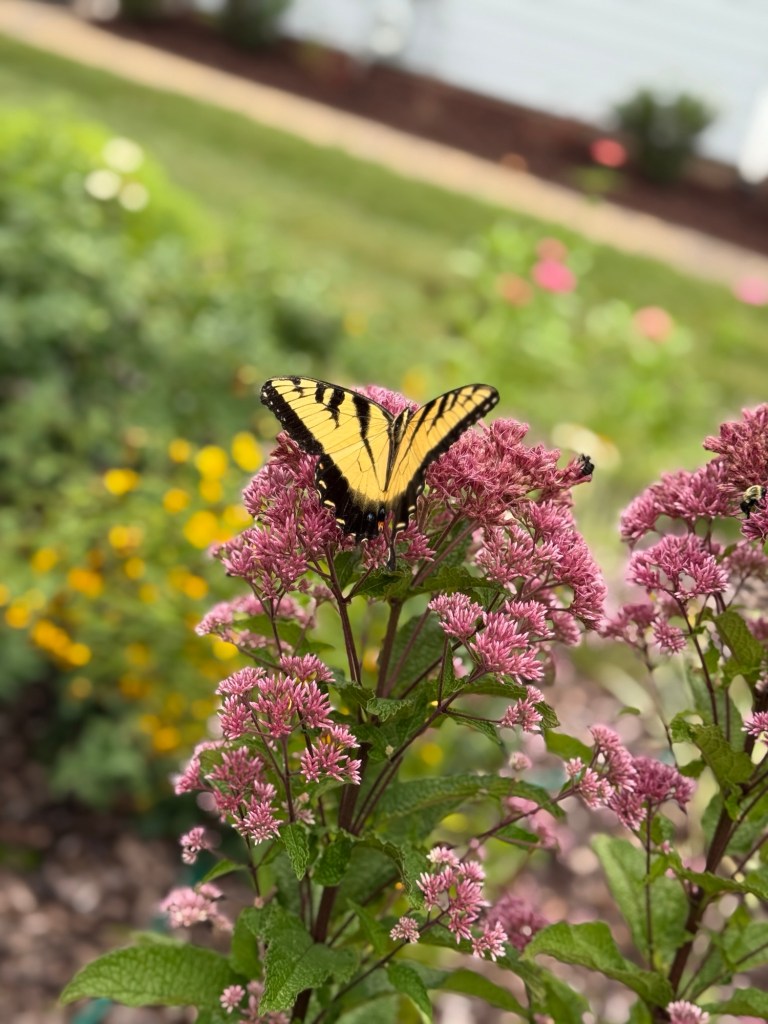
Give yourself grace for all the big plans that you had that maybe didn’t work out. I think of my difficulty and disappointment when the bunnies ate all five of my Phlox pilosa down to stubs. The difficulty with the timing of not one, but two sets of butterfly weed plants that never made it into the ground, so I planted zinnias instead. No such terrible loss there after all and we can always try again.
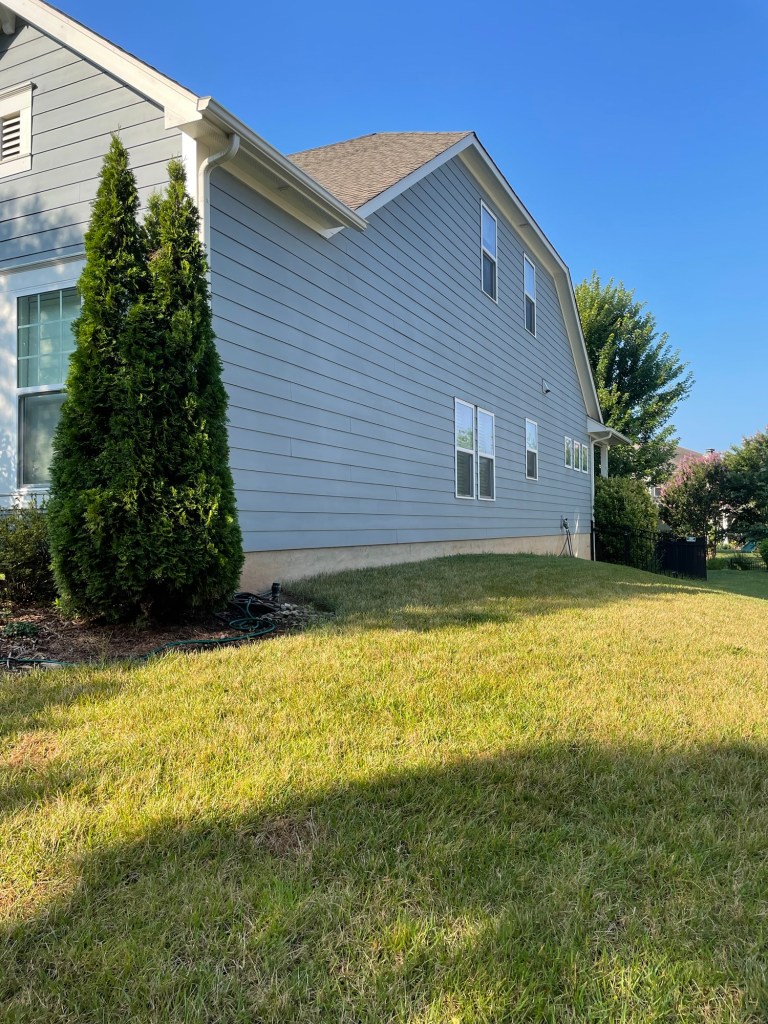
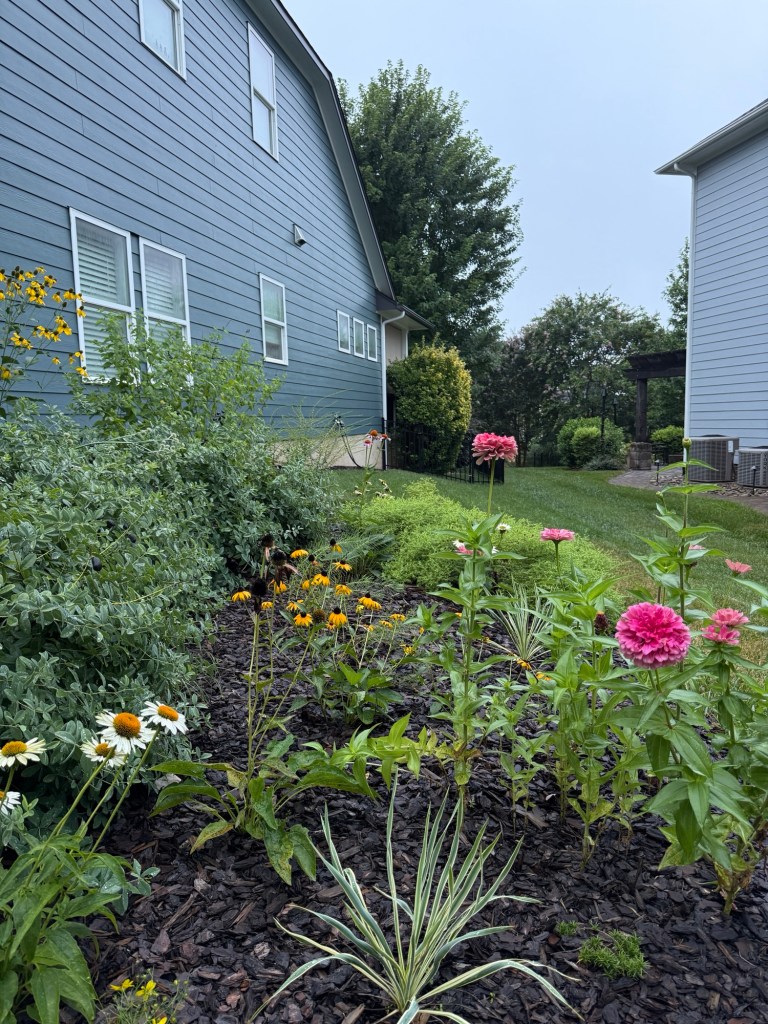
From research, planning and sketching, to installation, my New Native Bed- C2 came together pretty well for someone with no landscape design skills or credentials. Improvements: there are quite a few! Real life happens; we move on, find replacements, discover new designs, gain a bit more confidence. It’s all part of the process.
The Garden Edit: evaluation, action, take some notes and then enjoy some love and thanksgiving for what turns out to be.
Continue to love on your garden and it will reward you.


 Severnista
Leave a comment