Growing Solidago in the suburban landscape. Three varieties for the home garden.
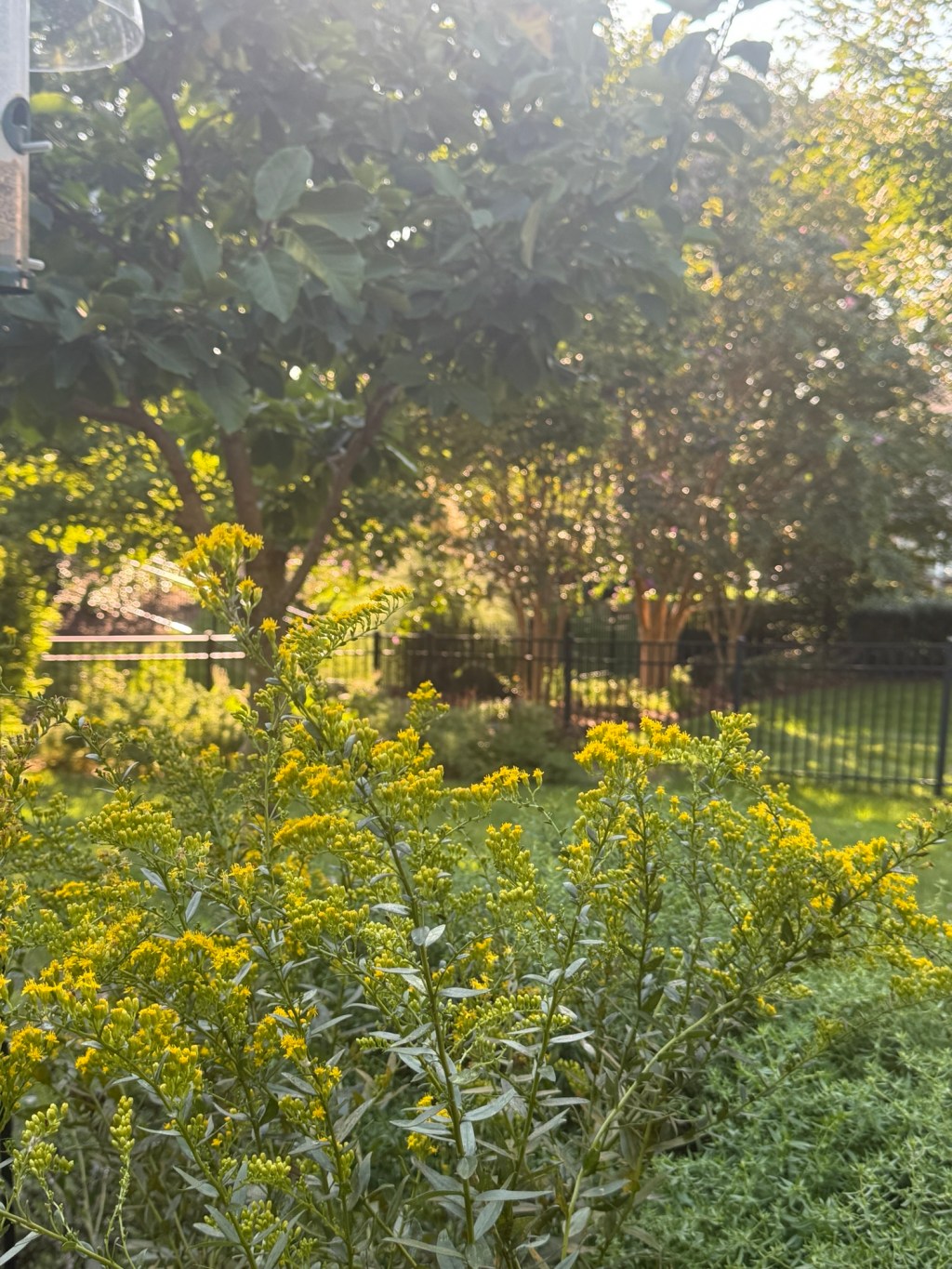
Solidago rugosa ‘Fireworks’
This goldenrod is modestly sized in the home garden, maturing at 3-4 feet. Its shape is tight and bushy on the bottom. I had this same plant in a more shade than sun situation, getting lost under an oak leaf hydrangea and a couple overgrown ‘Raydon’s favorite’ asters, until I moved it this spring into my mostly native bed, C2.
What a difference! This is the first time I’m seeing ‘Fireworks’ grow to its full shape and height! Now as we come into September I eagerly await the opening of its lengthy blooms that shoot from the top of its bushy shape like tendrils of fireworks ready to explode! These tendrils almost look as if they are on a different plant they are in such contrast from the overall shape of this goldenrod.
If you are looking for a goldenrod for the mid to background of your border and holds its shape, then this is a perfect option for you! Pair with other fall bloomers like asters.
Solidago shortii ‘Solar Cascade’
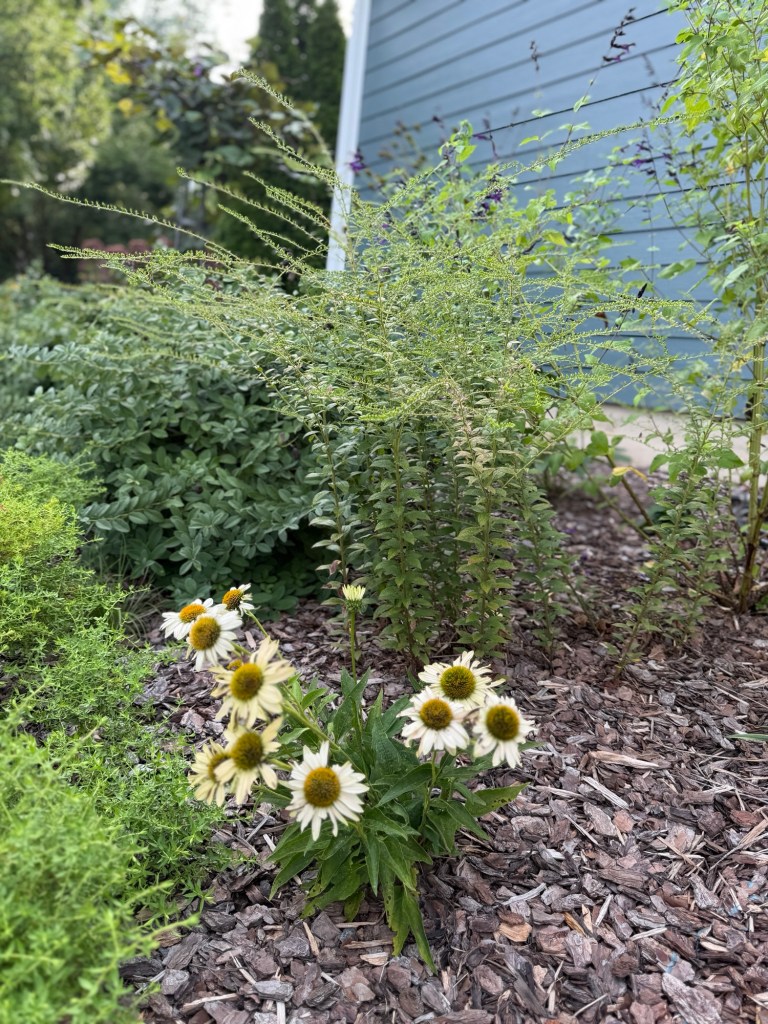
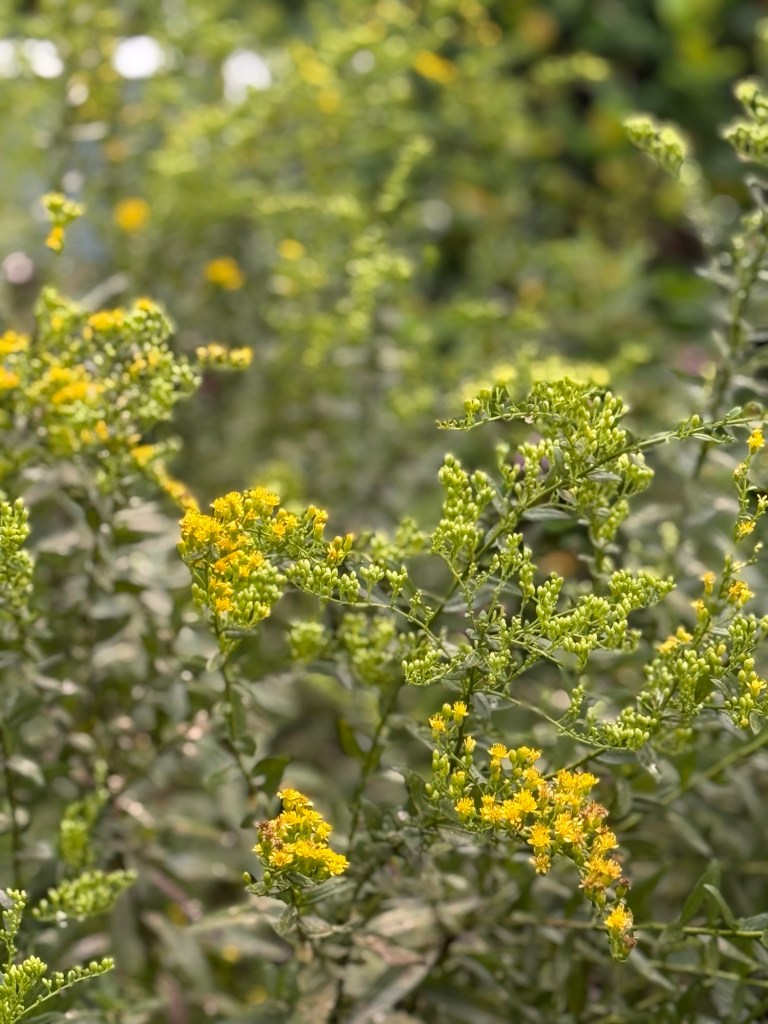
‘Solar Cascade’ is by far the highest attractor of insects of the three but this may be because it enjoys its amazing blooms in full sun!
‘Solar Cascade’ was developed by the Cincinnati Zoo Botanical Garden Native Endangered Plant Program as part of an effort to save this rare and endangered species. Read about the straight species, Solidago shortii, here on the Missouri Botanical Garden’s website, and its history of naming, native range, and why it’s endangered.
The MBG profile says it grows to two feet but in full sun expect up to three. It does slowly spread and with this height can flop a little so prepare to stake your plant, if this bothers you, or plant alongside other perennials with upright habits that may offer support.
Enjoy the piccadilly for insects and the visiting finches that like to perch on the tall stems.

Solidago sphacelata ‘Golden Fleece’
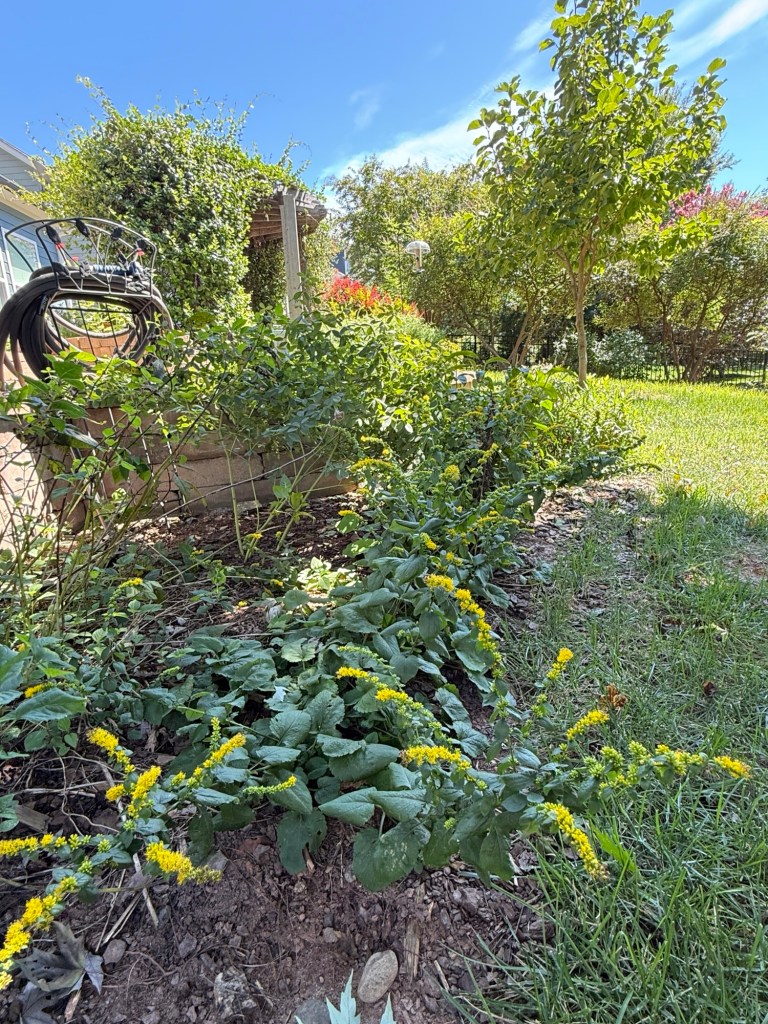
Solidago sphacelata ‘Golden fleece’ is a compact variety of Solidago sphacelata, also known by the common name Autumn Goldenrod. This variety was introduced into commerce by Mt. Cuba Center in 1989 after being discovered in a home garden. It grows to a height of 1.5 feet total when in bloom. This cultivar’s foliage grows snug along the ground with lovely green leaves before sending up its arching, yellow blooms in late summer to early fall. A perfect goldenrod for small spaces!

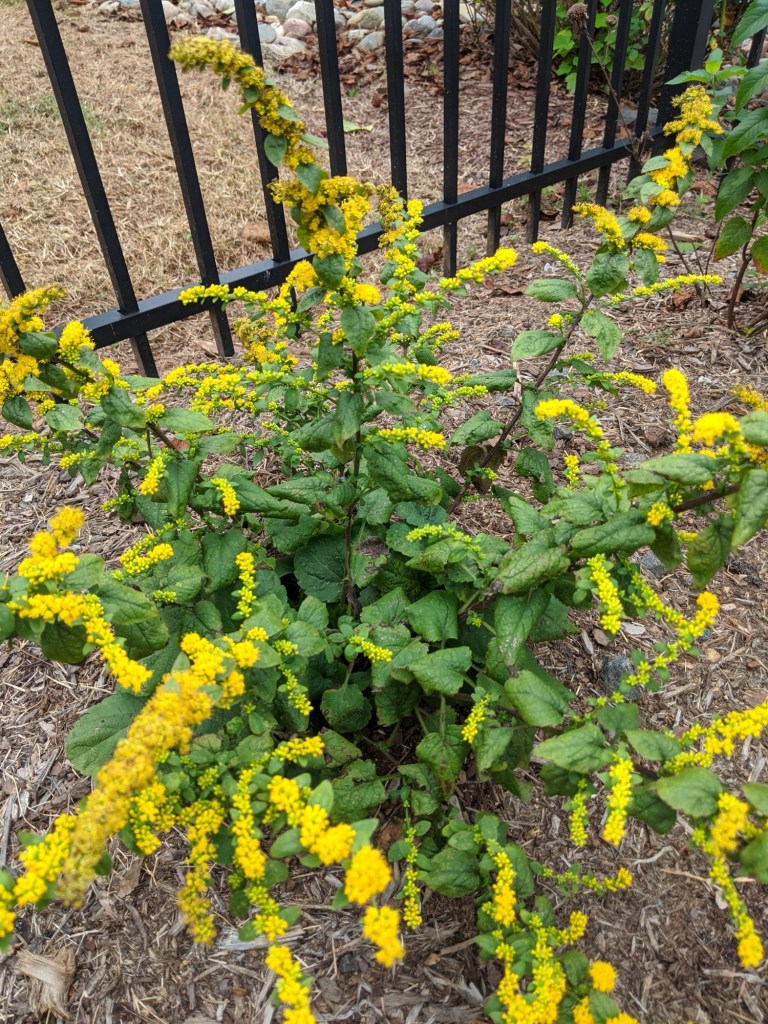
This herbaceous perennial is drought tolerant and can handle full sun to part-shade. It works great as a foreground plant along borders and divides easily for transplanting to other areas of your garden. The straight native species supports Wavy-lined Emerald (Synchlora aerata) larvae. And while it attracts butterflies and birds, it is not eaten by deer and rabbits.
I love this goldenrod for its ability to act as a ground cover with perks! Its heart shaped, basal leaves will slowly spread from rhizomous clumps and not get taller than 6- 10 inches. But behold when it blooms in late summer! This goldenrod offers an exceptional display of bold, arching, yellow inflorescence that brighten up the part shade area along our patio.
These are all varieties of solidago species that I was lucky enough to find retail near me over the last few years. They have been top performers in my garden and are representative of a ‘keystone species’ so they have ecological significance for the home garden and wider community beyond their pretty faces.
We should be reminded how our trees are so important! Check out this list of native keystone plants here.
If you can find one of these great, growing Solidagos near you or from a reputable online vendor, don’t hesitate: Grab it, plant it, love it!
You will not regret it! And if you don’t plant it right the first time, move it, and try again!
It’s also forgiving.




 Severnista
Leave a comment