From drought to flood and back again.
It was an especially wet start to August for some of us in the Southeastern U.S. states. Our clay soil was saturated and this can make conditions tougher for plants than if it were a dry spell. And yet another dry spell was to follow, as we have seen little rain in the last two weeks. Without a raucous thunderstorm passing through, the beds are drying out as we enter September.
Yet some native perennials are quite adaptable to this pattern of drought and flood. Here is a preview of a few notables that can take some mixed conditions.
Narrow Leaf Mountain Mint
Pycnanthemum tenuifolium or Narrow Leaf Mountain Mint, gets top rating in Debbie Roos’ Pollinator Paradise Demonstration Garden in Pittsboro, NC. It’s fern-like foliage adds nice contrast and interest in the perennial garden year round. As with other Pycnanthemum spp. this mint is considered a ‘keystone species’ because it supports a high diversity of native insects, which in turn supports healthy ecosystems.
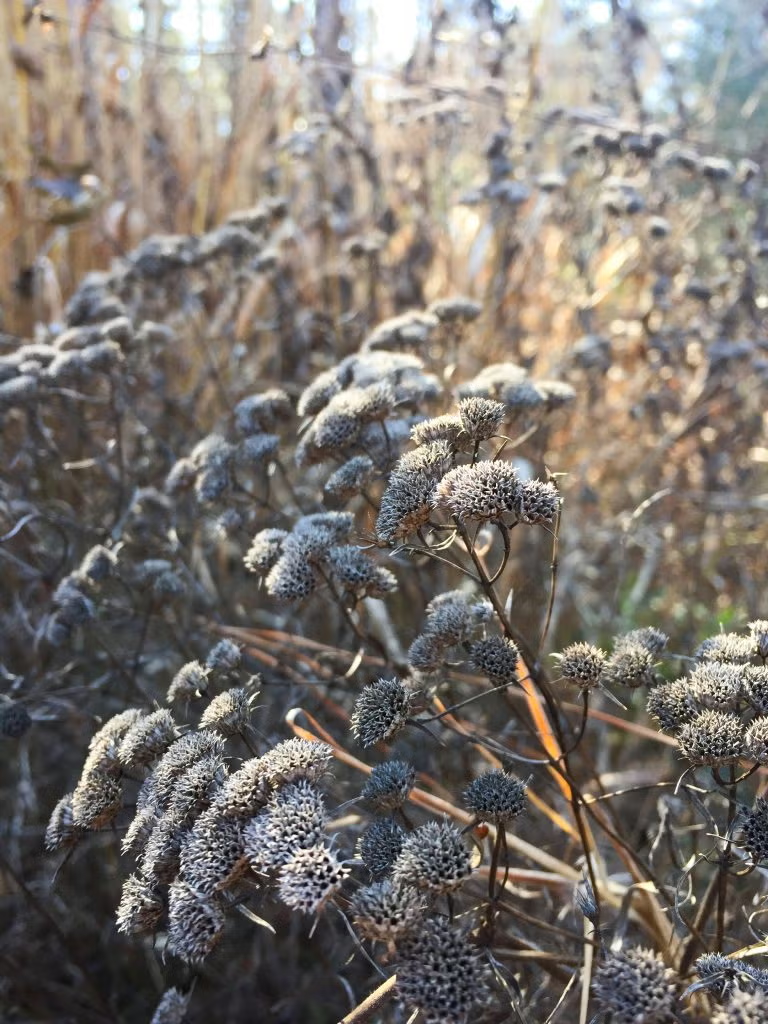
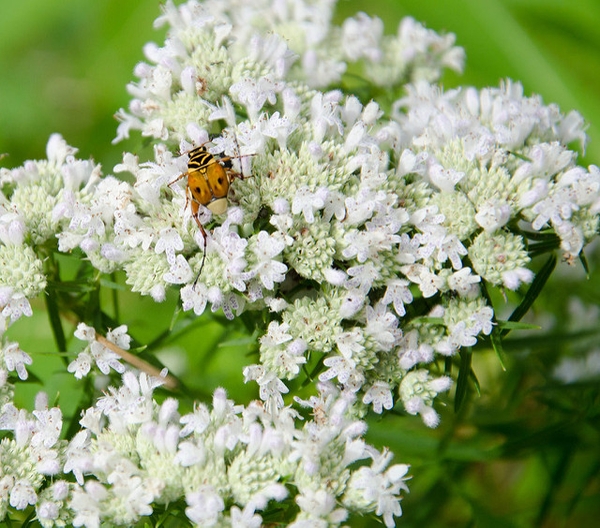
It grows in a variety of soils, in part shade and full sun. Its small, but profuse, white flowers attract many kinds of pollinators from June through late August. Unlike other varieties of mint, narrow leaf mountain mint does not spread aggressively. It fits in the perennial border from fore ground to background growing 18- 30 inches in height and 24-36 inches wide with maturity. It is also to note that these are deer and rabbit resistant.
That’s all very textbook but I have to confess, I haven’t grown it yet. This will be a new one for me to try in the future. I always like the versatility of a native mint especially if it’s not too aggressive or can be easily maintained.
‘Little Joe’ Pye Weed (Coastal Joe Pye Weed)
Eutrochium dubium is a fragrant, herbaceous perennial that can grow up to five feet. It is native to the eastern coastal plains and wetlands of North America. Its mauve colored flowers form a dome on tall stalks that bloom for months in the garden while continuously attracting pollinators.

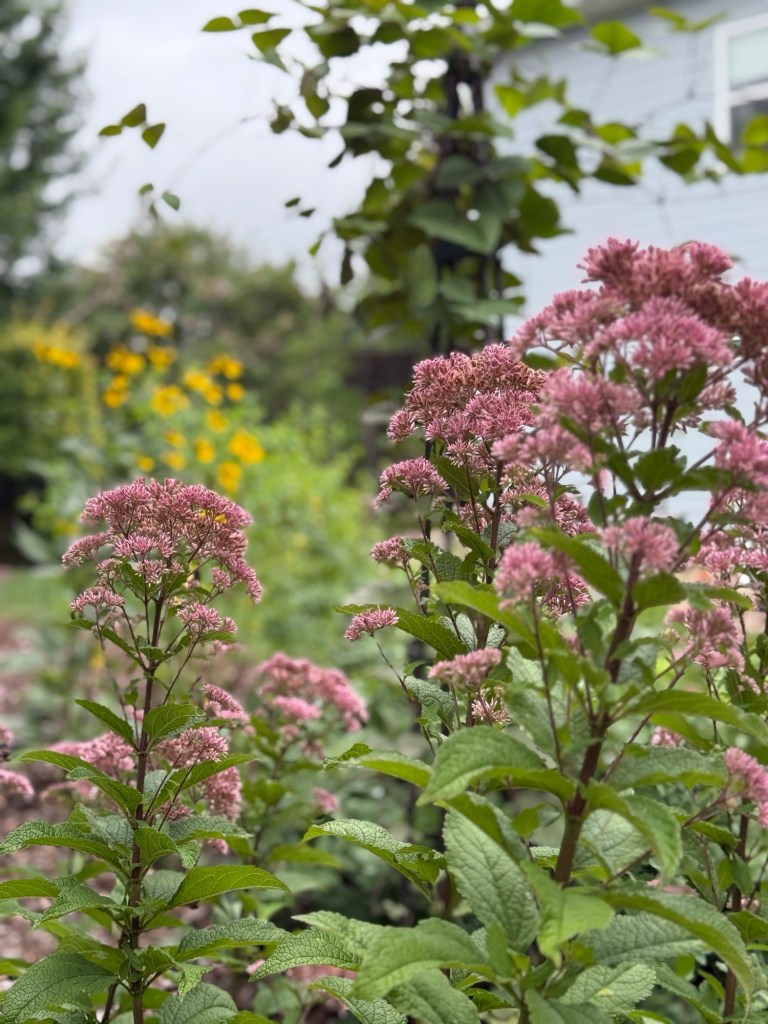
My baby joe is already in its second month blooming and its stalks are still sturdy. It’s planted near our home’s downspout and seems to like it there just fine along with the next plant on my list, turtleheads.
Turtleheads
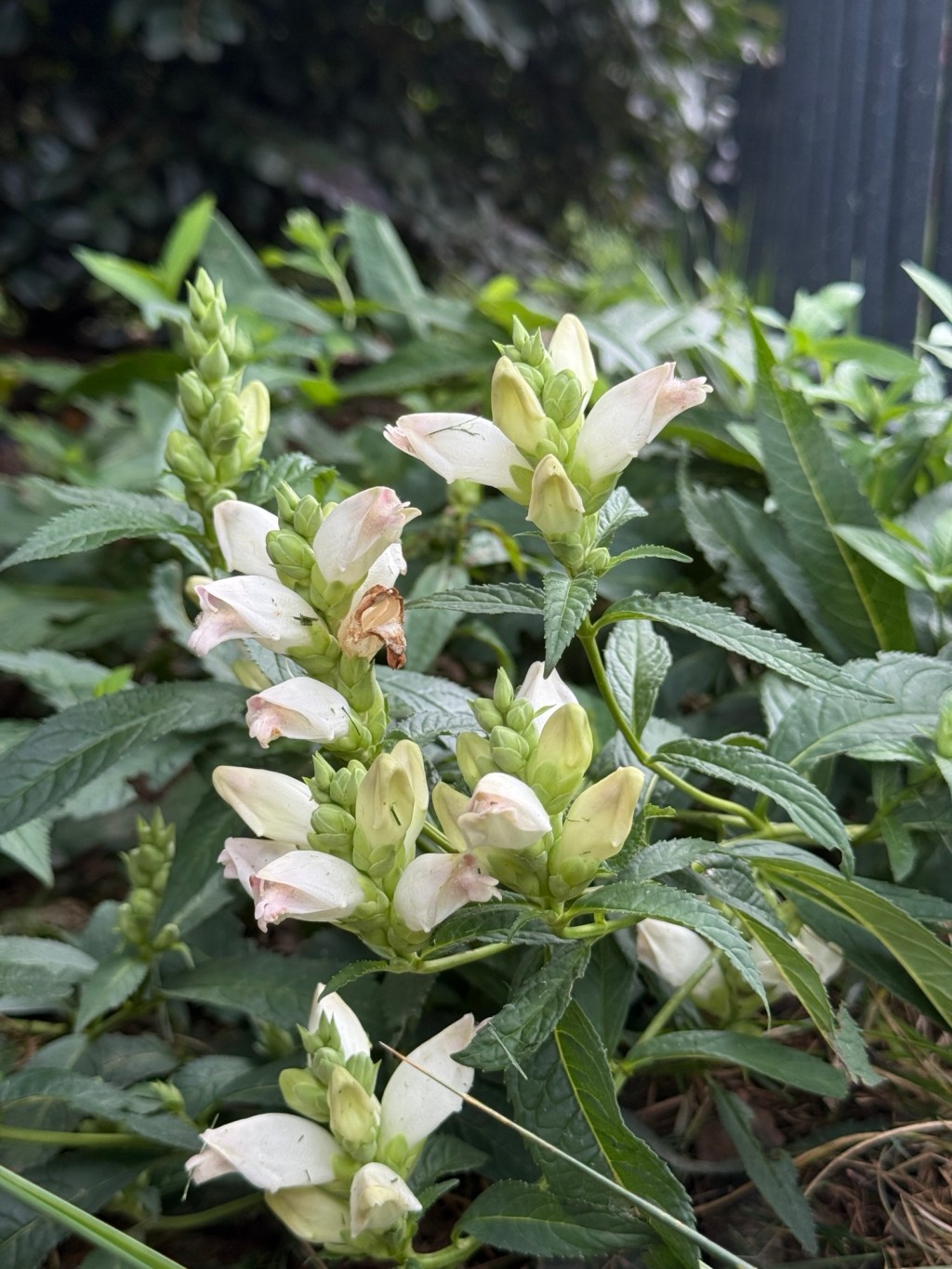
Chelone glabra, or white turtleheads, are flowering perennials with a ‘tortoise’ head shaped flower that blooms in late summer. This native central and eastern U.S. plant is a member of the plantain family and grows naturally in woodlands, along banks and streams, and in flood plains and marshes. It is also well adapted to the home garden. It can grow in full sun and part sun.
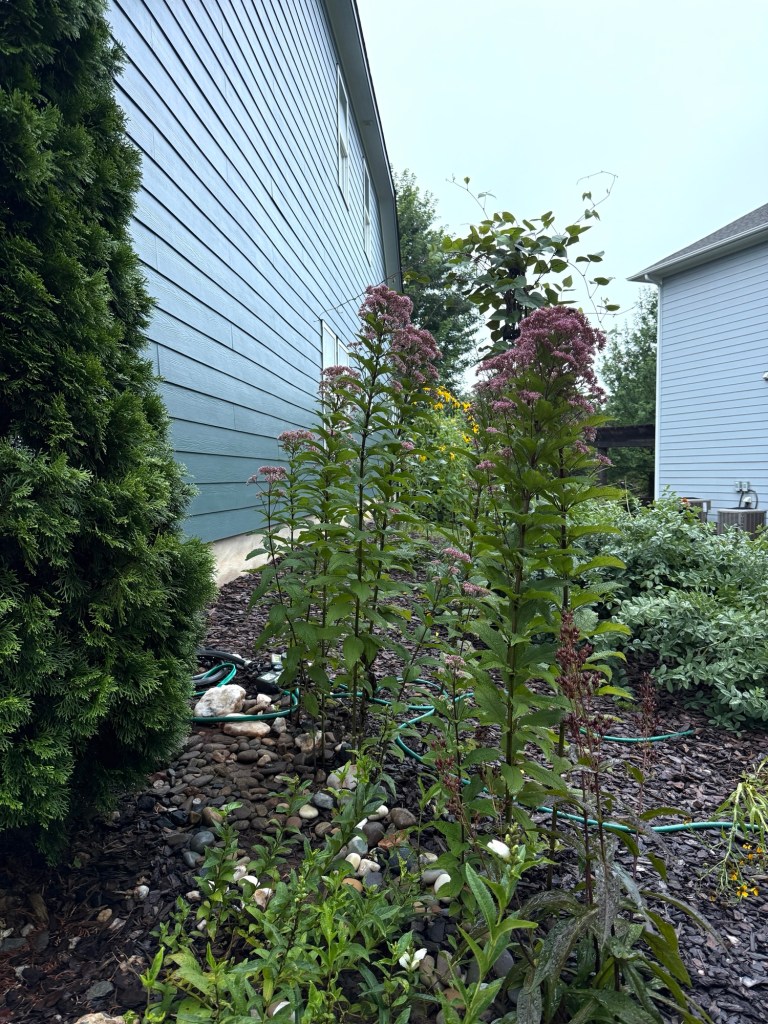
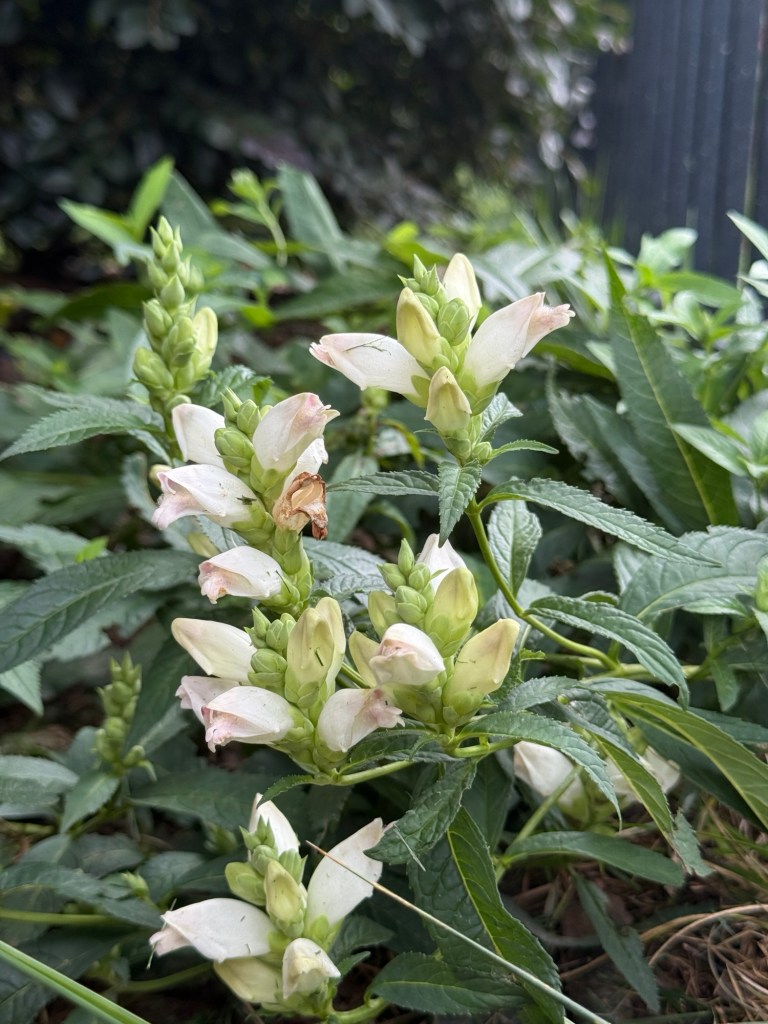
If used in part sun it may resemble ground cover as it tends to flop over. This certainly doesn’t stop its late season blooming! Also works well in a wet area such as the base of a down spout as seen here in my own garden.
Blue Star (Eastern Blue Star)
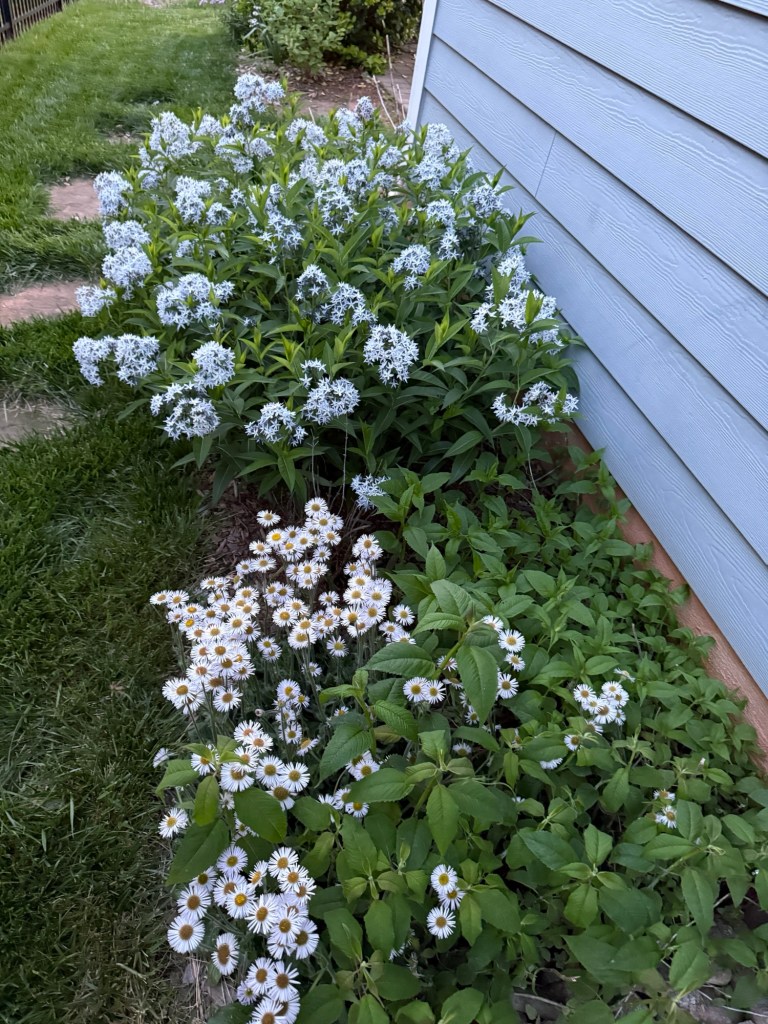
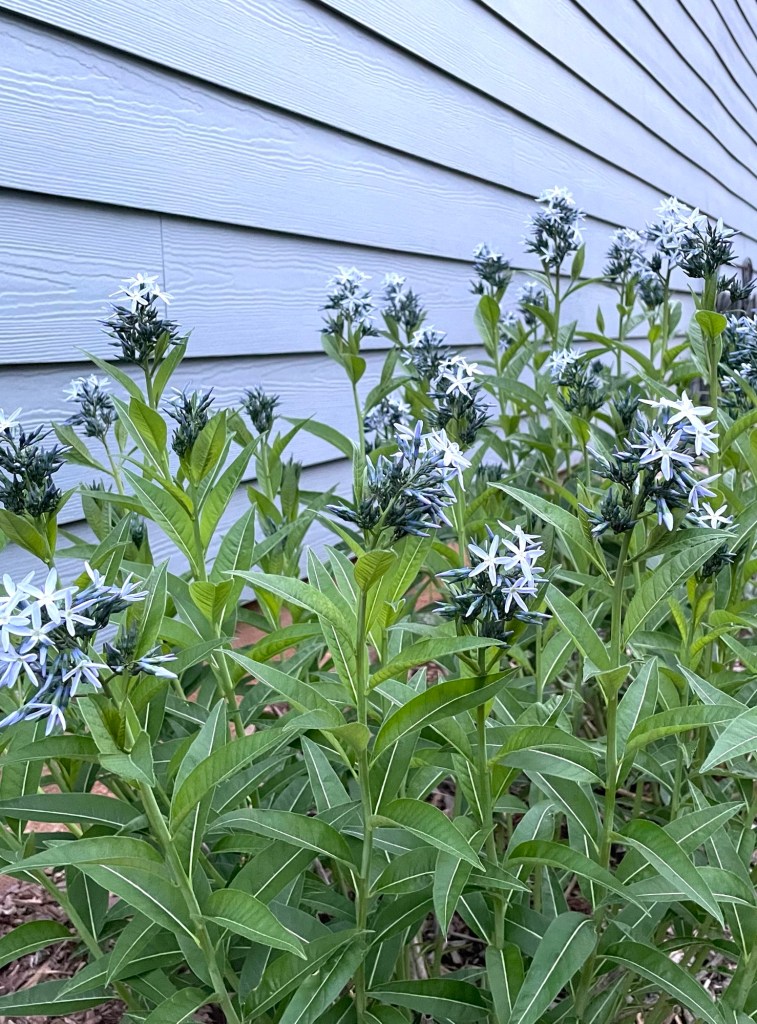
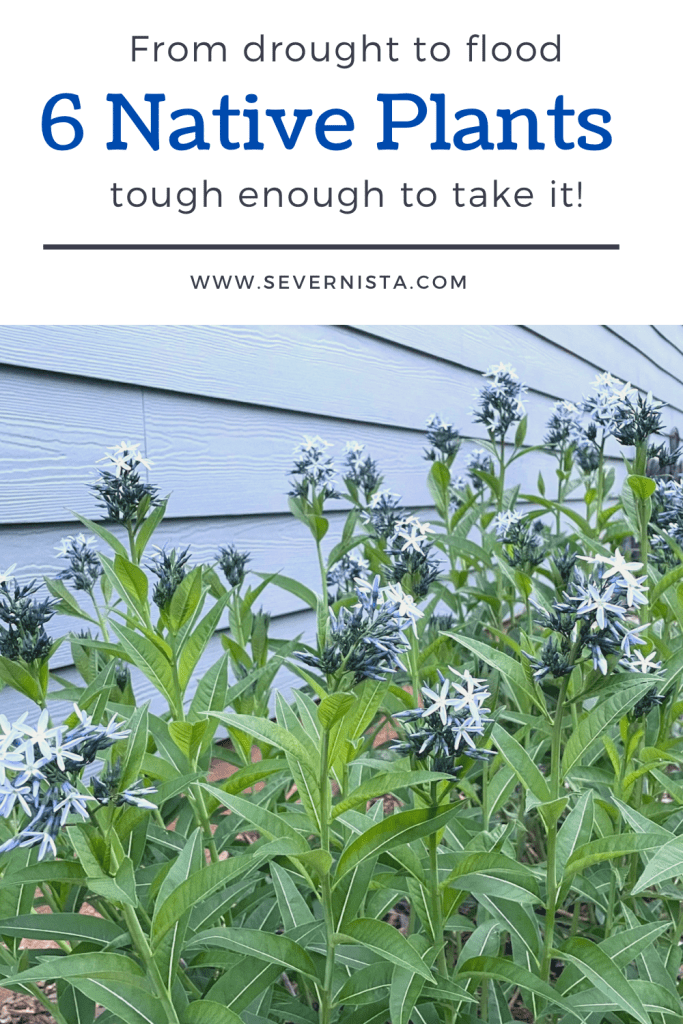
Blue Stars, Amsonia tabernaemontana, according to NC State Extension Gardener Plant Toolbox, are said to like to be planted in moist to occasionally wet soils as it is found in typically moist soils in its native areas. I have found that my blue stars have happily tolerated very dry soils for several years now without hindering its growth and bloom. It is hearty, reliable, and long blooming. And if it loves to be wet too, another bonus!
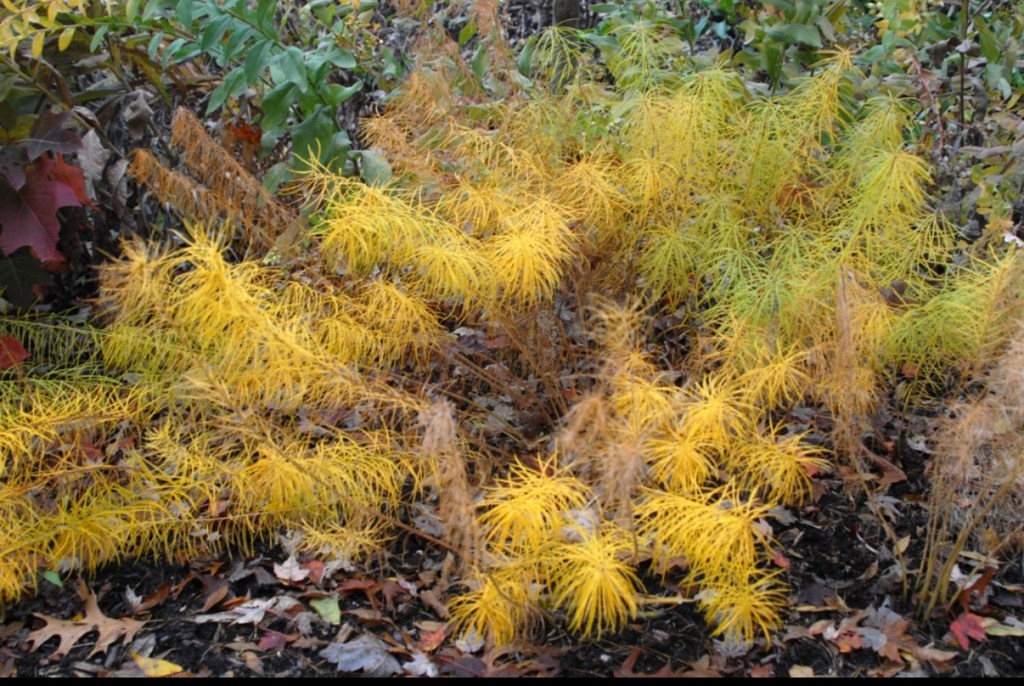
There are several different U.S. native and psuedo-native varieties (like Blue Ice, which may have questionable Asian origins, therefore not making it native, but nonetheless striking) of this spring to early summer bloomer. Amsonia hubrichtii has threadlike leaf foliage and comes from central Arkansas and Oklahoma. Amsonia ciliata, also called downy blue star, is another species found in the southeastern U.S. and west to Texas. I have not seen the later sold retail and it is said to spread aggressively. Amsonia ciliata and A. hubrichtii also have nice golden, fall color in their leaves, adding an extra season of interest and color.
Culver’s Root
Veronicastrum virginicum, also known by the common name Culver’s Root, is an herbaceous perennial native to the eastern and central U.S. Its green lanceolate leaves and round smooth stems bush out and can grown into a five foot shrub in full sun. These leaves are then topped with white spear-like flowers that can also appear lavender or pink. To me the groupings of flowers look like a summer candelabra attracting pollinators, energized by the goodness that these flowers have to offer.
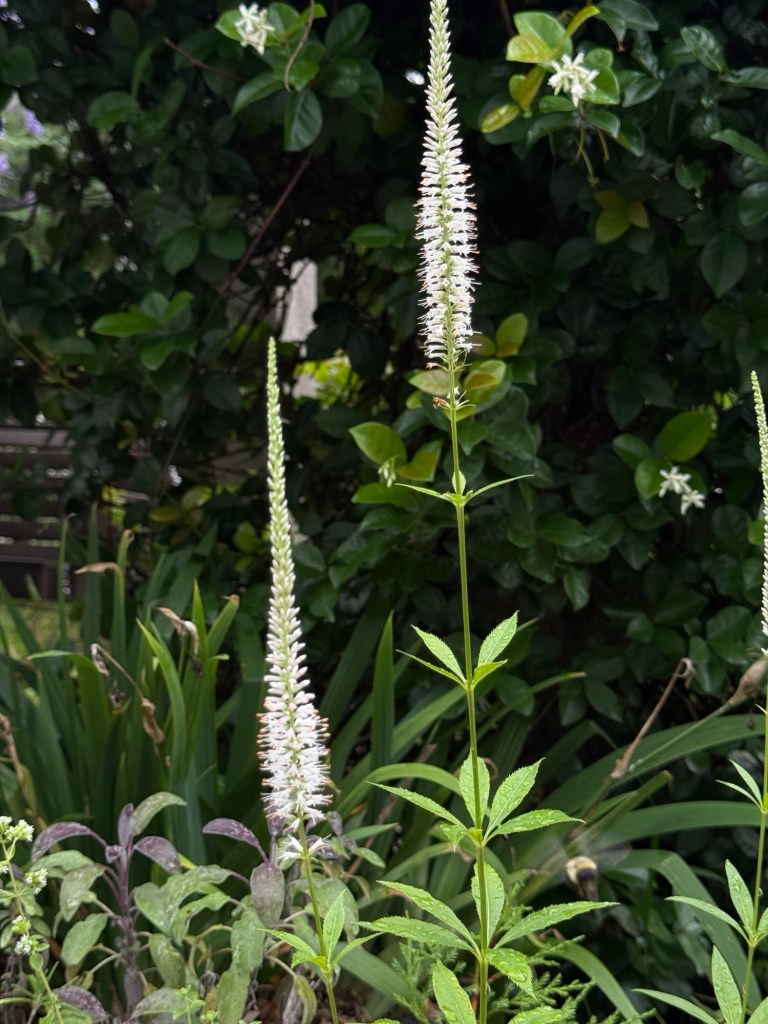
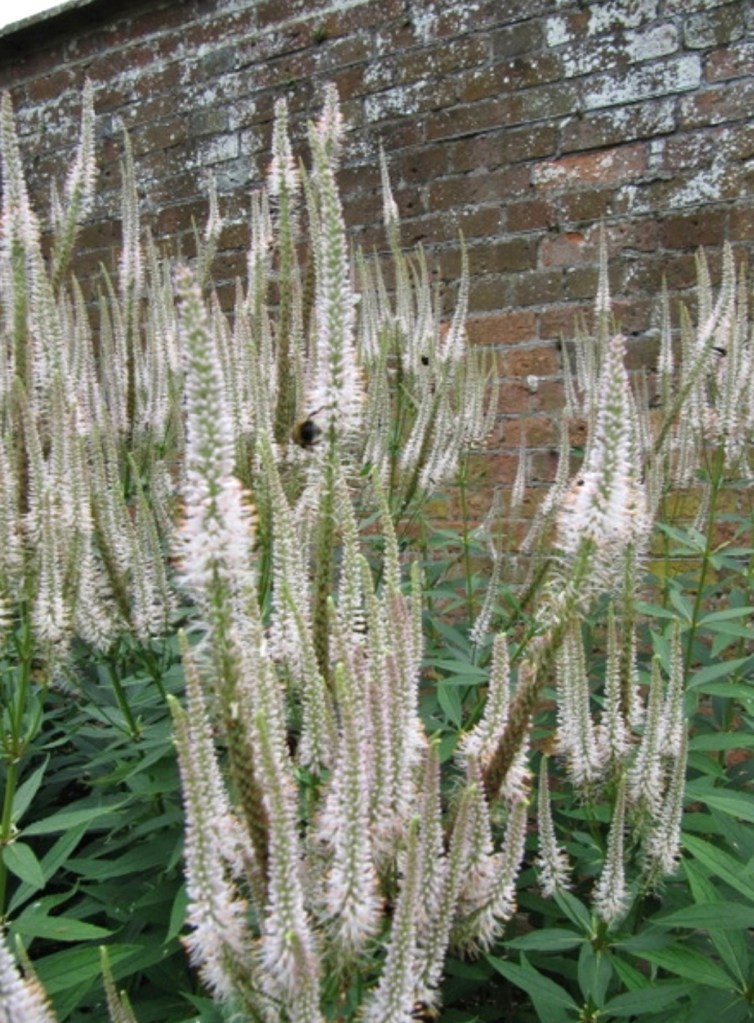

Culver’s Root is striking when it’s in full bloom. It can handle occasionally wet soil and also dry spells. I’ve had mine potted this summer as I decide where I’m going to plant it. i can plant it part sun in C2, the mostly native bed. Will it flop? Will it flower much with reduced sun?
Another option is to plant in the dry ditch in the back corner of our fenced yard under a birch tree. It’s a location that gets part sun and the occasional deluge of water as it’s part of one of the (what were supposed to be fescue swales) drainage areas for our and our neighbors’ lots, lining the edge of our backyard boundaries. My hesitation here is the work required before planting as the rocks need to be channeled differently as the area has changed over the years. The vegetation has also changed and the way our home runoffs affect the area. In addition, I don’t really know what herbicides or pesticides are being washed from adjacent areas and I don’t want my plant killed because of it.
Swamp Milkweed
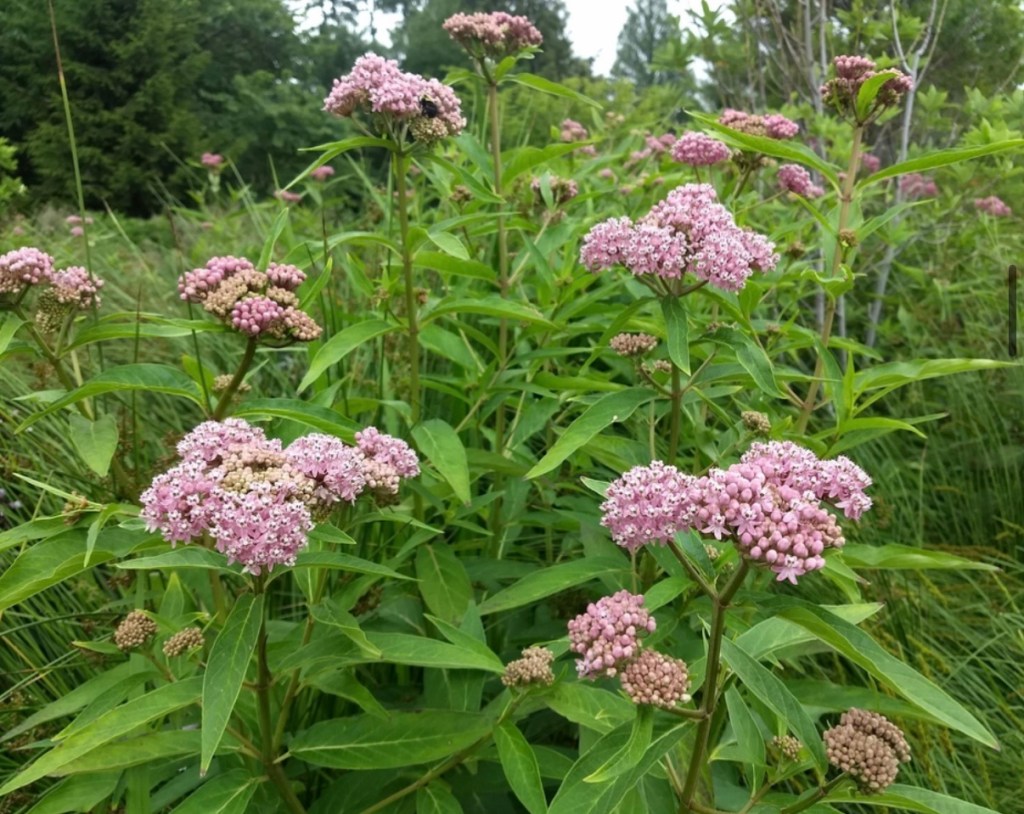
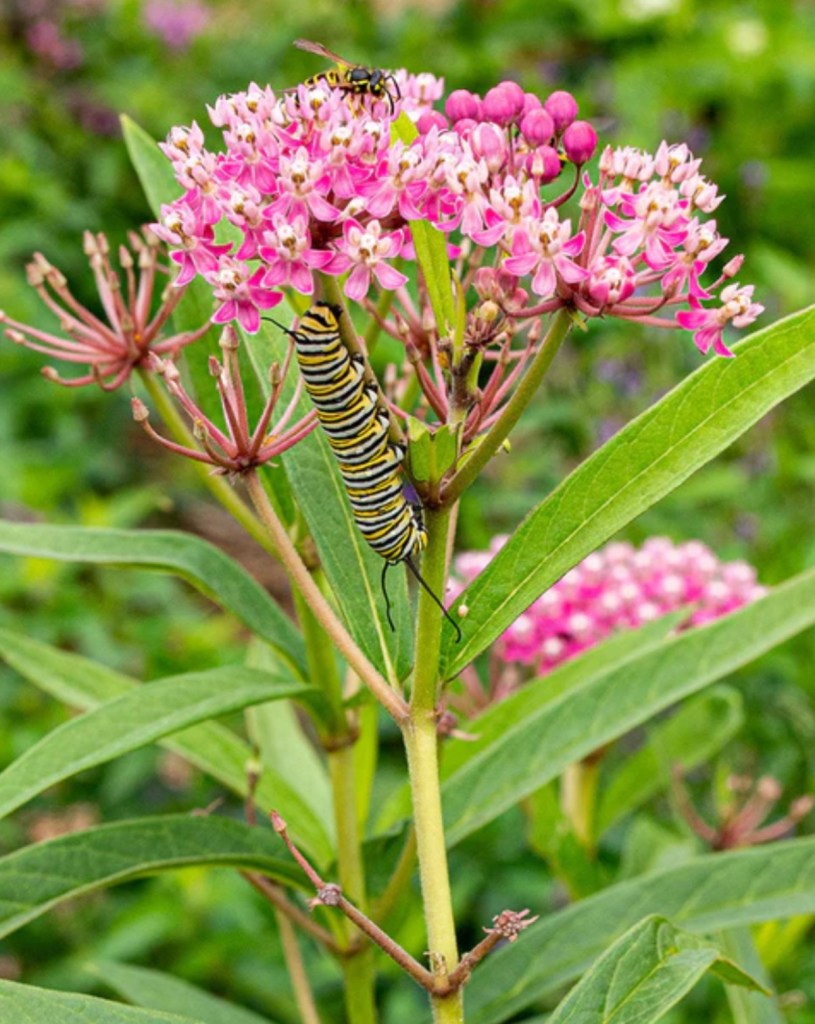
Asclepius incarnata. According to the NC State Extension Gardener Plant Toolbox, swamp milkweed is native to wet sights but can also adapt to drier conditions. I am considering planting the three that I recently purchased at a local botanical garden sale along the front corner downspout in my mostly native bed, aka C2. This design is nearly identical to the Downspout Design featured in Kate Brandes’ e-book, “Native Plants for the Small Yard” found here.
I have never grown swamp milkweed before. Hopefully I will have more success with this plant than I’ve had with Asclepius tuberosa. Hopefully there is enough sun! Hopefully it provides the needed food for the Monarch caterpillar! I think the pink blooms will look vibrant and fantastic next summer. They will add much needed color around this evergreen that dominates the corner.
Read more about Milkweed and Monarchs here from the US Forest Service.
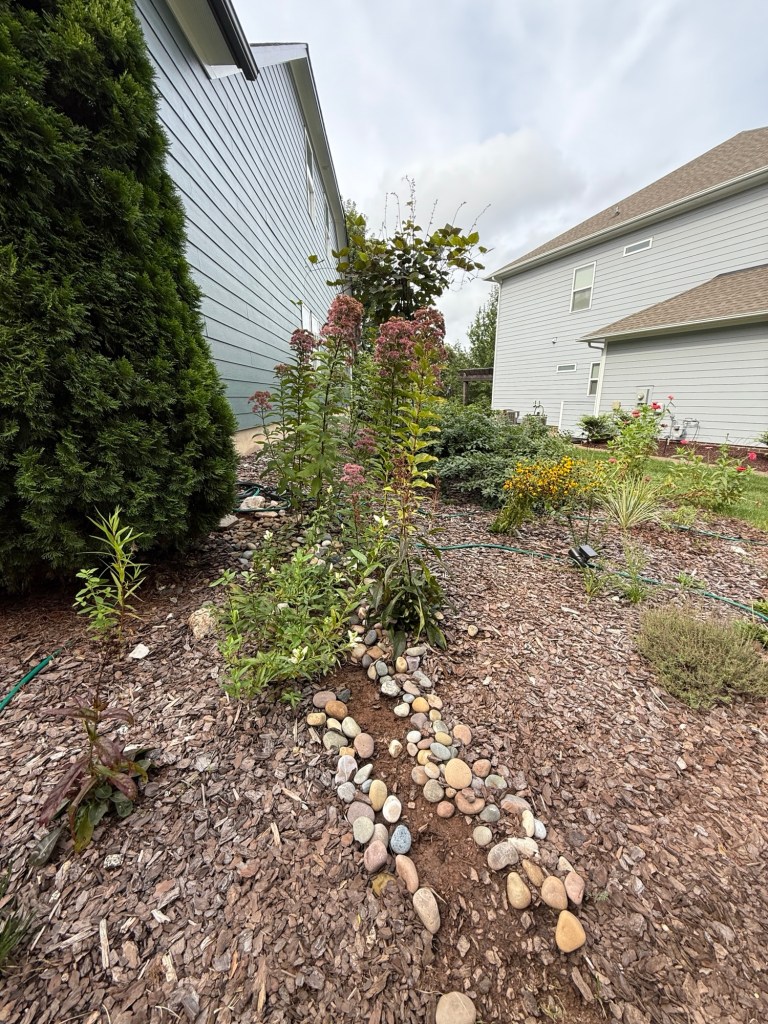
Do you have a place in your garden where you get a good amount of rain water and runoff but it isn’t in an ideal place for a rain garden like close to your house foundation?
Consider planting one of these native perennials and challenge it to the drought and the flood and see how tough they truly are!




 Severnista
Leave a comment