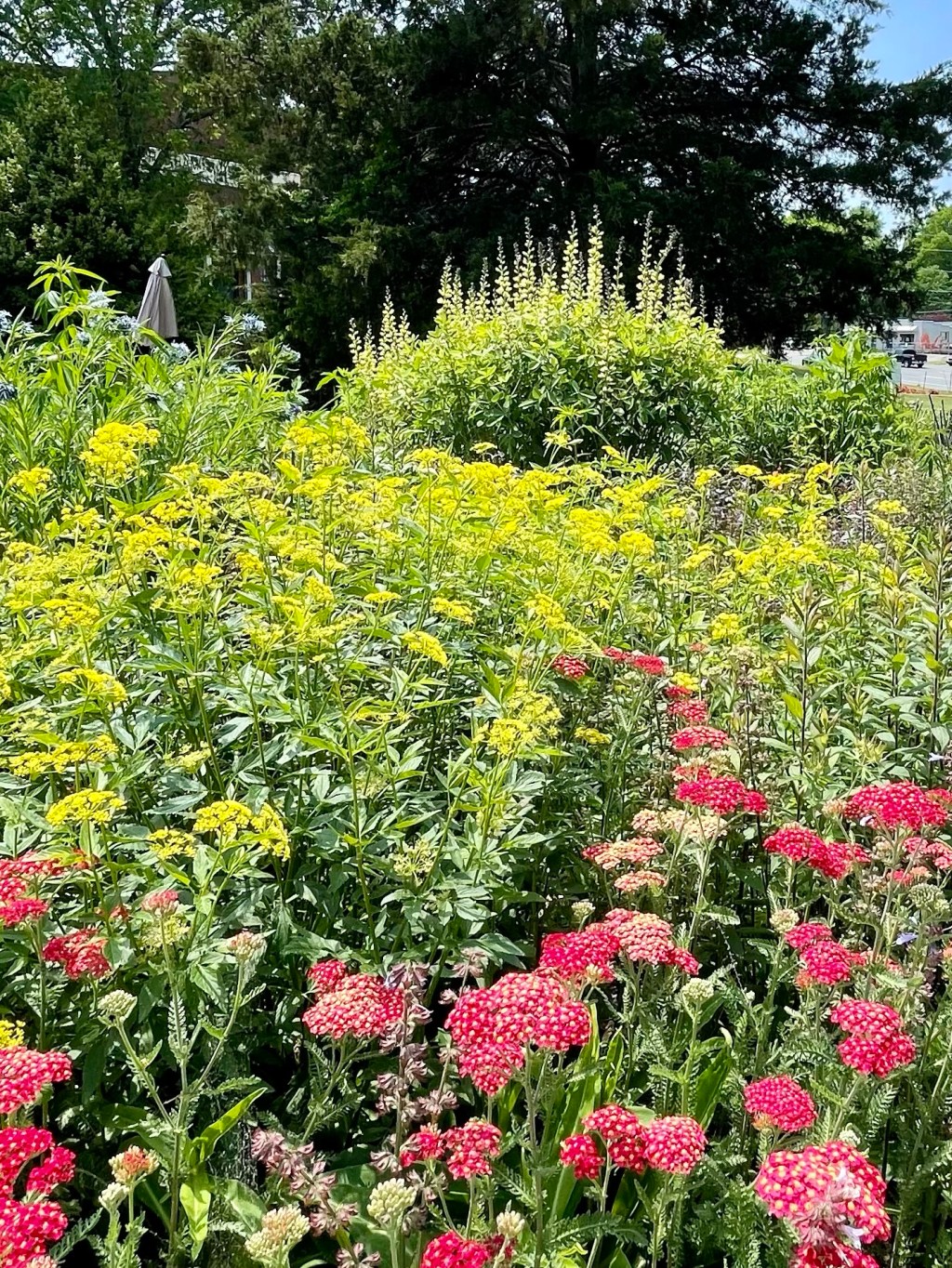
Beyond establishing the basic requirements for the plants you choose in the design process, one must have some inspiration. Without real life inspiration, not just photos on a phone of some fantastic, professionally displayed garden, how do you truly know what a plant can be and who its friends are?
This new native bed, aka C2, has been inspired by three main local NC Piedmont gardens.
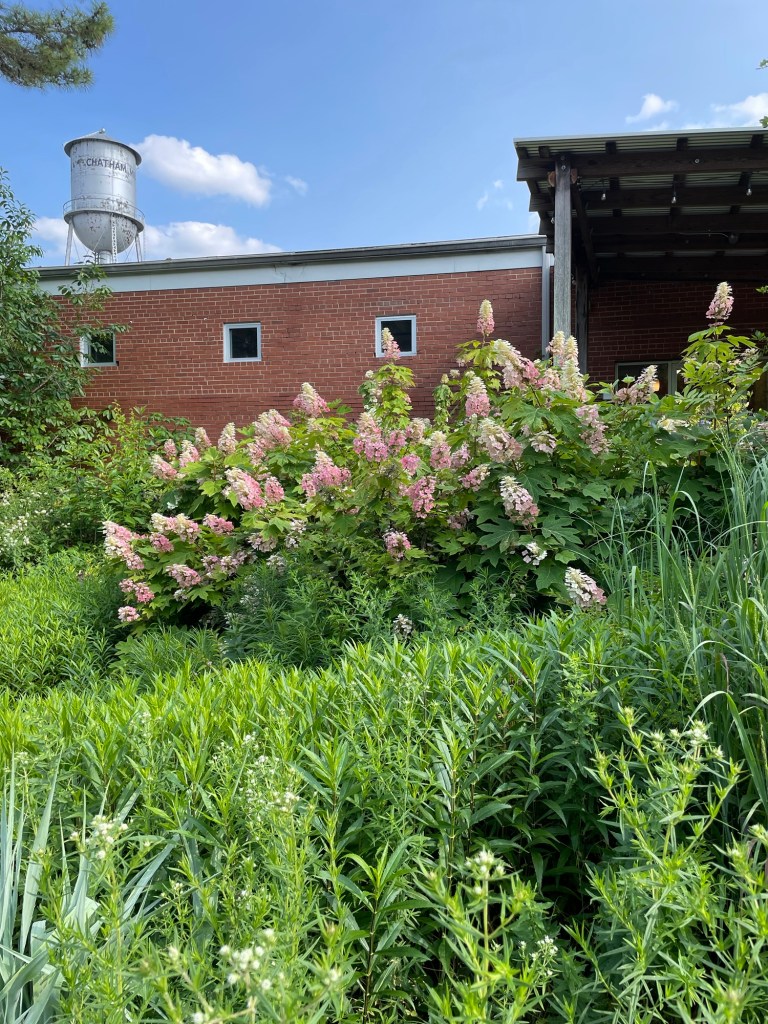
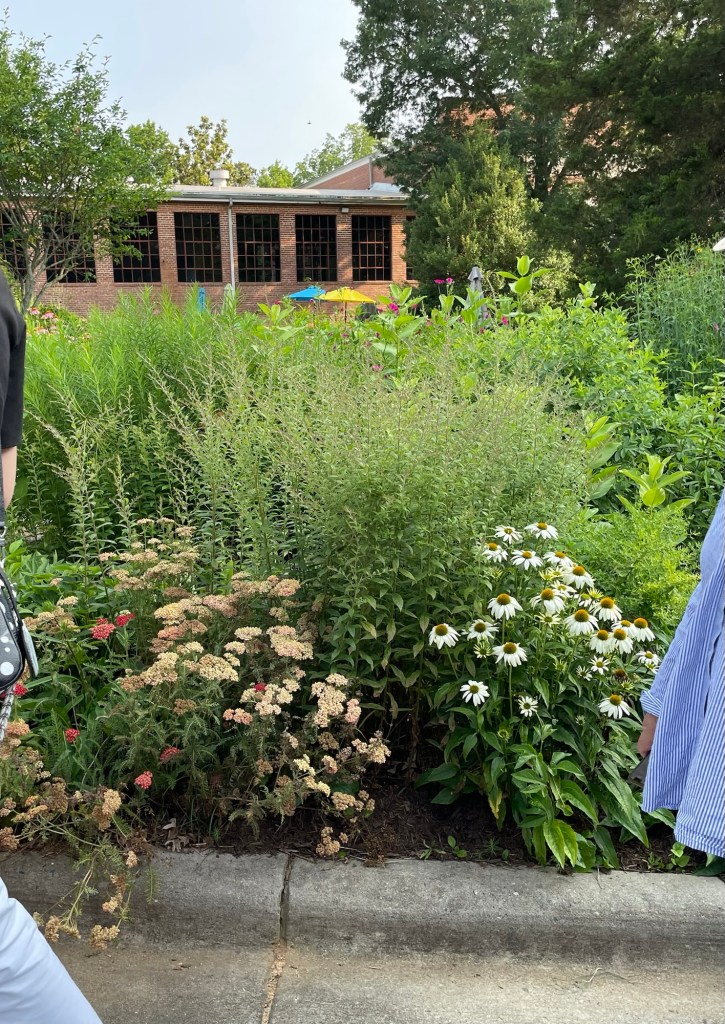
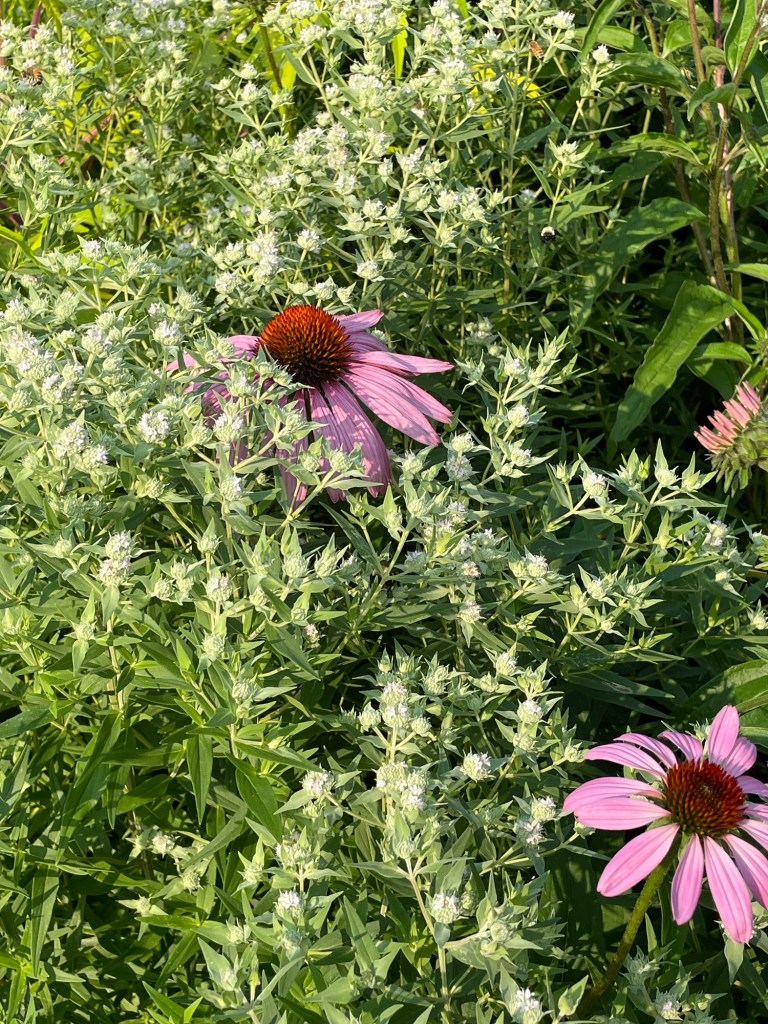
One is Debbie Roos’ Pollinator Paradise garden in Pittsboro, North Carolina. What she and her volunteers have done there is pretty amazing and it’s something worth travelling to see. The garden is not growing in the easiest of places either. It’s filled in around the parking lot of a refurbished, repurposed mill complex. There is no supplemental irrigation. It’s basically one big experiment designed to bring in the pollinators and other beneficial insects that are much needed for a great deal of NC’s agricultural enterprises. It can’t all be soybeans and corn.
In fact, as Ms. Roos is an Agricultural Agent for the North Carolina Cooperative Extension, work on her pollinator garden began years out of necessity. Because farmers were noticing a loss of crop because of a loss of pollinators Ms. Roos was tasked with finding what plants supported a healthier ecosystem.
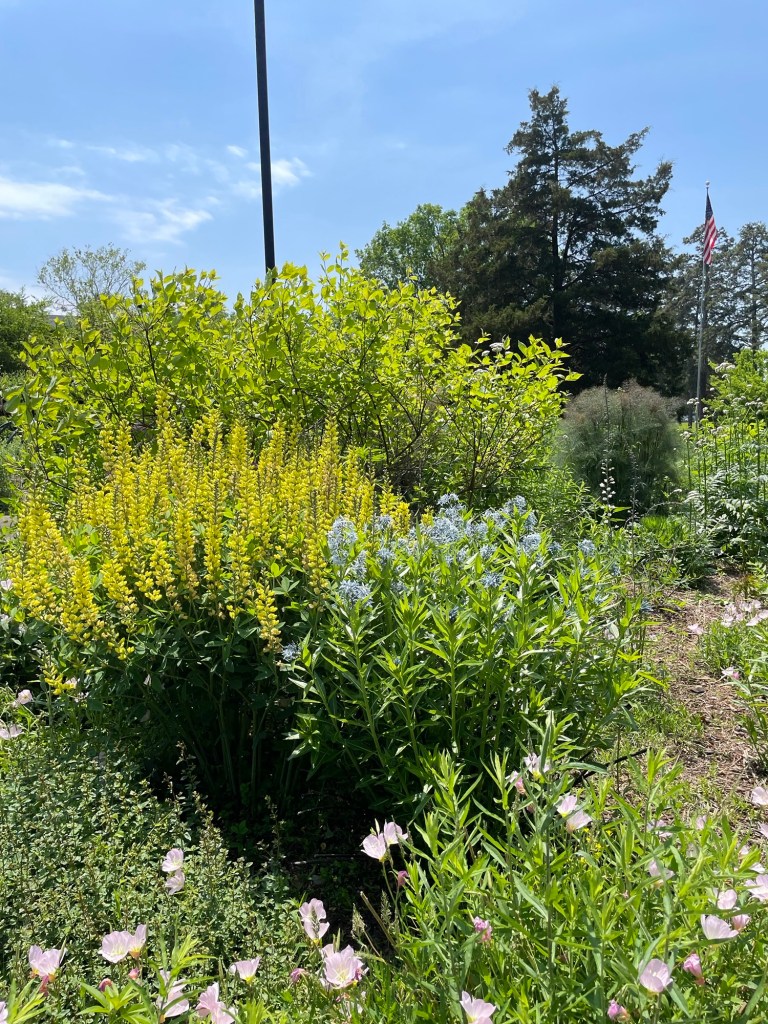
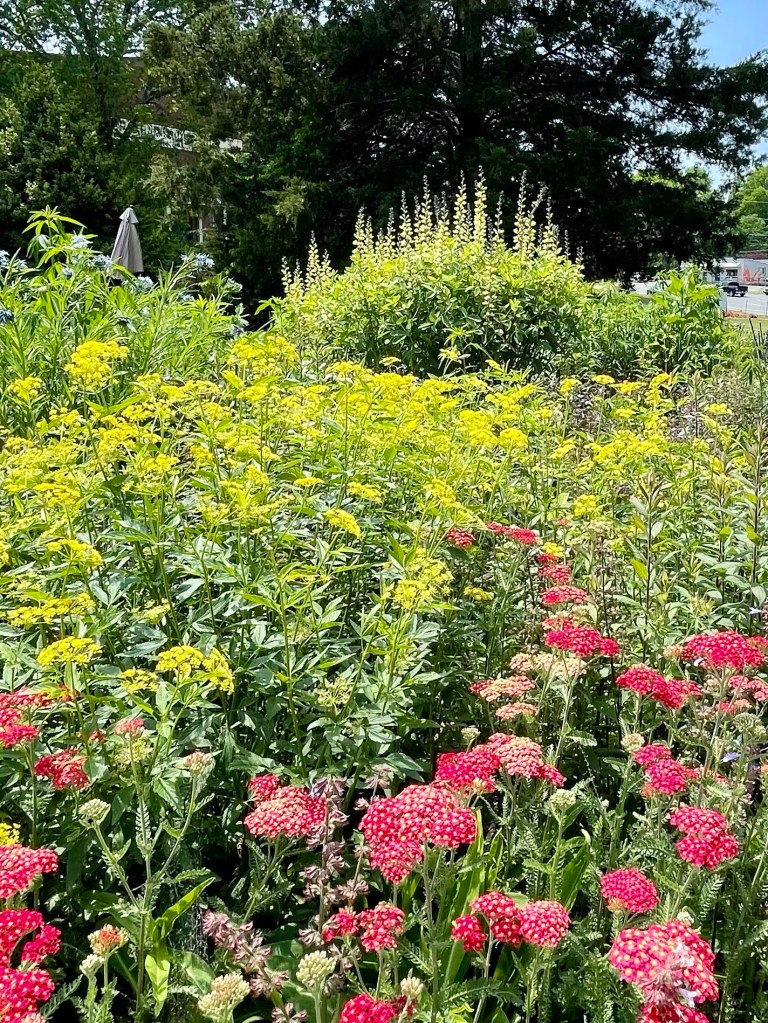

Learn more about the Chatham Mills “Pollinator Paradise” Garden here. Ms. Roos’ photos and documentation are awesome! I have also attended her personal garden tour and NC State Cooperative Extension’s ‘Landscaping for Pollinators’ Workshop led by Ms. Roos herself.
Another inspiration is the North Carolina Botanical Garden in Chapel Hill. I absolutely love this garden!! It’s free to the public, has excellent display gardens, including the show stopping carnivorous plants display, and is based on conservation and healthy ecosystems.
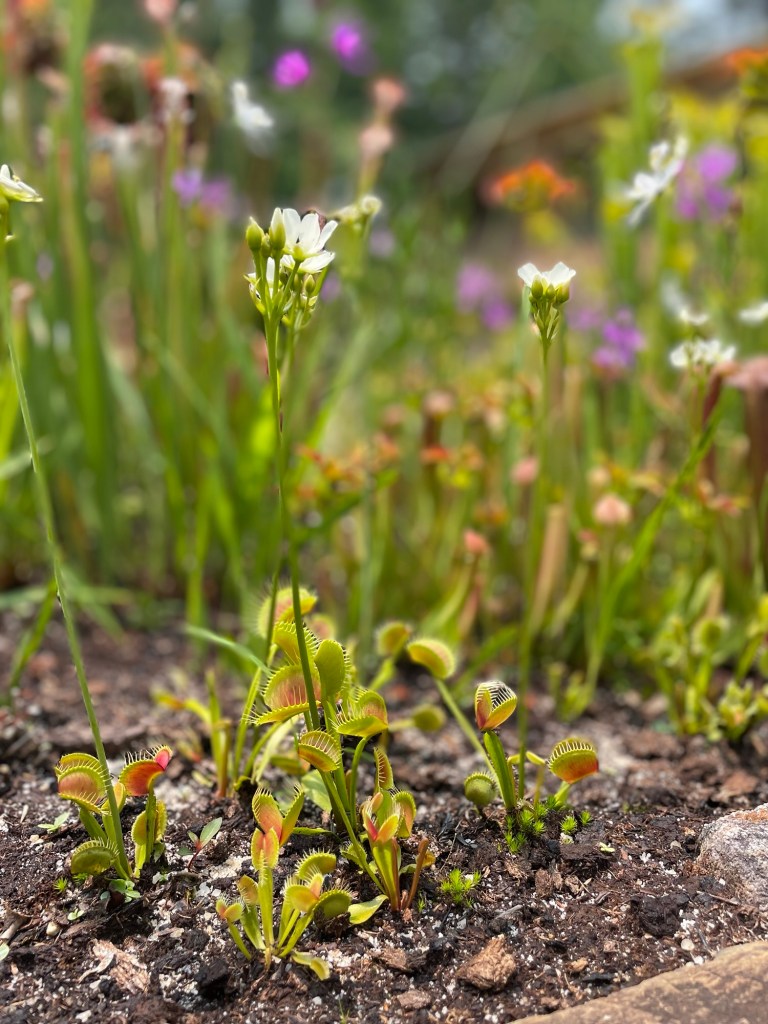
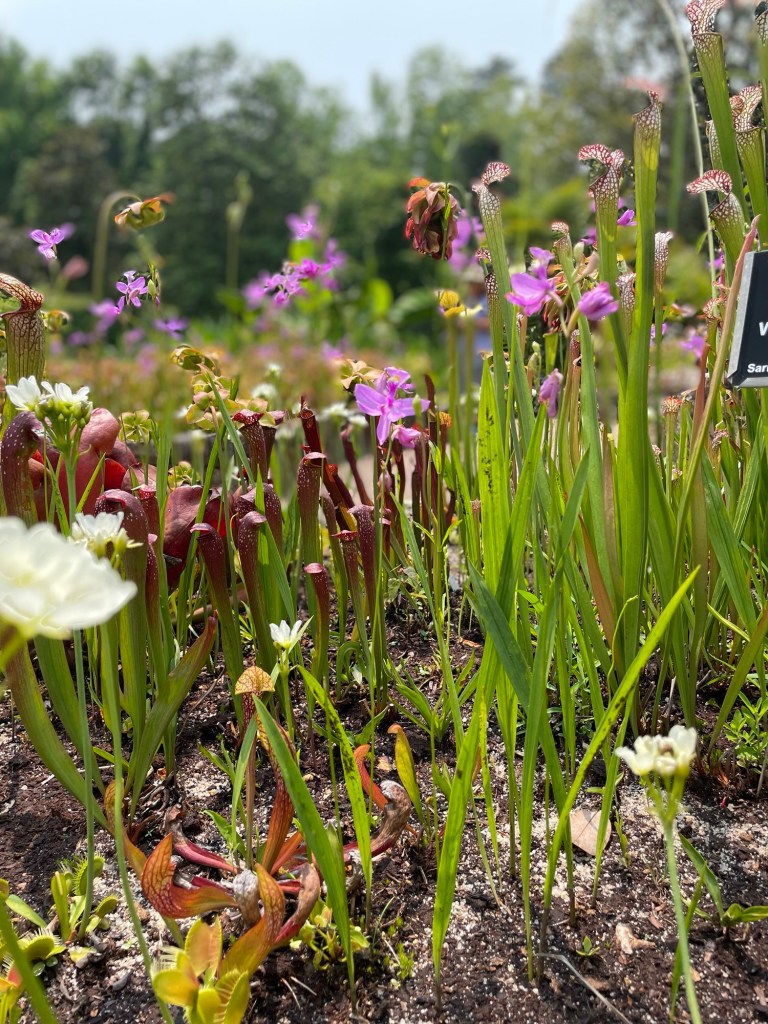
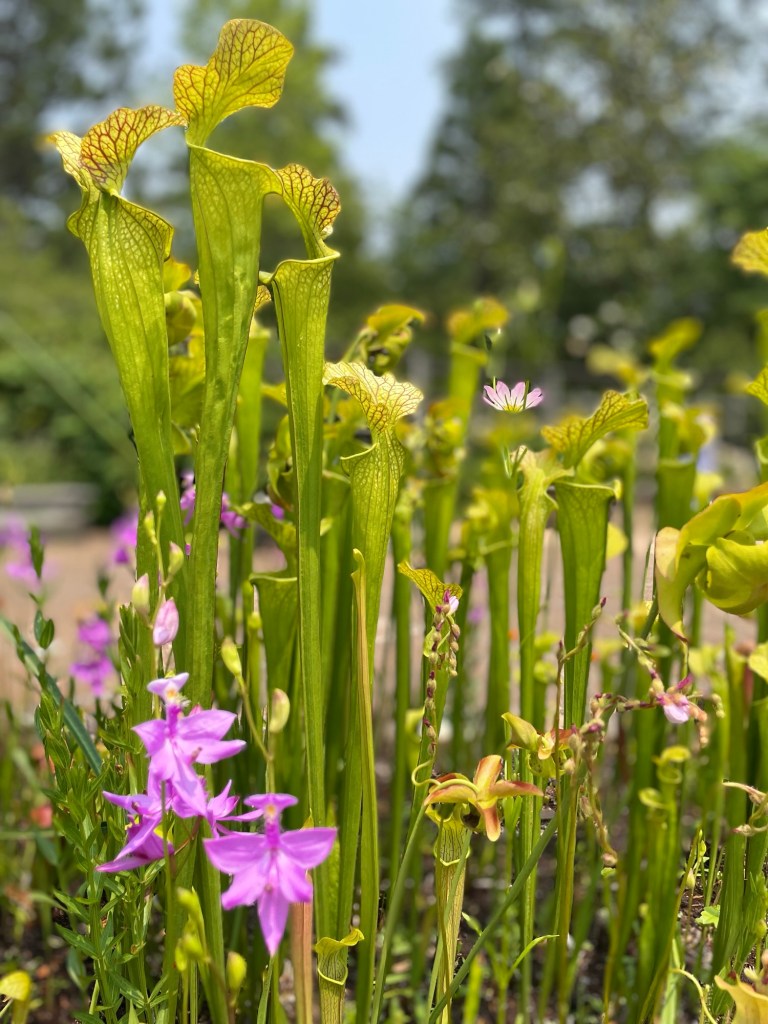
In their own words: “Today, we cultivate more than 1,100 acres of garden and conservation areas, safeguard rare and endangered plant species from extinction, and educate new generations of plant lovers and environmental citizens.”

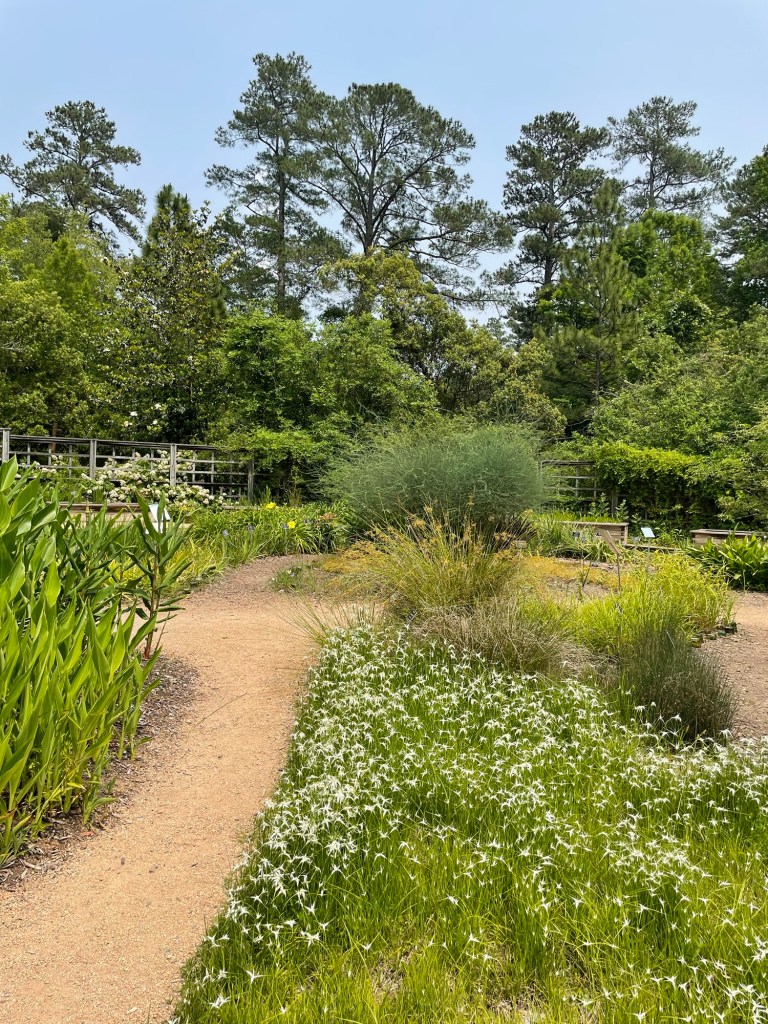
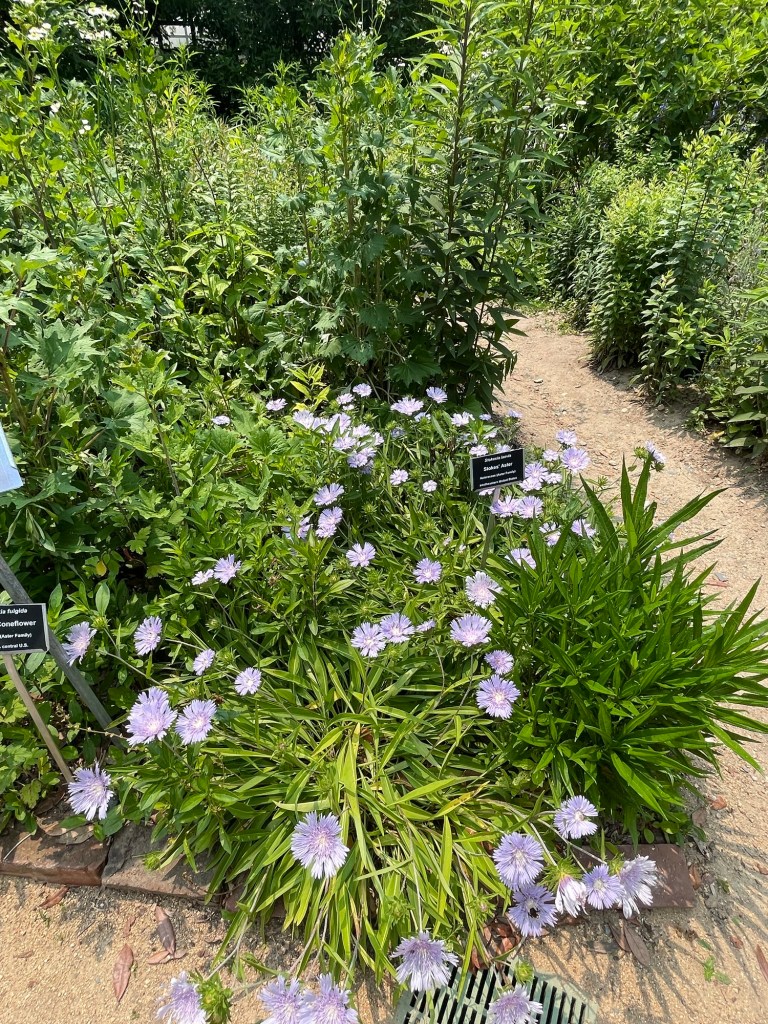
Of particular inspiration to me was an island bed whose center foundation plants are Baptisia. I loved how they filled the space and the beauty of their foliage. I also decided that my bed was going to have to be a lot bigger to accommodate three ‘Sunny Mornings’ but ‘yay’ that means less grass and more interesting plants to delight the neighbors 🙂
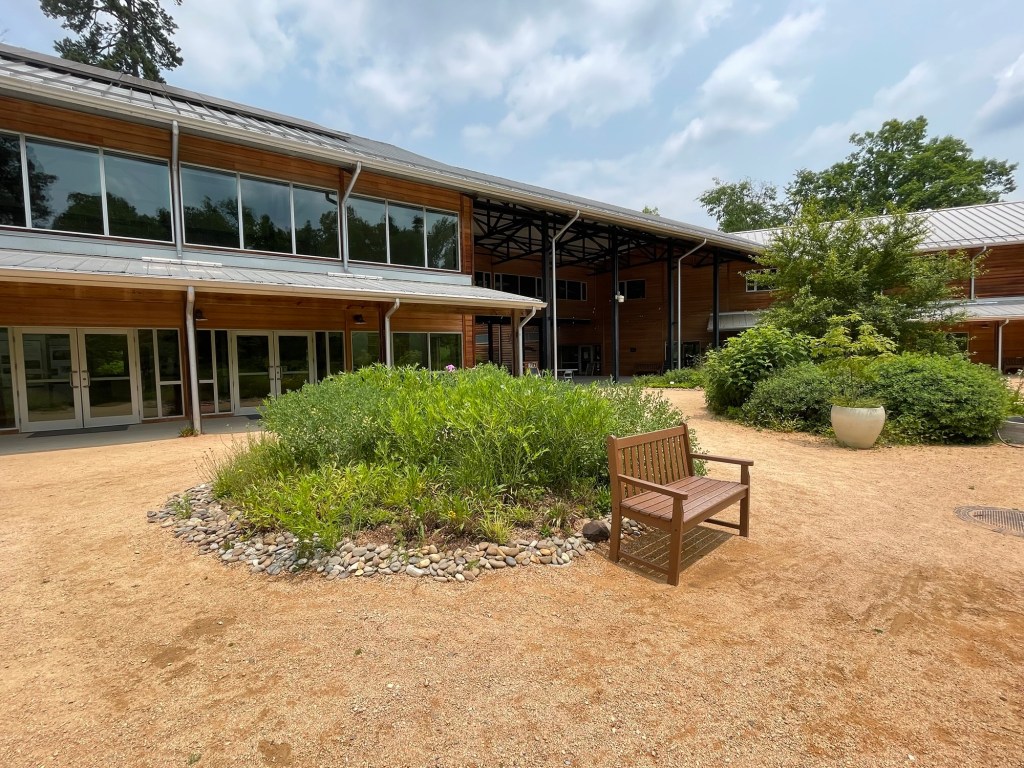
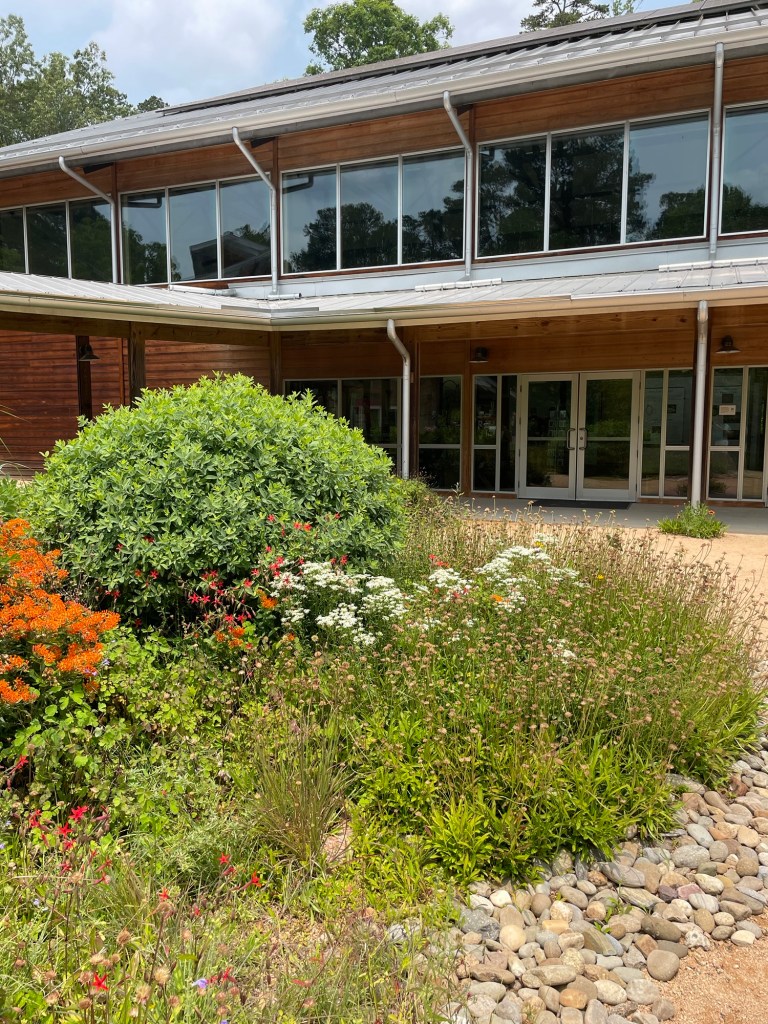
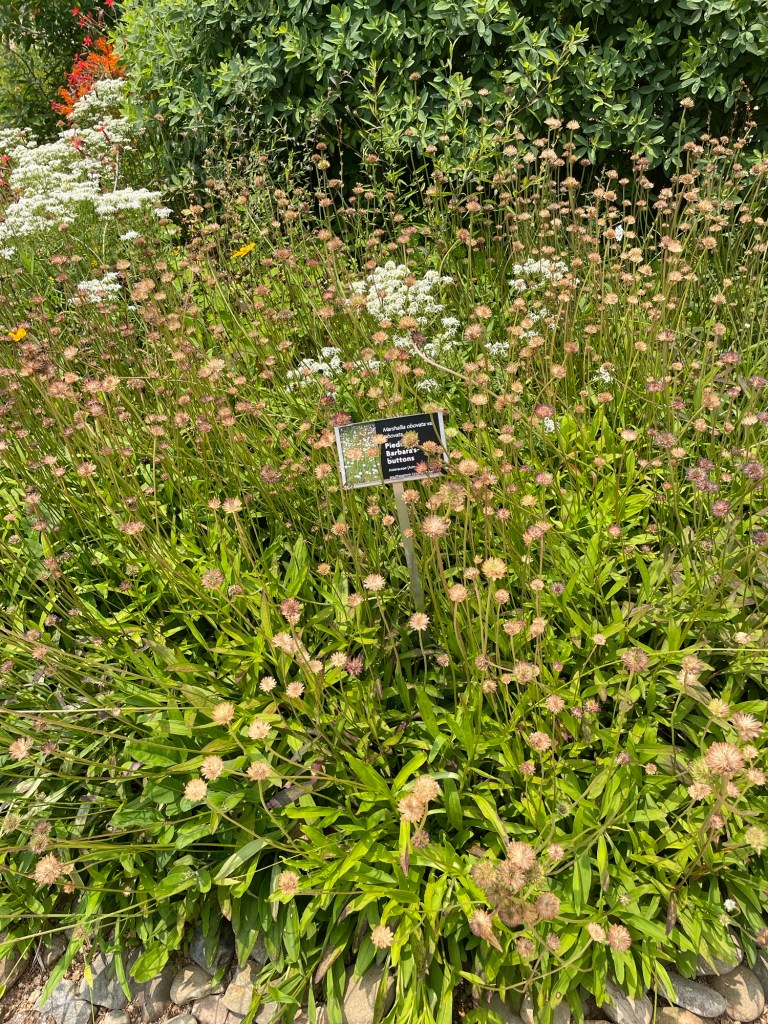
One more inspiration after I began my designing was the natural NC piedmont planting at Quest, part of the Latta Nature Preserve in Huntersville, NC. All of the choices they made for the landscaping around the educational building are plants native to our area. It was quite valuable for me to see which plants were chosen (and not a long list either considering the space) where they’re used, how, and in what landscape combinations. To see this approach used in a commercial and especially residential setting is often hard to come by when most landscape designs and installations are made of non-native plants, shrubs and often non-native trees.
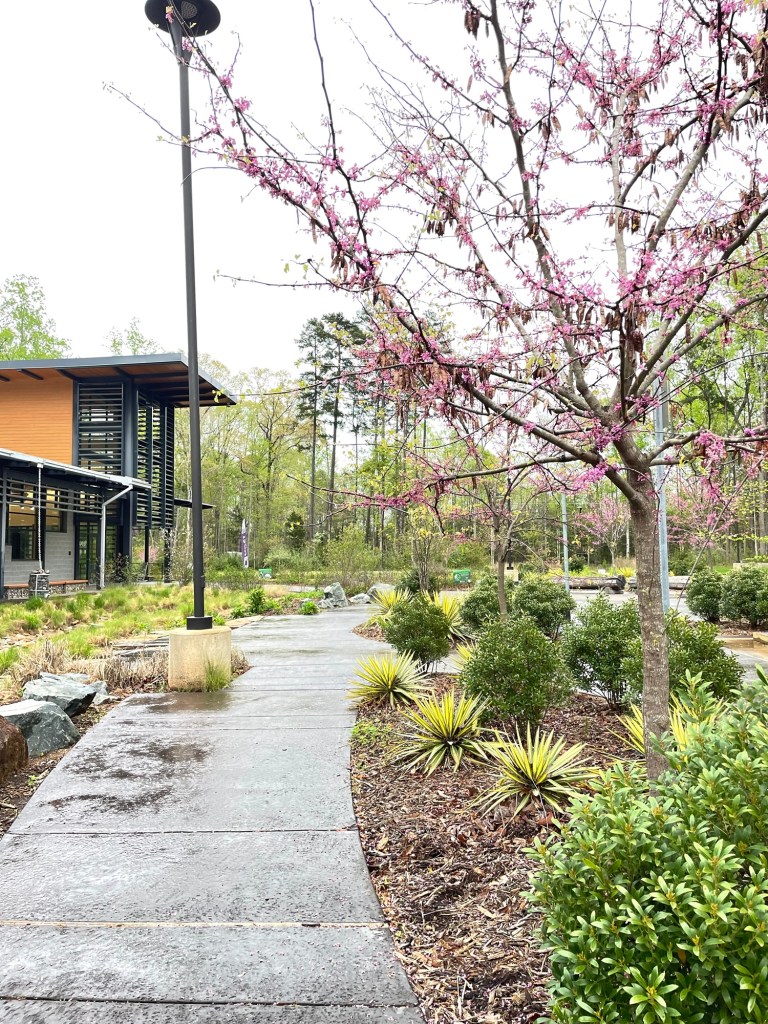


I was reaffirmed to include the yucca as an evergreen type structural plant and in the future hope to understand and use more grasses, carex and sedges. Another native evergreen they use for year round interest but also ecological value is the inkberry, Ilex glabra, which I had sought out in the past but ended up rethinking because of lack of affordable availability and also timing.
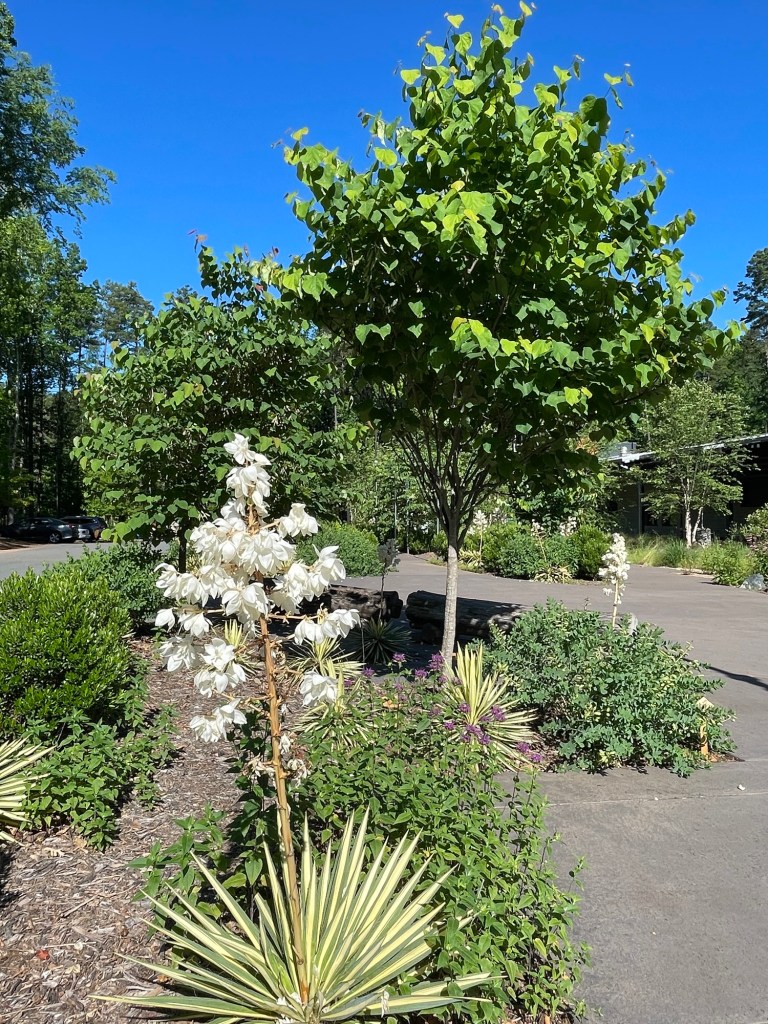
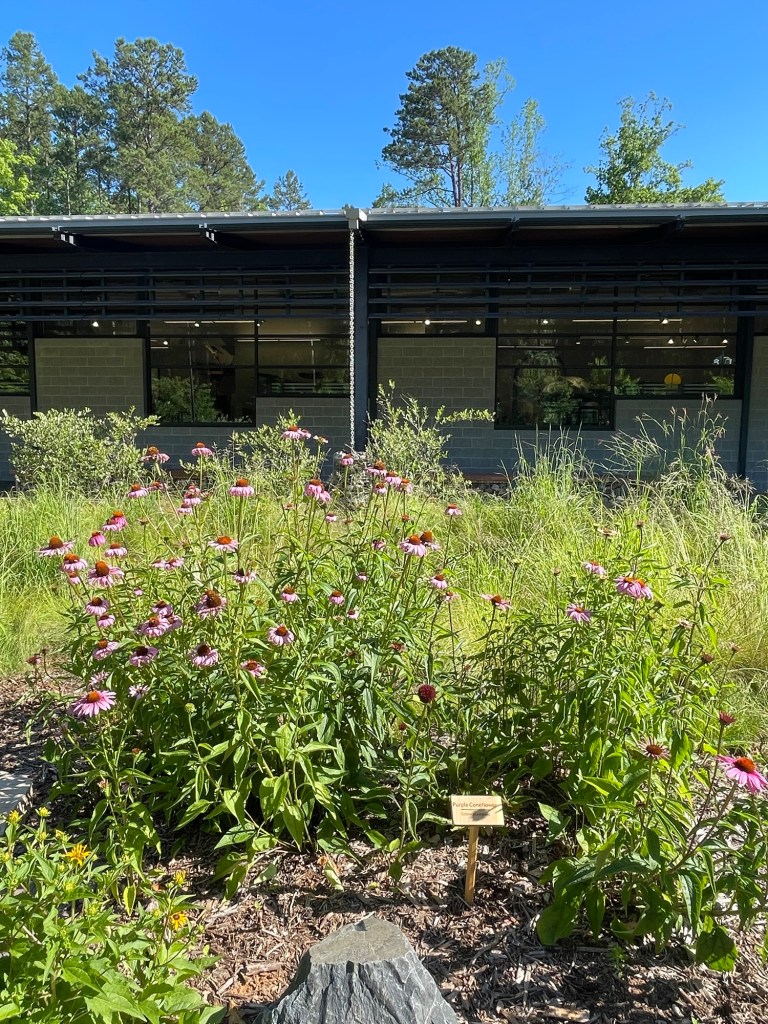
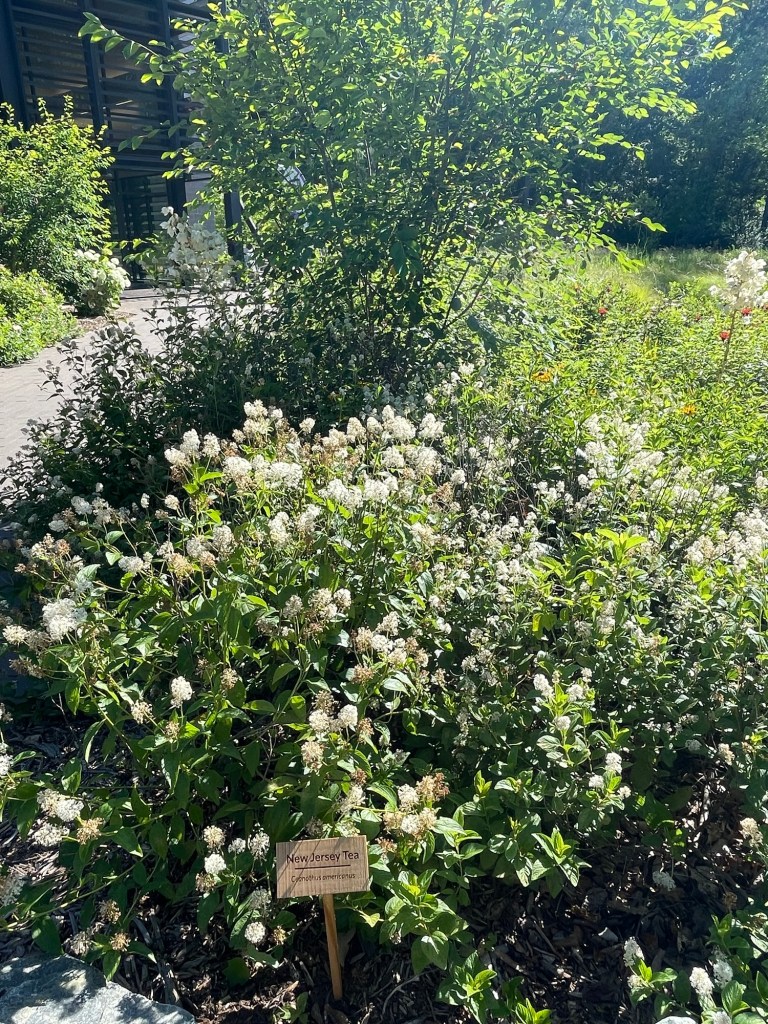
I wish they had more information about their landscaping online. On site they do have plant tags and plaques with information on local ecological processes. Quest is an interactive educational center geared towards children but the landscaping is super impressive. Of course the highlights of the Latta Preserve are its non-motor water access, hiking trails and the good deeds and education of the Carolina Raptor Center.
Have you been thinking about starting a little patch for pollinators in your garden? Are you looking to just down-size the grass and go bigger with natives to boost your property’s ecological value? If so, check out how I began to do just that here in A New Native Bed: Patience and Planning and here in A New Native Bed: Selection Process
I hope this information helps in planning your borders and beds. Also see my Native Garden Reference Links here, it’s being updated all the time.
Coming up next is A New Native Bed: The Inventory
 Severnista
Leave a comment