
Taking inventory is a good task for this winter month: moving through the neglected yard, seeing what’s coming up and what tasks need to be done.
Most importantly we take in the daffodils.
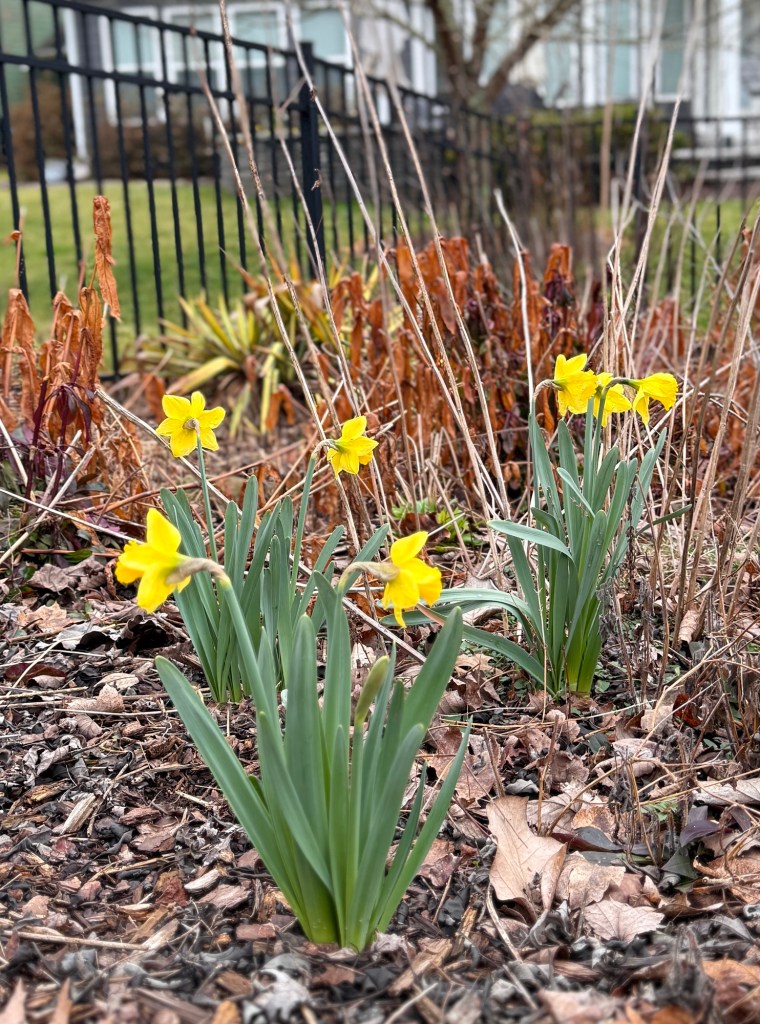
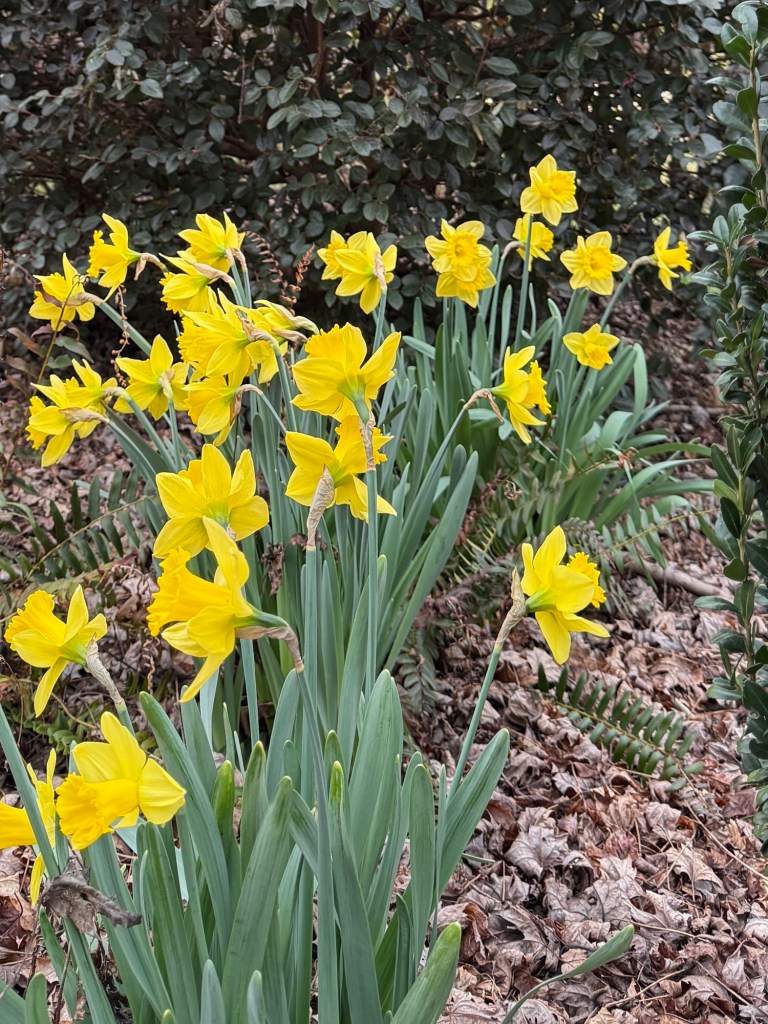
Looking out into the dreary winter landscape their presence acts as a thrilling jolt to the torpid system. Their beautiful, yellow glowing flowers recharge the senses. As for taking inventory they can only be written down as ‘find ways to multiply’ and ‘add more here.’ Not only cheery but tough, daffodils certainly have the ‘just-what-everyone-needs’ disposition for this time of year.
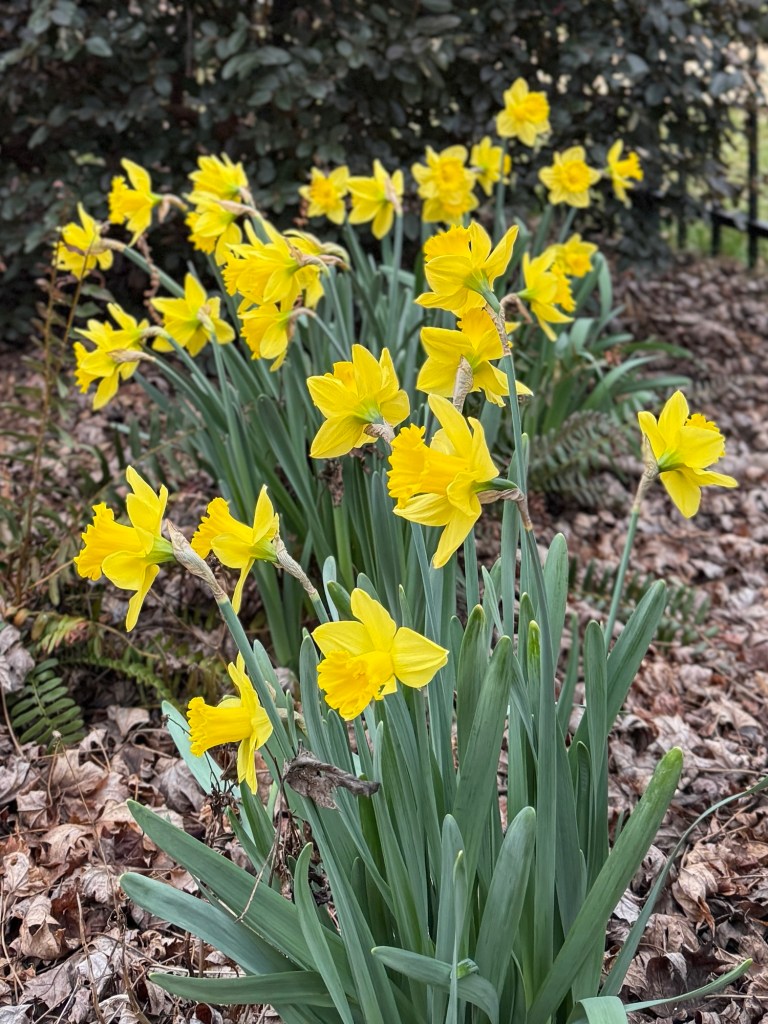
A flower that is almost euphoric in its dazzlingly bright and defiant beauty, it almost always stands first, always stands out and often stands alone. Though not native to North America, they are a much needed tonic, as early as February, after staring at a somber, crusty brown or boringly overdone evergreen winterscape.
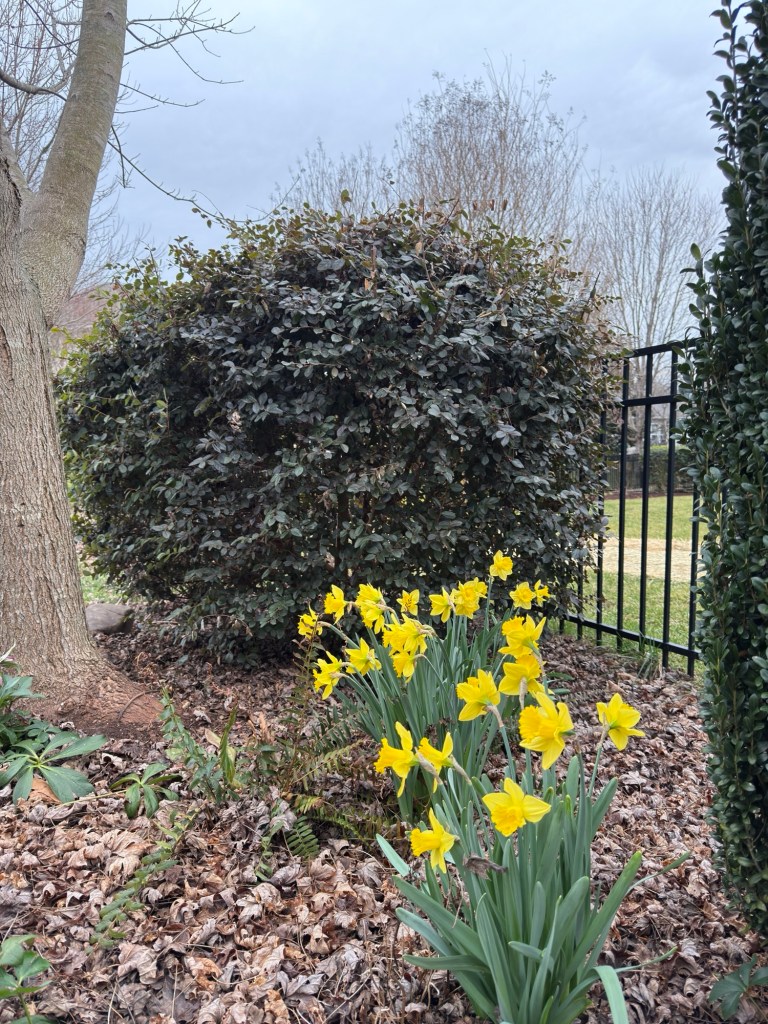
I’m a nerd gardener so I started to map all of the daffodils in my yard. It is the only flower in my garden that has a map dedicated just to itself, a true Narcissus. The objective is to map their locations so that I can properly take note of where there needs to be more: this corner here, under those trees, more in the front. Every place needs more daffodils! For me their presence truly marks the beginning of a new year.
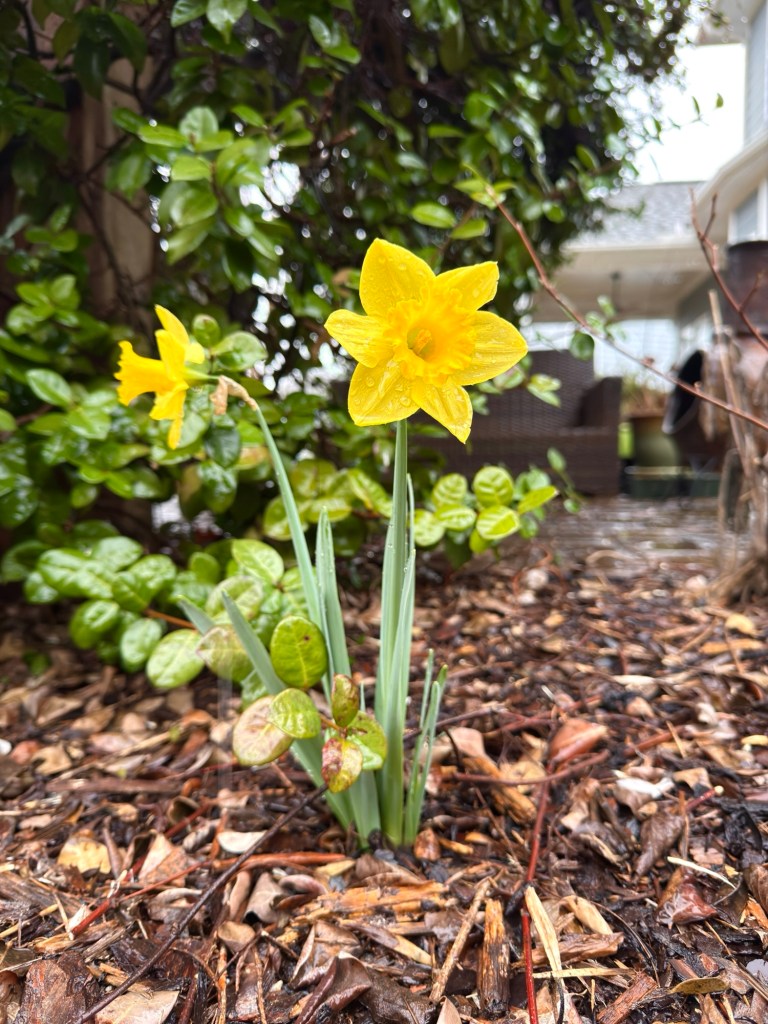
There simply must be more.
I’m completely addicted to the breathtaking joy with which they decorate the entire garden even if it’s just one bulb to start in one bed. Over time they become a naturalized group all on their own. And it’s a flower that, though short-lived itself, a one-time bloomer, keeps its stature and appearance through tough wind and rain (it is still winter) until it’s given its gift and goes.
Tip: Plant a variety of daffodils with various bloom times to stagger the blooming display for many weeks.
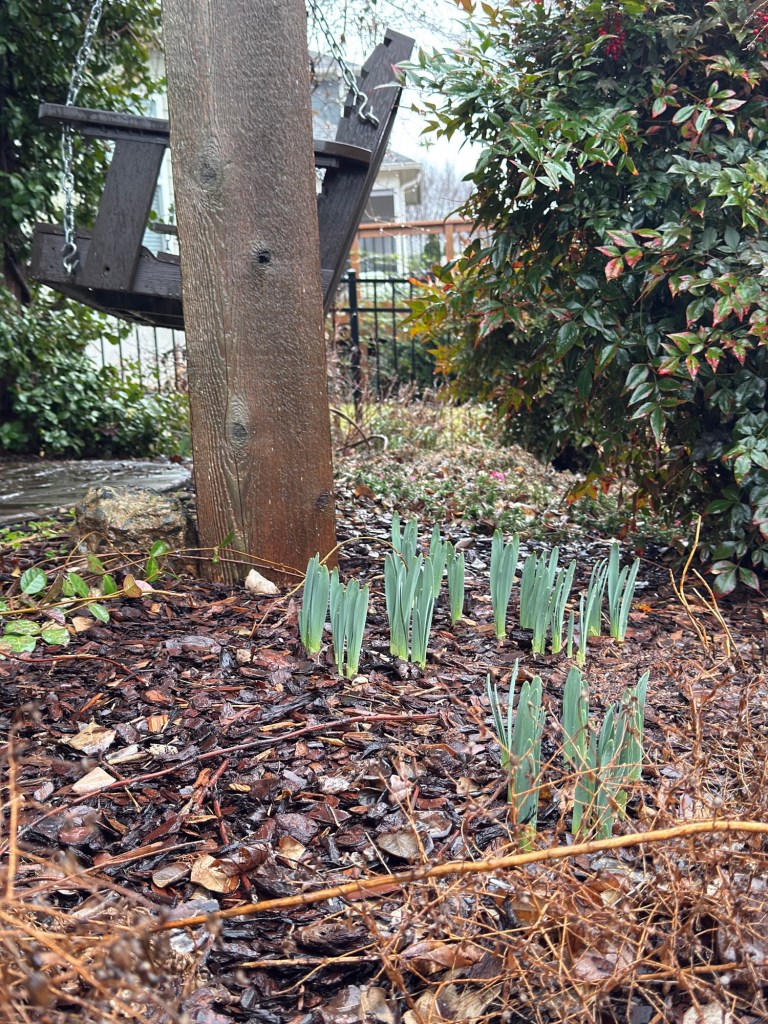
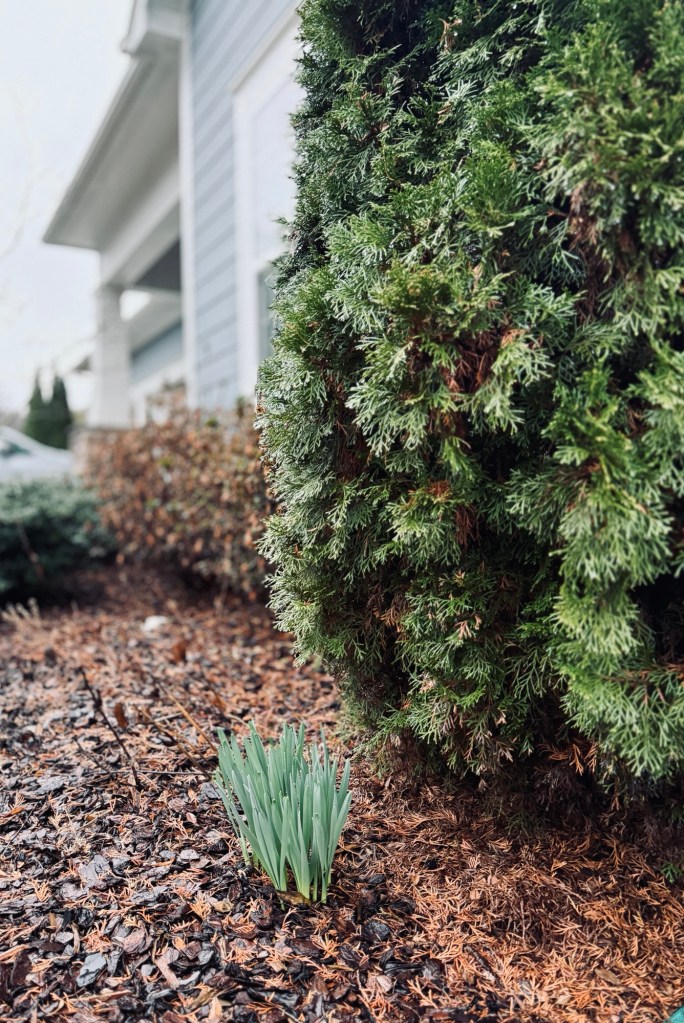
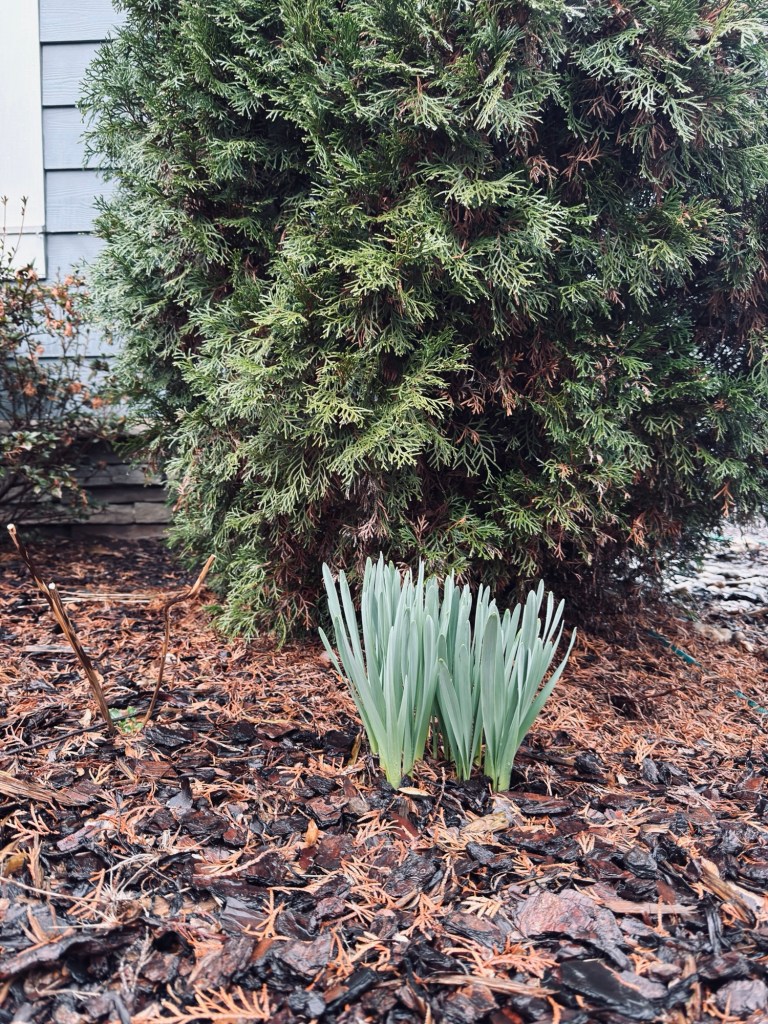
So while you’re out admiring the fresh, spring green of the new year’s growth and jotting down where they’re turning up, because you’ve forgotten exactly where you’ve planted bulbs due to rush jobs in late fall – don’t worry I’ll write it down later when I’ve completely forgotten – recharge your senses in the crisp air of late winter (esp. for those in Zone 8) and get the endorphins pumping by clearing up and collecting some perennial twigs and sticks to make a ‘winter’s finally leaving us’ bouquet. This is something that will be for the birds.
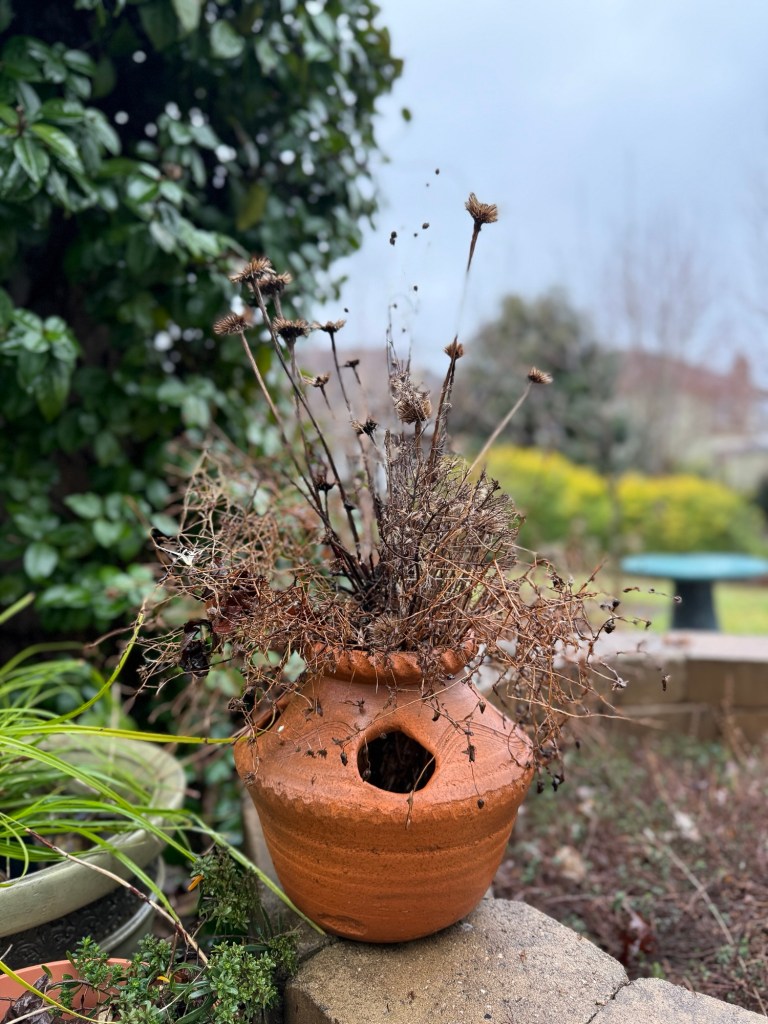
What I consider as part of my ‘taking inventory’ tasks is to remove some of the twiggy detritus from last year’s growth. Most of the dead perennial debris I left in place in the fall was to provide some interesting architectural shapes to the winterscape and also to leave available seed heads for the birds.
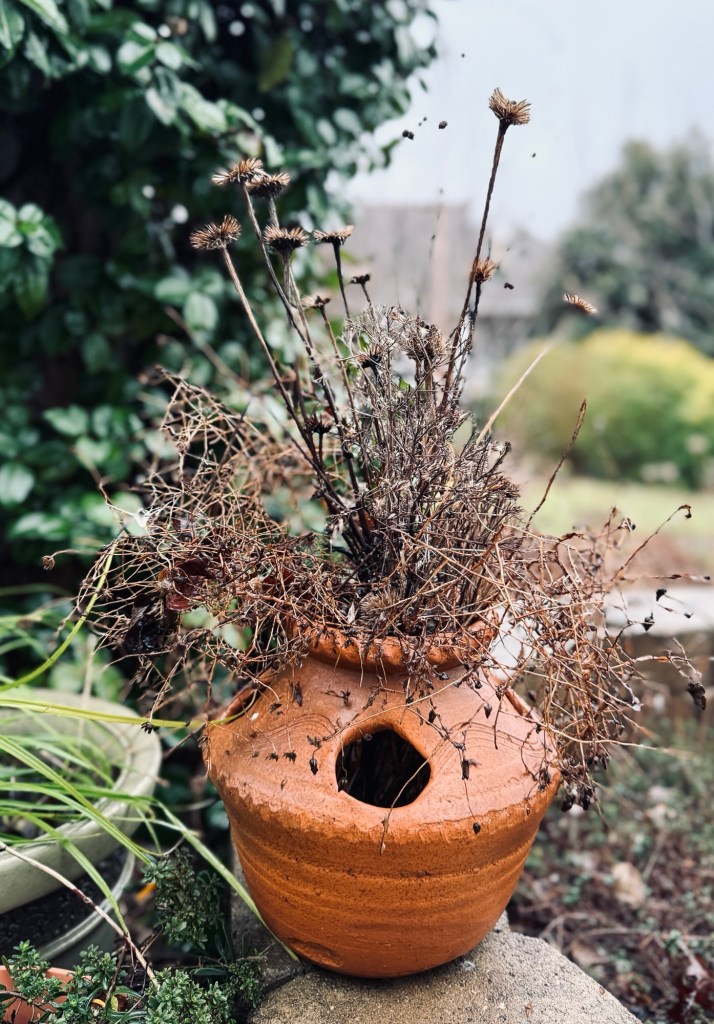
With twiggy matter in hand I can craft a couple of bird’s nest bouquets with the good-byes of last year and the hopes of safely, nested and fed baby birds of this one.
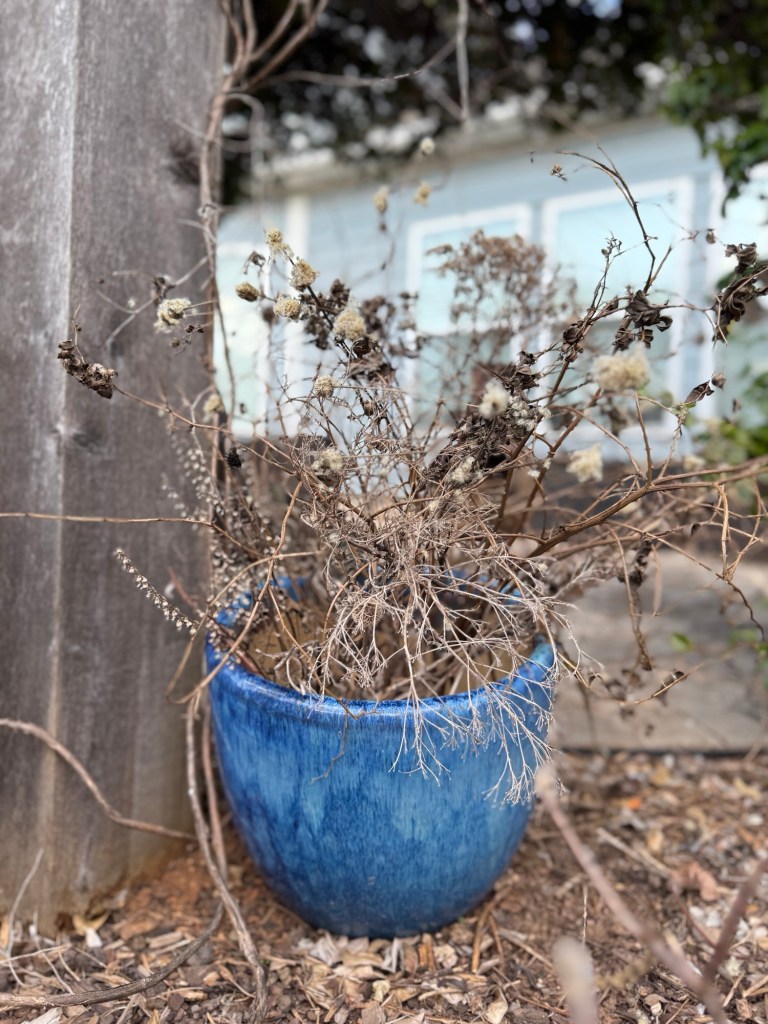
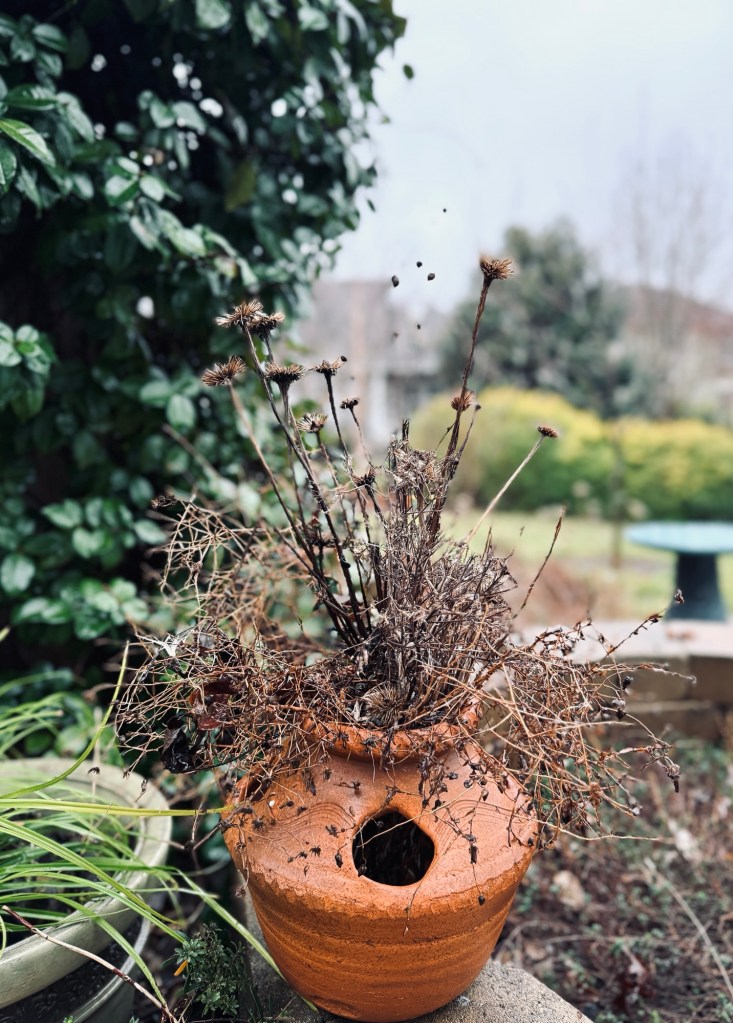
To do this I find an empty planter pot and stuff it with what I’ve collected, arranging it with various heights and textures of different plants as you would any living container or freshly cut bouquet. Then it is left for the birds to peruse and pick out something for them to use as their home building materials. This bouquet is primarily made up of three year old Baptisia remains. They appear in winter in a tumbleweed form, limbs breaking off easily clear to the ground.
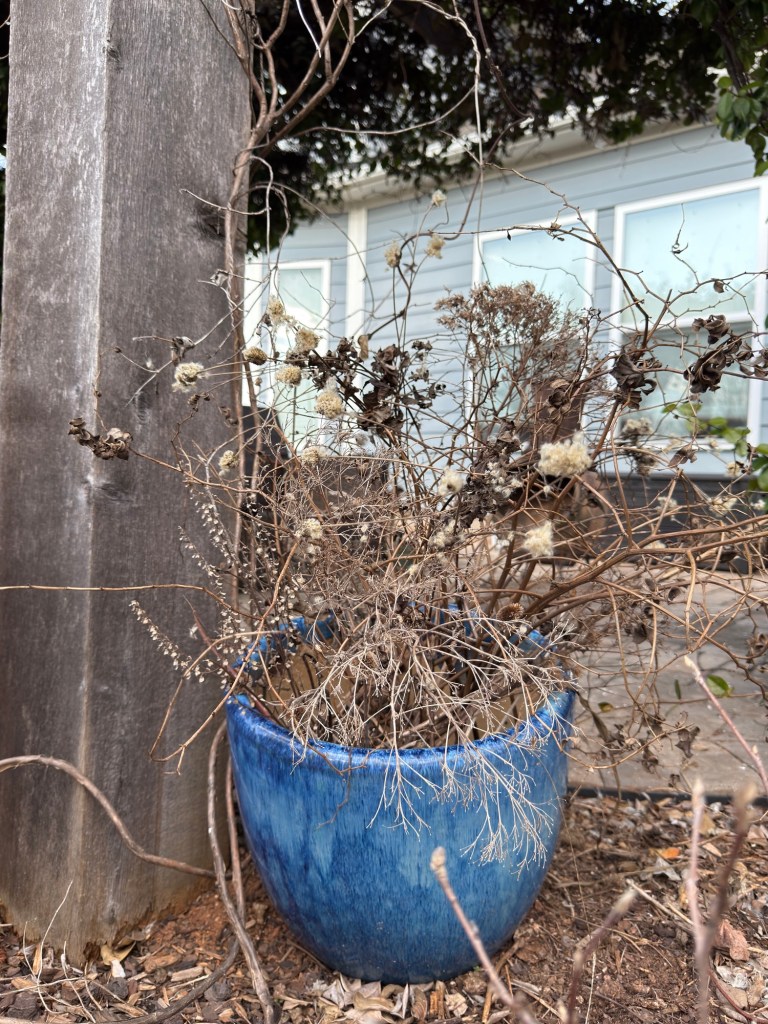
I add some baby joe pye weed stalks for a tall, dark thrill and some white cotton puff blooms of an anemone for contrast. For added texture I include seed heads from Scutellaria incana, also known as downy skullcap, a more ‘well behaved’ member of the mint family, which in summer has dainty purple blooms and is of a medium stature in the native perennial garden.
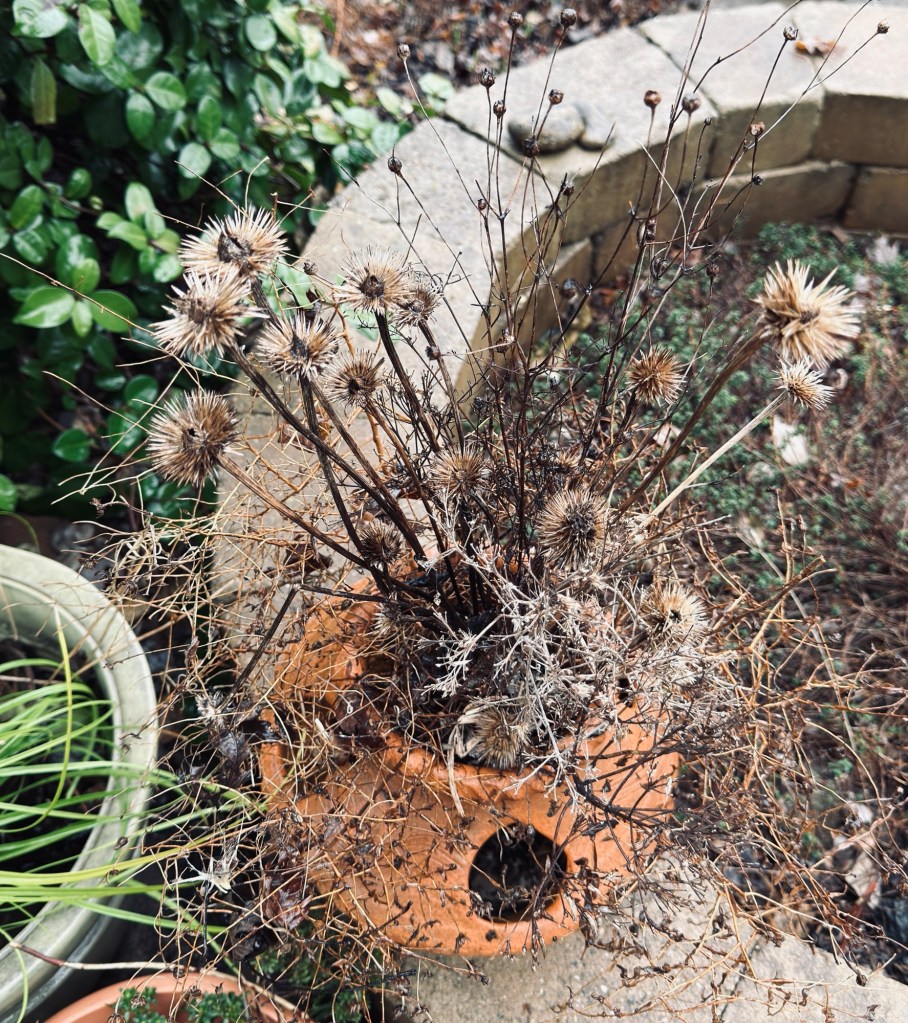
I use four different plants but you can mix it up, add more, vary the plants. Echinacea seed heads or Rudbekia are other excellent choices for medium to tall size filler. Add smaller asters like ‘October Skies’ at the bottom for a spiller element. I’m pretty sure you can’t go wrong and that’s what makes it even better to behold!
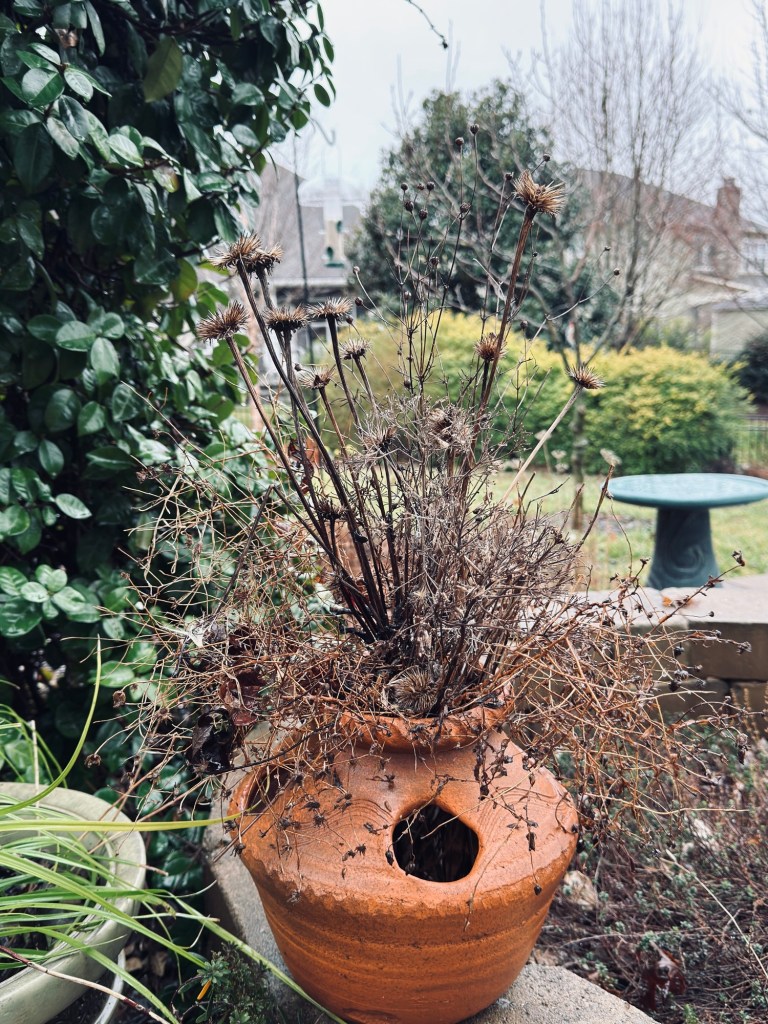
Will the birds use it? Do they take the twigs, fly off, begin their construction? Who knows. I’ll keep watch. I just like making use of an empty pot with scraps that people have been looking at for months now as they walk by my yard thinking, ‘what’s with all the dead shit?’
There is another purpose in all of this and it’s to leave the old growth in fall and then in spring trim it back part ways only to reveal cavities in the stems for insects, and especially small nesting bees, to use. And who wants to attract more bees?
Well, we do, of course. Harmless, these small insects are out there pollinating as vigorously as any honeybees some of the foods that we are fortunate enough to get to eat! So you don’t need a bee hotel or structure, just leave stuff a little rough looking throughout winter and then ‘kind of’ clean it up, but not really, in early spring. Cut some stems back by two-thirds, but leave others. Take your time basically. Be a little lazy. Lazy and half-ass gets a reward here. Be a gold medalist!
For more information on native bees that nest in perennial stems, visit Debbie Roos’ article here. She is an agricultural extension agent with NC State, a native plant gardener, an insect lover and an amazing photographer! She too is a kind of nerd gardener and her years of study, field research and documentation has been an outstanding influence in my own gardening.
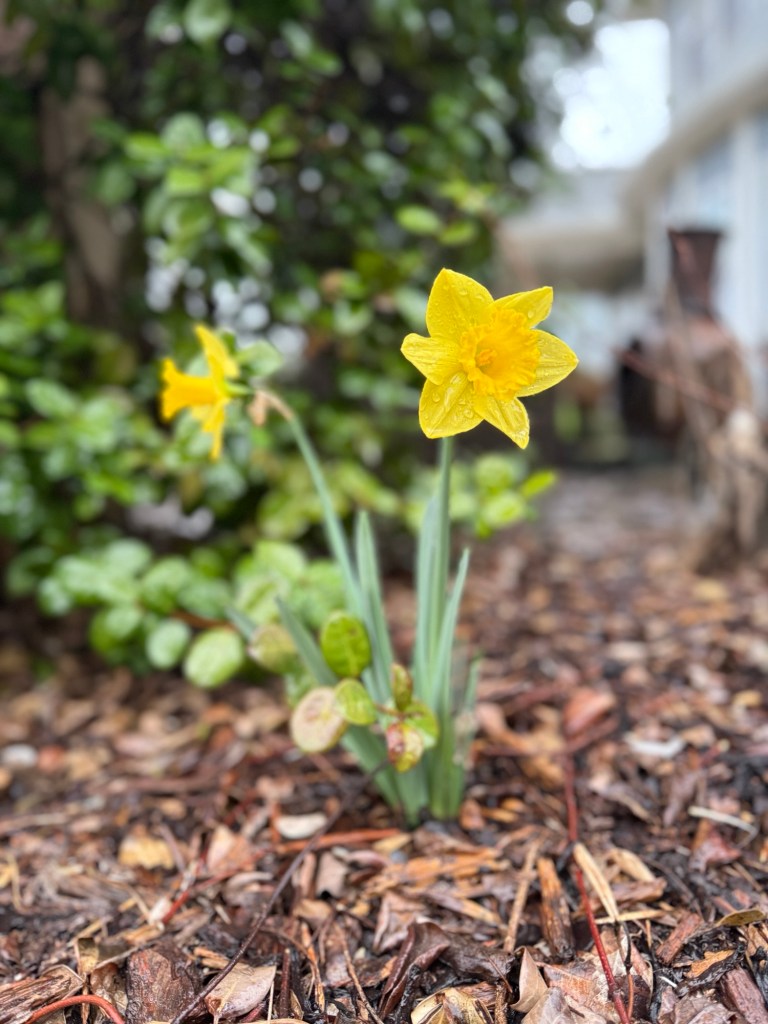
So back to your garden: admire the daffodils, let them make you happy, let them whittle away at winter depression. Take inventory and plot where there needs to be more yellow cush narcissus joy. Do little work or a little work, however you want to look at it. Make scraggly ‘bouquets’ and say they’re for the birds. Get ready; spring is on the way.
Here is a different view of daffodils that is worth a read. Without a doubt the bright, sunny face of a daffodil is for me, the gardener, and those that pass by. But in all things, perhaps there’s an alternative that can bring just as much joy.


 Severnista
Leave a comment