Many people love the fall season. The change in the light, the crisper air, the slow down and then re- energizing for the holidays.
In the garden the perennials have slowed for dormancy, trees have put on a show with colorful leaves, or not, and stand bare, ready to brace themselves in quietness through the winter cold.
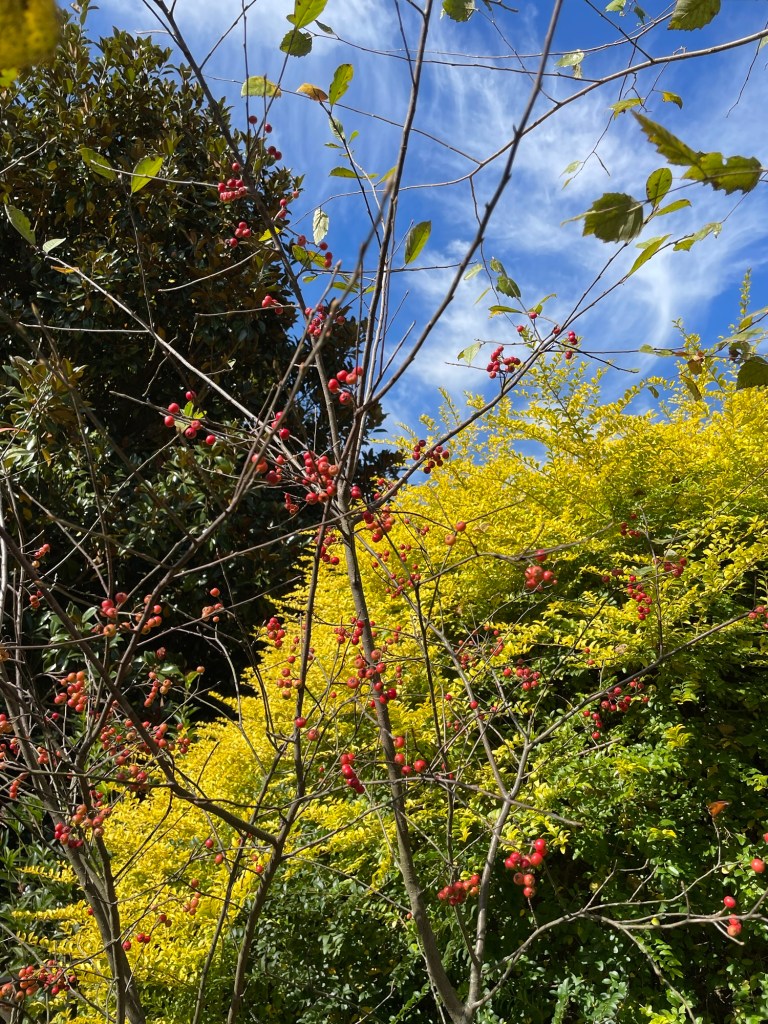
Some plants are already at work prepping for their spring display. Other native shrubs like the red chokeberry (Aronia arbutifolia) have set the harvest table for the birds with dainty red berries.
Even though fall seems like a time for saying goodbye to things we love: bright beautiful flowers; long, hot summer days; vacationing and changing our view if even briefly, fall is also a time for planting hope and seeing the world around us with fresh perspective, with clarity. Just like any season, I suppose.
Here are some beautiful hopefuls:
The Pine
No tree in our area of the Piedmont of North Carolina seems to really stand out and take the show at the end of fall as much as the pine. Standing incredibly tall and straight with its long green needles, this tree pops out onto the landscape as all the deciduous trees fade en masse with their grey empty branches. Hello, pine, they say. Hello, pine. There all the while but now finally we see.
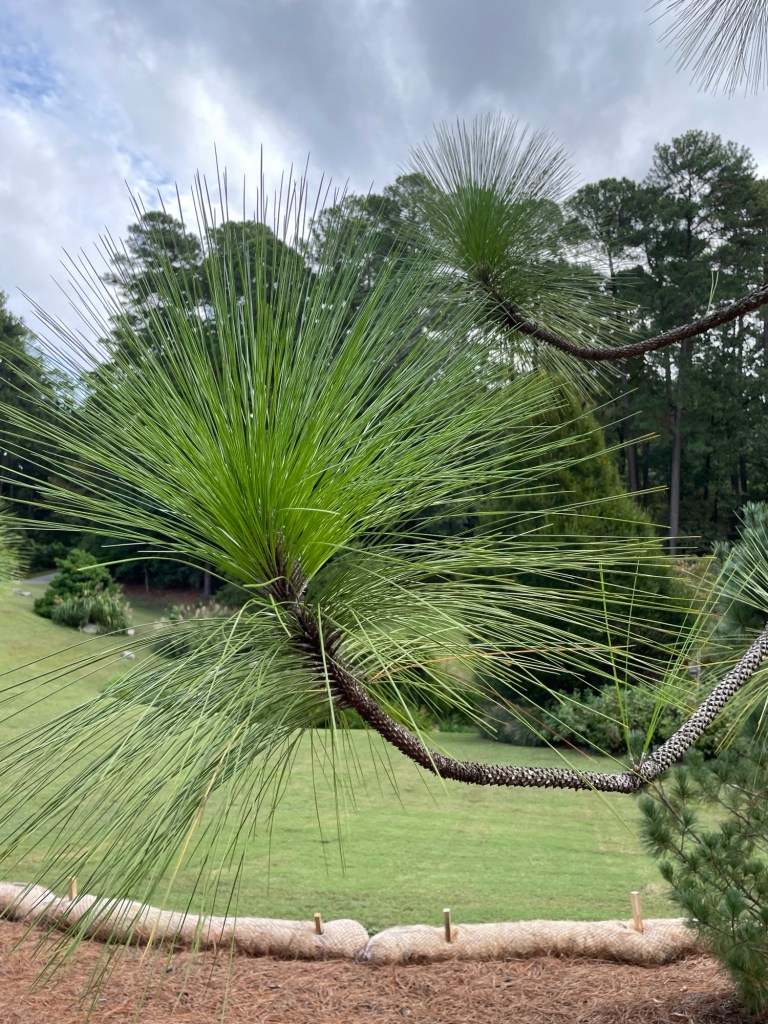
Another tree species whose fate was changed by our industry, Pinus palustris or the long-leaf pine, was once part of one of the largest ecosystems in North America before over extraction for human commerce and necessity. This ecosystem stretched from Texas to Virginia and existed as one of the most diverse for plant, insect and animal species.
For an experience check out the North Carolina Zoo: The Nichols Longleaf Pine Preserve is the largest remaining known stand of old-growth Piedmont longleaf pine in North Carolina.
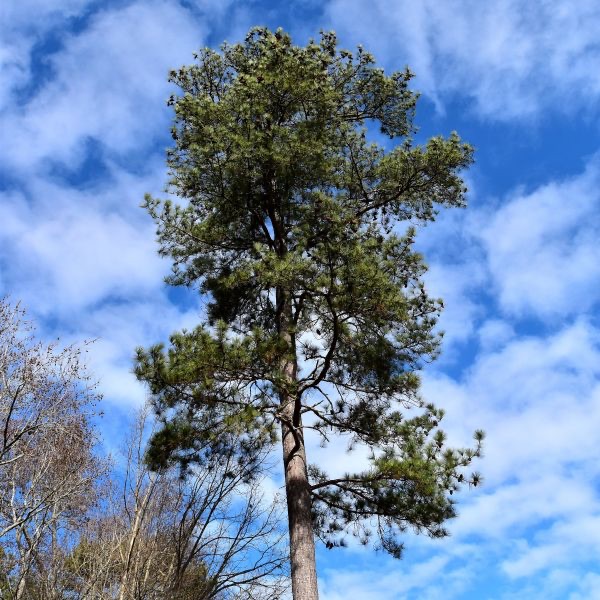
Now more commonly we see, but not any less regal and handsome, Pinus taeda, the loblolly pine, which is the most common pine currently in North Carolina as it is grown for paper products in forestry. These incredibly important trees supply food and shelter for hundreds of species of animals including us humans. And though they drift back from view each spring into the leafing out of the forests, the pines are ever working, ever providing and this earns them top place on being a fall hopeful.
The River Birch
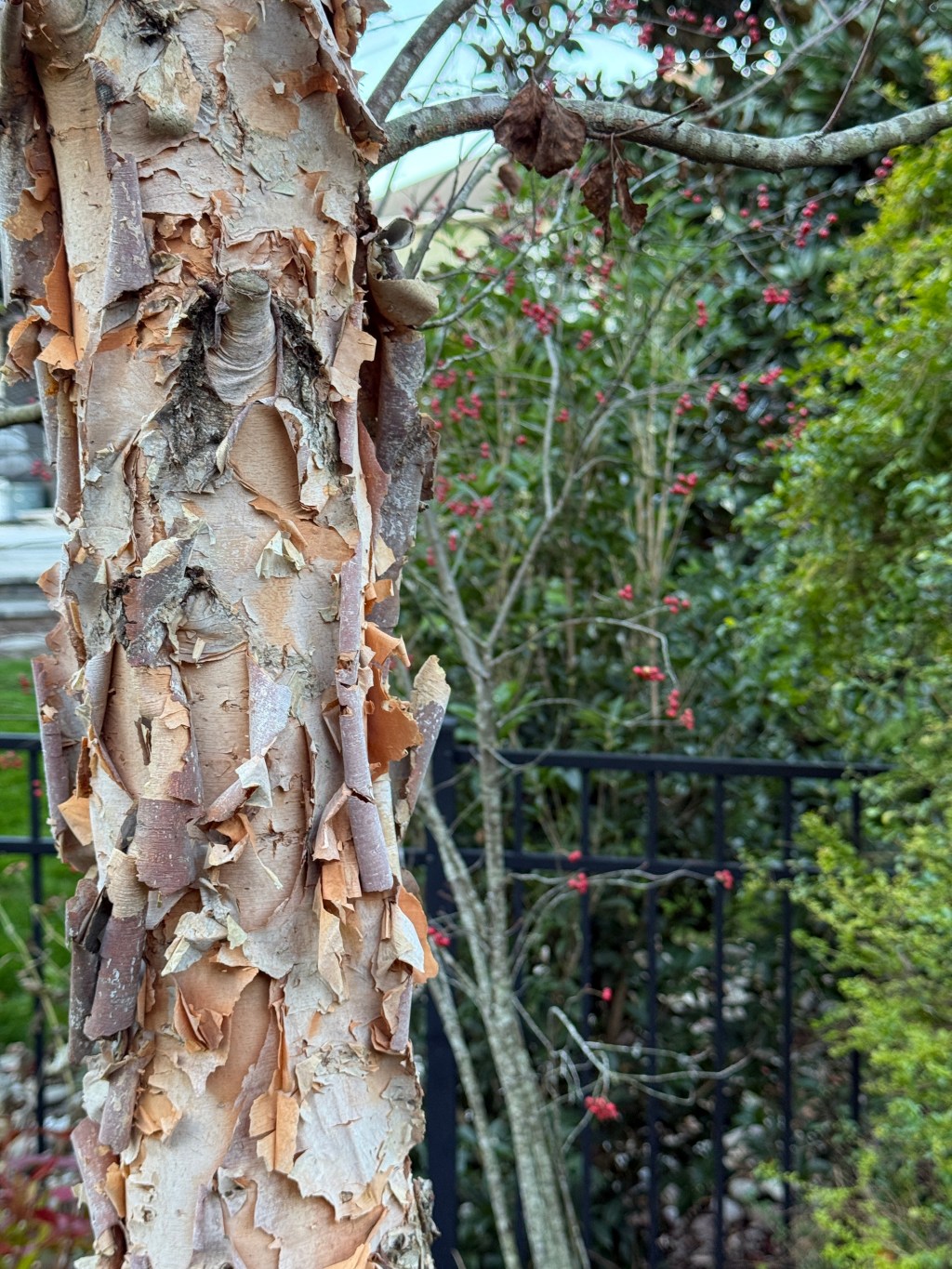
Betula nigra, another tree native to our area, commonly known as the river birch, does produce a pretty yellow changing leaf in fall, but to me that doesn’t nearly show off and draw interest as much as its unique exfoliating bark. Like papery shedding skin, the bark curls and unfurls in layer after layer revealing a smooth, pale inner bark. And yet not until fall, when all its leaves have finally left, do we begin to take more notice of this curious tree.
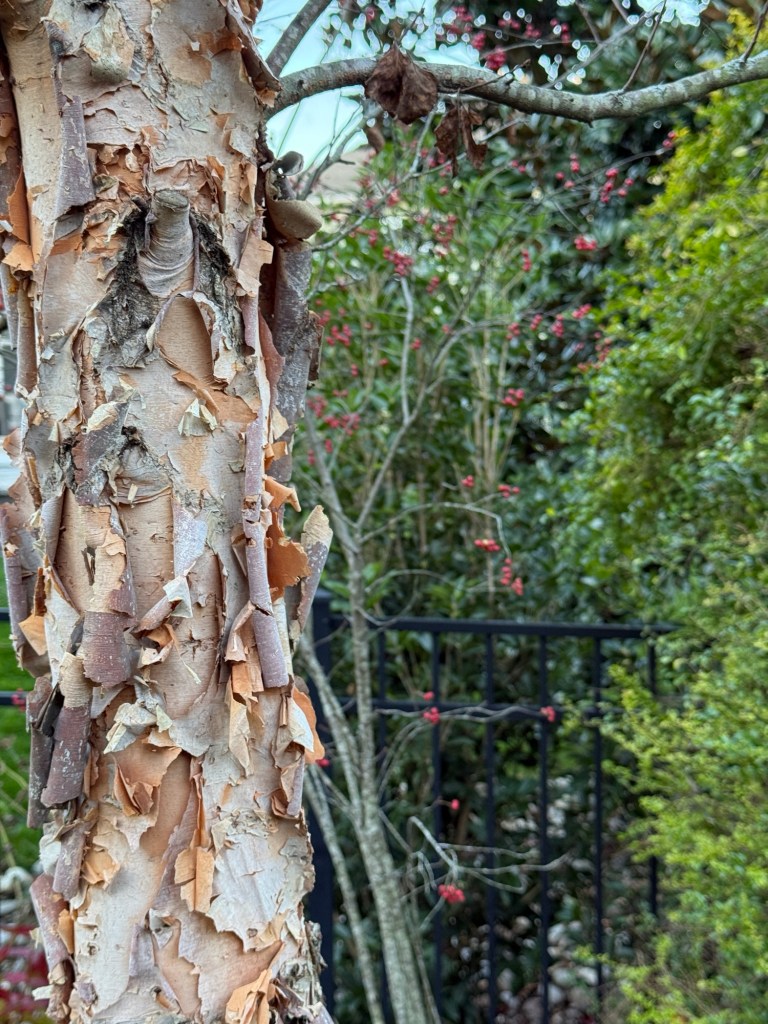
What’s hopeful about it? According to Bringing Nature Home: How Native Plants Sustain Wildlife in Our Gardens by Doug Tallamy, the entire family of woody Betulaceae plants, which includes our river birch tree, supports over 400 species of lepidoptera, a key insect species in a healthy ecosystem as they play the valuable role of pollinators and provide food for other creatures.
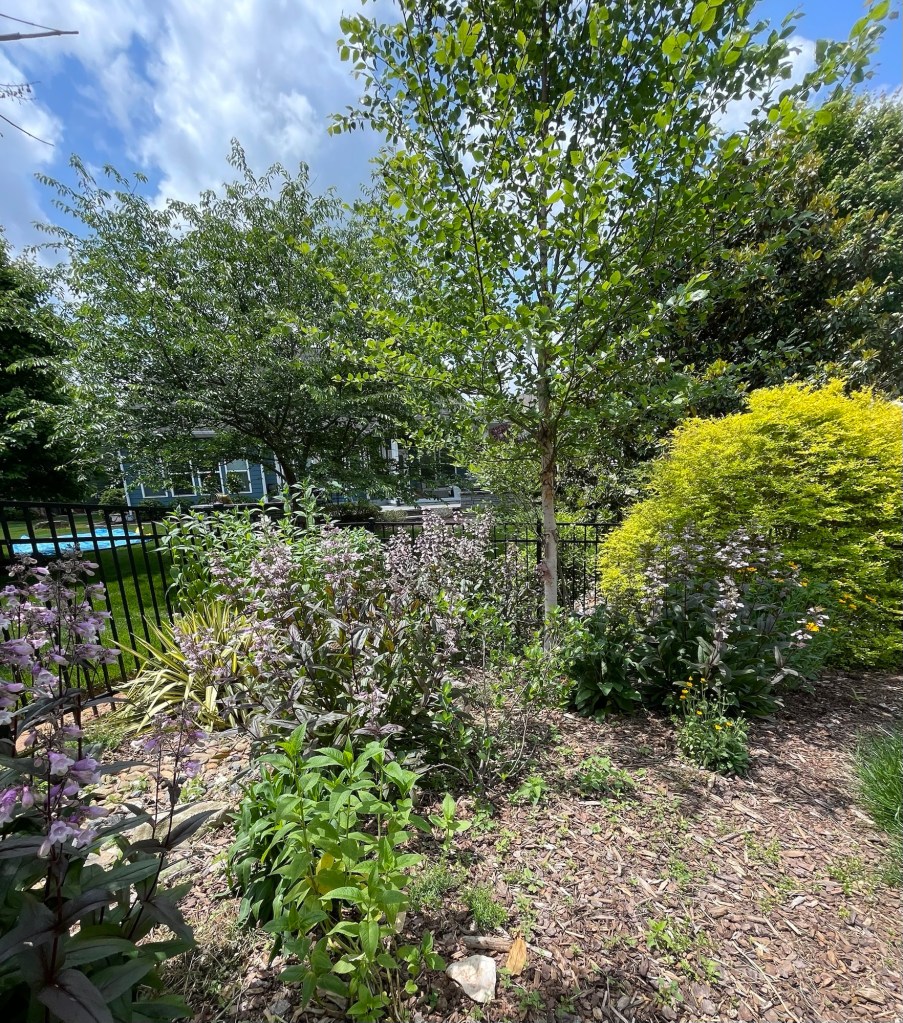
It’s also very adaptable. So if you have a very wet and clay compacted area of your yard that can support the grand size of a tree, consider planting a river birch. Wind and heat resistant, it stands with the best of them.
The Deciduous Magnolia
I think that when most of us think of magnolia trees we think of the large, broadleaf evergreen Magnolia grandiflora also known as the southern magnolia. With around 250-300 species worldwide, the Magnolia genus consists of a diverse variety of beautiful shrubs and trees both evergreen, like the southern magnolia, and deciduous.
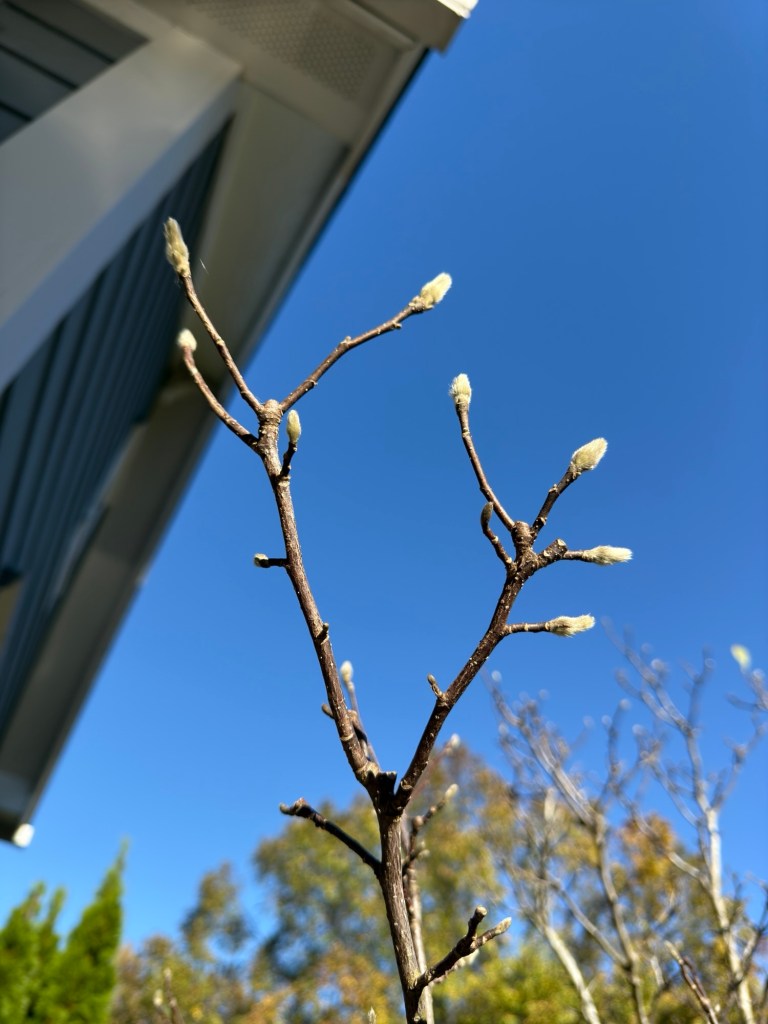
In our garden we have two deciduous non-native Magnolia species that we chose for their smaller statures and beautiful early spring blooms that emerge before the leaves. Ranging in color from white to pink to yellow, these blooms are hopeful in spring but long before the show of flowers and leaves, emerge their tough yet velvety little buds, popping out along the ends of bare branches in autumn.
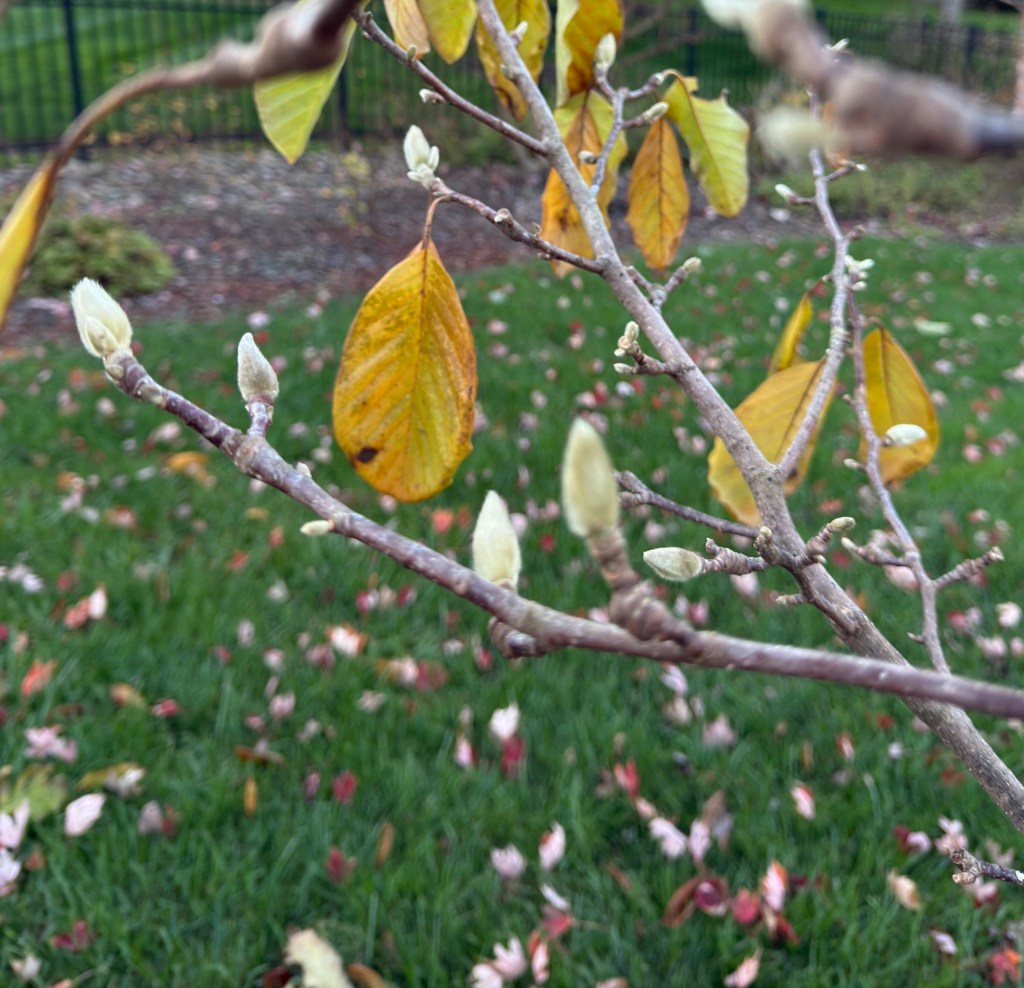
As the tree completely loses its leaves and the buds start to appear by the hundreds, I am reminded that in autumn nature is packing up promises for the future. This display of buds standing fast all through the cold winter is a daily reminder of the promise of spring and to me nothing so overlooked and ordinary can be so hopeful!
Fothergilla
We all love the blazing fall colors of the maple, a tree part of the beautiful forest landscape whose colors brilliantly change during the season. A display so stunning that people travel great distances to vacation around the transitioning. We love the show but not all of us have room in our small suburban yards to accommodate these grand sized trees.
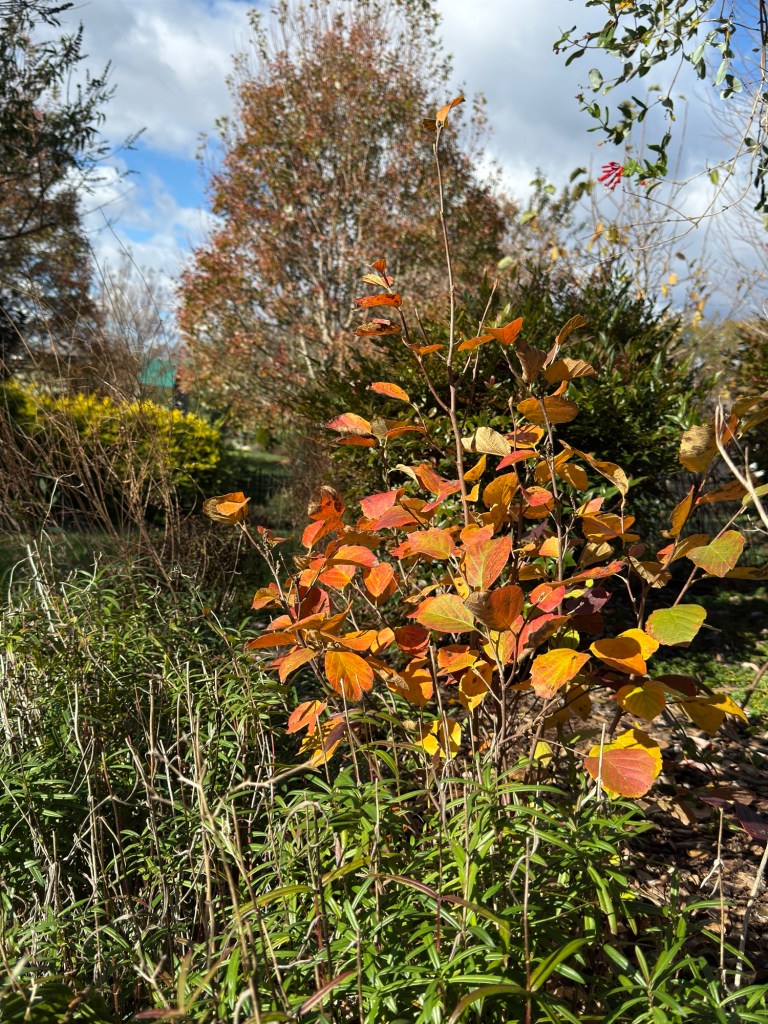
One of our garden’s fall color beauties happens not to be a tree at all. This is Fothergilla gardenii, a deciduous, native to the US shrub and member of the witch-hazel family (Hamamelidaceae). Growing about 1-3 feet high and 2-4 feet wide, this little shrub catches my attention everyday in the fall landscape especially when it sits in contrast to something evergreen or semi-evergreen. In our case it’s tucked in between Phlox pilosa and a variety of Nandina.

The bright orange is eye-catching but upon closer look there are leaves turning dark burgundy and leaves part yellow, orange and red, even emerging new green leaves. Its bold fall vibrancy almost seems unexpected as Fothergilla usually gets lost all summer with its small to medium size and ordinary green leaves. I find the woody little shrub remarkable because it’s as if it’s saying, “Here I am, you suckers! You forgot that I had it in me to burst such awesome colors! I won’t be counted out yet!”
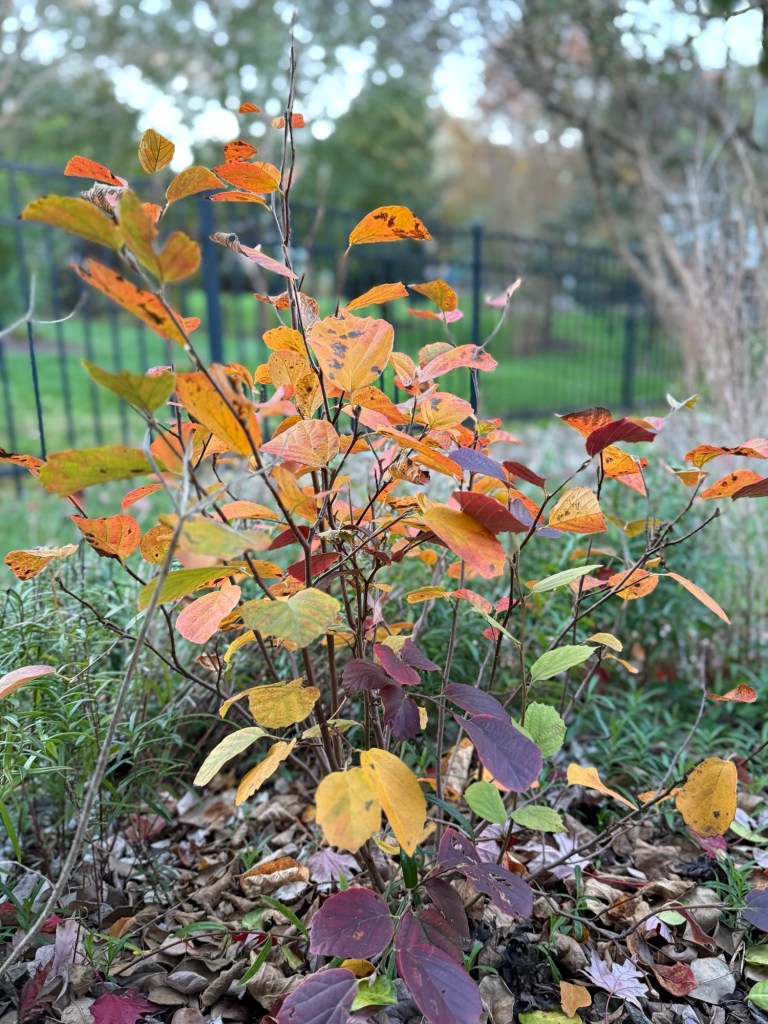
And so Fothergilla does its late season trick and bursts out amazing color! Then in the spirit of its witch-hazel relatives comes back in the early spring with its quirky little bottle brush shaped flowers, scented like honey, a delight for the pollinators and the bees. It’s a native insect food source and gets a gold star for being a habitat hopeful.
Echinacea
Belonging to one of the largest plant families in the world (Asteraceae is over 25,000 species large), Echinacea purpurea is an herbaceous perennial native to the central and eastern US. It’s one of my garden favorites. It’s bloom time is long and pollinators love it!
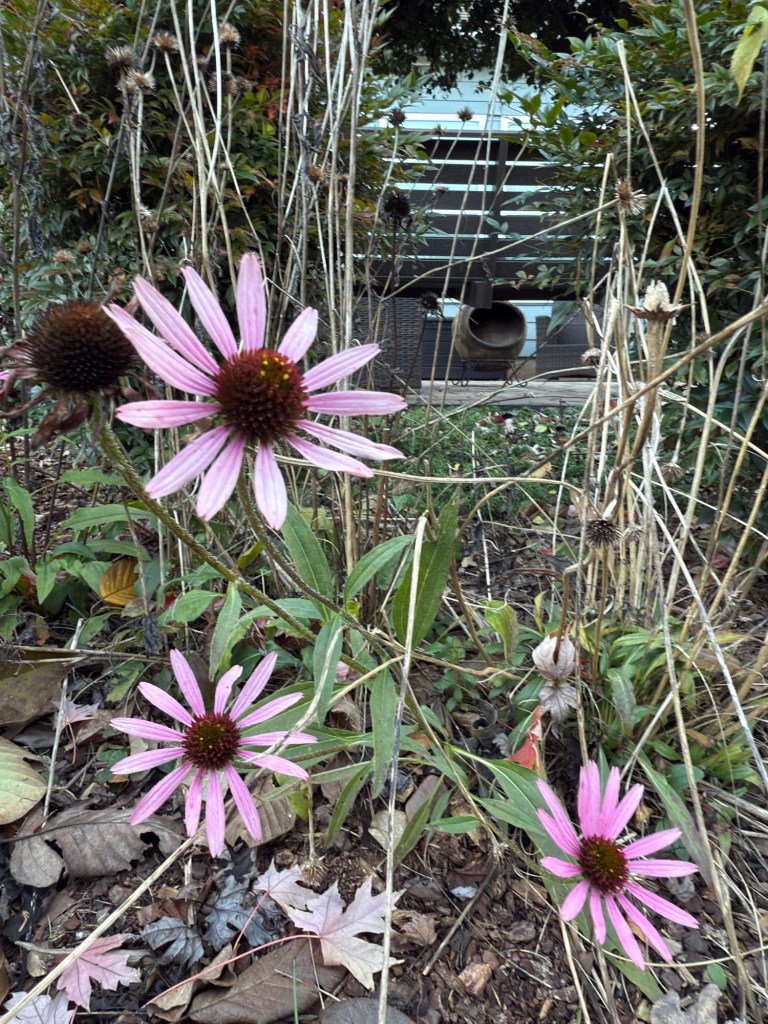
What I’ve come to love just as much as its blooming flowers are the seed heads they leave behind. These persists through the fall and winter, providing food for the birds, particularly finches. To me the winter garden is never a boring place and the staunch seed heads of Echinacea are one of the reasons why.
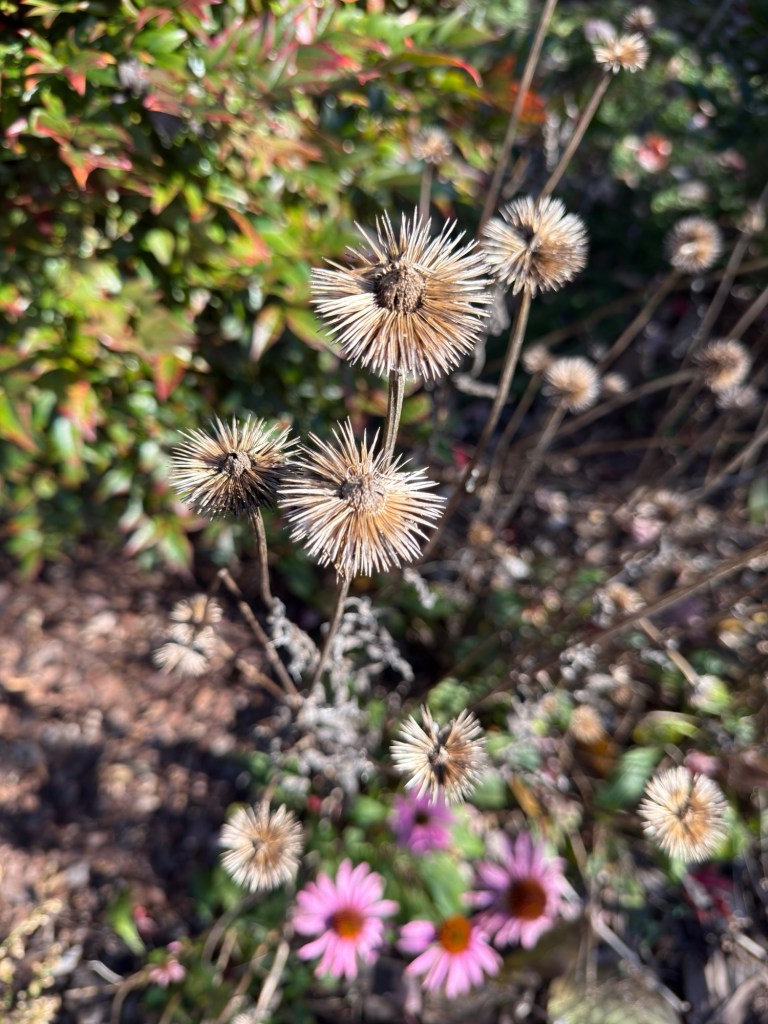
There’s something about that orange, spiky seed head that stands forthright from the ray of purple petals all summer. It’s as if to say, “This is the real reason we’re here, for you, the pollinators, the birds. Never tire of our offerings.”
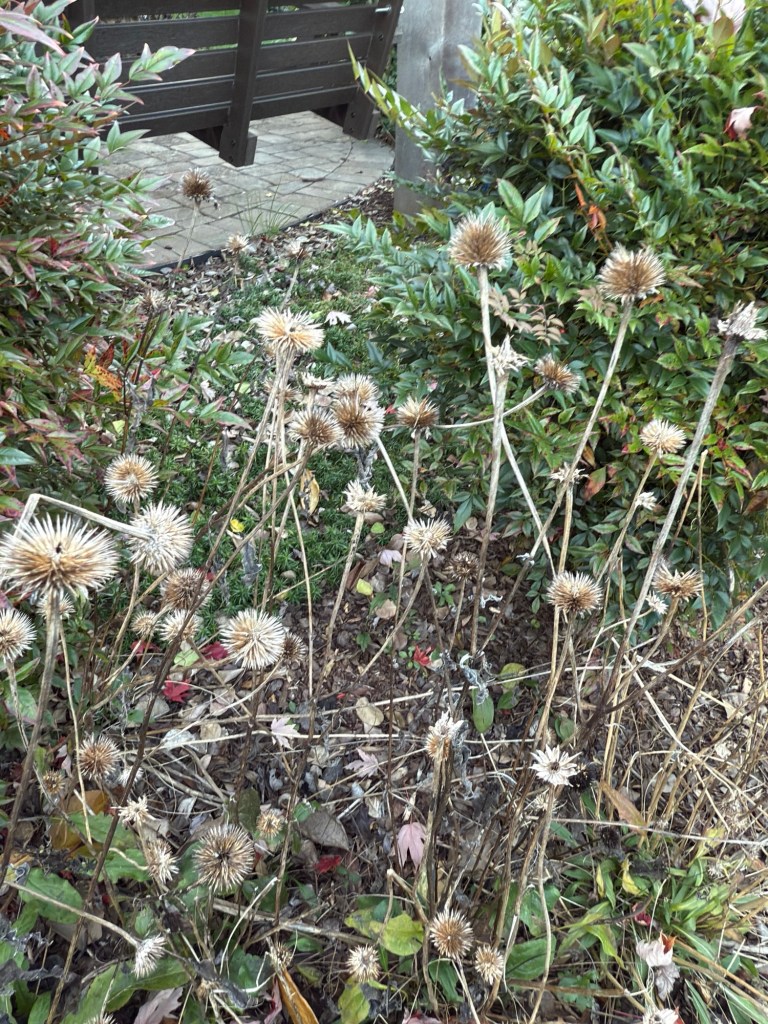
Many people may find the leafless stems and brown seed heads part of the messy aftermath of beautiful, blooming summer. They cut them down and clean them up. Sometimes there’s already new growth, if you’re in a zone like mine, Zone 8. For me the hope carries on in what the dormant plant still has to offer, when all the color has faded. Leave your stems through the winter and in spring cut back only slightly to allow for the activity of smaller bees who find the hollow stems a perfect place for nesting.
For more information on fall clean up in the garden, visit this article from NC State Extension here.
Or better yet, find some amazing photographs and hands on reference for insects and the particular plants to grow that benefit them, from Debbie Roos with NC State Extension here.
Daffodils
Fall bulb planting is one of the final garden acts before winter. In Zone 8, I have planted daffodil bulbs in December. There’s a lot of faith that goes into planting something you won’t see for months to come. Will it come up? Will it grow? Where did I even plant them?
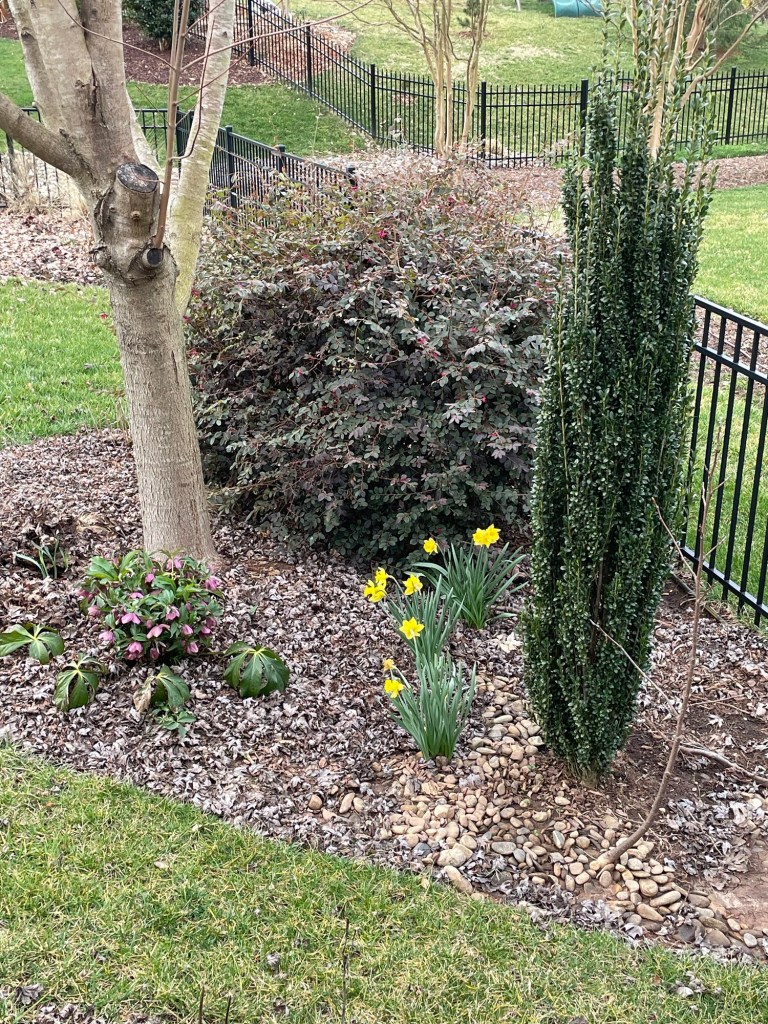
Planting daffodils (or whatever your spring bulb jam may be) is the act of faith and hopefulness. When all is turning brown and grey and the skylight becomes dim from shorter days, the garden still calls for your attention. Don’t forget to plant. Keep it going. Have faith. And with the greatest of delights your faith, and digging, is rewarded.
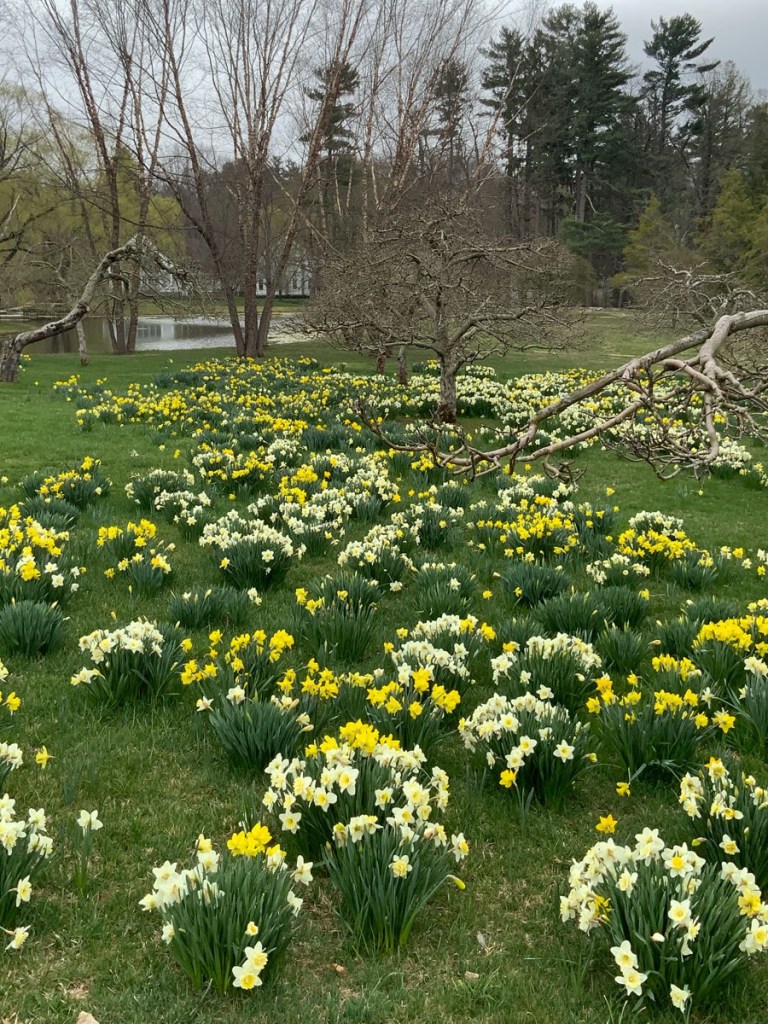
Daffodils are my happy plant. And I am not alone. I don’t care whether or not they’re native. And I don’t know if they aid local pollinators in any way at all, but they serve an important role: putting a smile on my face. Their fresh, cheery appearance in early spring (as early as February here) scattered throughout the garden is a clear call for hope and all that is to come in the new year. There are plenty of winter bloomers here and there but nothing punches out from the earth quite like a daffodil and this earns it as another fall hopeful.
I hope that taking notice of these plants or others, and the act of planting, can be a hopeful process for you. Or a masochistic one, if you like to get dirty and do the work yourself! In this way of watching things grow and change year after year, I think I’ve realized that the true backbone of hope is actually persistence.
Life persists. It finds a way.



 Severnista
Leave a comment